Software
Houzz Logo Print
h_nurmikko

Potatoes

11 years ago
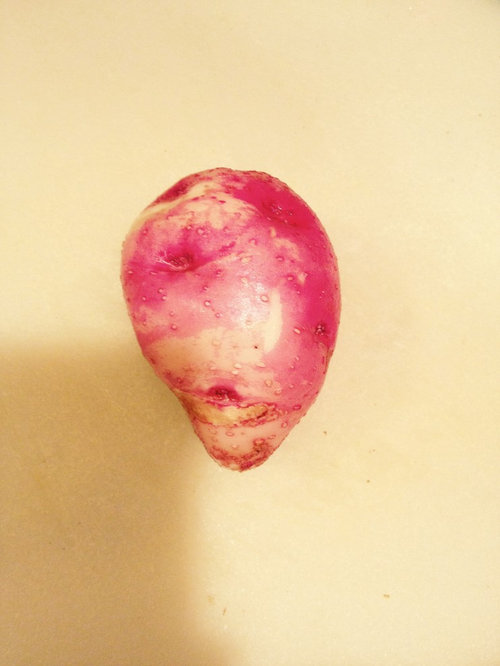
So this year, the hubby wanted to try growing potatoes for the first time. We followed instructions and have hilled them. Because of all the rain, I was wondering if we had any or if they rotted. I pulled the first one out while peeking and it is the weirdest potato I've ever seen. Is this normal or diseased? Also, are you supposed to fertilize them or leave them be?


Comments (2)

  • 11 years ago

    some of mine look like that too. The info I found said it was from too much water but edible not diseased. I am about to finish the digging since we are expecting rain Friday.

  • 11 years ago

    Potatoes are a cool-season crop that matures around the time the soil and air temperatures are really starting to get hot in Oklahoma. Because Irish potatoes can rot in hot, wet soil, most of us are digging our potatoes in June of an average year, though some folks may have been harvesting as early as May depending on when they planted and what varieties they grew.

    Your potatoes look fine. Those little white bumps on them are called lenticels, and they are an indication the soil is too wet and the plants are trying to breathe through the lenticels. You rarely see them in an average year and when growing in well-drained soil, but they can develop in heavy, dense clay that holds moisture too long in any year or in any type soil in an excessively rainy period.

    I'm quite a bit further south than you and I plant my potatoes in March and harvest them in June. I enrich their soil with organic matter, mostly compost, before planting and do not fertilize them after that. My potatoes are grown in highly-amended clay soil that is rich in mineral content, so there is no need for me to fertilize them. If your soil is highly fertile, it will feed the plants and you won't need to fertilize. If your soil is not rich in nutrients, you might need to fertilize potatoes but you'd do it earlier in the growing season, not this late. Avoid fertilizing them with a high-nitrogen fertilizer or you'll get all leaves and not many potatoes.

    When potato plants are nearing maturity, the foliage begins to change color (pale washed-out green, yellow, tan, and even brown late in the process) and die back. Often, folks who are new to growing potatoes misread this change as a disease instead of the natural maturing process. When I see foliage do this, I leave the potatoes in the ground a couple more weeks when I can. (You can leave them when the ground is more dry than wet but not when temperatures are well above 90.) This allows the skin to thicken and toughen and ensures the potatoes store better. Now, if you only have a couple of plants and believe you'll eat all your potatoes in the next few weeks, long-term storage isn't a concern, but if you are raising a year's worth of potatoes and need for them to store as long as possible, you want to give them that couple of weeks in the ground to develop a tougher skin.

    When it is the kind of year where I think that I can leave the taters in the ground for a couple more weeks, I still dig gently into the soil daily and check a couple of potatoes underneath each dead plant. If I find a potato has collapsed into a mushy, rotting mess (looking sort of like vanilla pudding), I drop whatever I'm doing and dig out all the potatoes. That kind of rotting is common here once the temperatures are in the 90s. It is sort of hit and miss---you don't always see it happen and, indeed, very small potatoes you miss while digging may survive the hot soil temperatures and sprout as volunteer potatoes the next year. It is fairly common, though, in wet years or even in a very wet spell in the midst of an otherwise dry year. You never want to just assume you can leave the potatoes in the ground for a couple more weeks because you might come back in two weeks to dig them only to discover every single one is rotting. People in cooler regions where the soil temperatures don't hit the 90s and higher in the summer can leave their potatoes in the ground all summer, but here in Hotlahoma, we can't.

    I'll link the TAMU Easy Growing Potato Guide for you as it is full of useful info for someone who is new to growing potatoes. It will have whatever sort of fertilizer recommendations they favor there in Texas. I don't fertilize with synthetic fertilizers so that's not how I do it, but many organic gardeners do fertilize their potatoes the same way, only using an organic fertilizer like Espoma Garden Tone, which has lower N-P-K numbers than most pelleted synthetic fertilizers. When using an organic fertilizer with lower numbers, the package directions generally tell you how often to use it because you tend to need to use it a bit more often since the N-P-K numbers are lower.

    Also, please note that when you have potatoes with those lenticels on them, they do not store as well as potatoes that have not developed those, so use up the ones with lenticels first. Some of my crop this year had lenticels, but others did not. Lenticels can let bacteria get inside the potato and that bacteria can cause them to rot, so long-term storage of potatoes with lenticels is unlikely.

    In a year as wet as this one, I feel lucky that we got such a great potato harvest because it certainly was wet enough that we could have lost them all.

    Dawn

    How To Grow Potatoes

Sponsored
Peabody Landscape Group
Average rating: 3.5 out of 5 stars8 Reviews
Columbus' Reliable Landscape Design & Contracting