Software
Houzz Logo Print
pegasus101

Zinnia problem

11 years ago
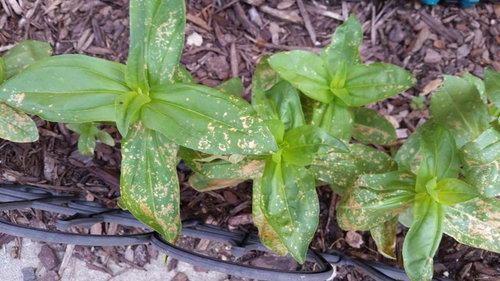
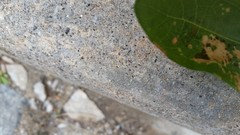
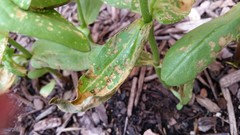
Hopefully, one or some of you might be able to help me with my question. What is wrong with my zinnias?


Comments (14)

  • 11 years ago

    Thank you for your answer, dowlinggram, I think I have some fungicide. I wish it was from watering the plants but I haven't had to water since I planted. Lots of rain, but I'll still put in a small trench behind them.

  • 11 years ago

    Hmmmm, fungal leaf spot wasn't my first thought. Any chance of seeing more pictures? What does the affected area feel like?

  • 11 years ago

    My mini rose looked just like your zinnias. I used a sulpher based fungicide on it and now it is fine and blooming like crazy. If it's not leaf spot it is some fungal problem but it looks to me like leaf spot


  • 11 years ago

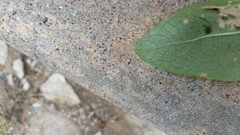
    rhizo, the leaves feel dry. Here are a few more pictures.


    I did spray with a fungicide this morning. Don't know if it will work for there is rain forecasted for tonight and all day tomorrow.

  • 11 years ago

    where are you ... how long they been in teh ground.. seed raised or transplanted ...

    and how close to the cement ... i am wondering if they are getting cooked by the heat of the cement.. when its not raining ...

    note the newer growth is not affected ... and half of the second newer leaves are not ... could it have been transplant shock??

    there might be something odd in the pattern of damage.. that the cause of the damage is gone ...

    zenman is the ultimate grower ... hope he chimes in ...

    ken


  • 11 years ago

    I am in 7b and I don't remember when I put the seed in. The zinnias are maybe 5 inches away from the cement border. There is about 12 feet (maybe) of zinnias and about 1/4 look like the above pictures and the rest are going good.

  • 11 years ago
    last modified: 11 years ago

    Ken, thanks for the compliment, but I don't consider myself to be an "ultimate grower". I am a nut about zinnias, tho.

    Pegasus, the middle picture in that last three pictures, is interesting in that it shows a mulch or growing medium with a lot of organic stuff in it, and sometimes a medium like that can contain infectious organisms. There are trace nutrient deficiencies or trace nutrient excesses that can lead to dead spots in the foliage, but the pattern that you have doesn't look like any of them that I have seen in real life or in books.

    dowlinggram's diagnosis of a fungal leaf spot may be correct. Let's hope it is. There are also bacterial leaf spots, possible virus infections, and some nematode species can infest foliage. Since bacterial, viral, and nematode infections are very hard to treat (discarding all infected plants is the usual recommendation), and there are several good systemic fungicides, I would recommend treatment with one of those. Just out of curiosity, which fungicide did you use? I am particularly concerned about whether it was systemic or not.

    ZM

    pegasus101 thanked zen_man
  • 11 years ago

    Thank you for answering zen_man. I used an organic garden fungicide from EcoSmart

  • 11 years ago
    last modified: 11 years ago

    Hi Pegasus,

    As listed on Amazon, the EcoSmart organic garden fungicide has active ingredients: Rosemary Oil ... 0.1% Thyme Oil ... 0.1% Clove Oil ... 0.1% Other Ingredients* ... 99.7%.

    So the Rosemary Oil, Thyme Oil, and Clove Oil together account for only 0.3% of the product and the product is mostly "Other ingredients". The "Other ingredients" are 99.7% of the product, so the product is mostly "Other Ingredients". So what are those mysterious "Other Ingredients" ?

    Well, those Other Ingredients are listed as "Water, octadecenoic acid potassium salt, wintergreen oil, and lecithin." The kicker there being that they don't say how much is water (I suspect it is mostly water), how much is "octadecenoic acid potassium salt" (I thought organic gardeners were supposed to not use "chemicals" and that sounds very much like a chemical to me) and why on earth does a fungicide contain lecithin? That is a food ingredient, and you shouldn't be eating a fungicide as food.

    Bottom line is, EcoSmart Organic Garden Fungicide doesn't sound like a systemic fungicide to me, and it strikes me as a rather odd fungicide. I would be particularly interested to know what it's actual percentage of water is. I suspect they would be embarrassed to put that on the label. I think they should be required to reveal that.

    But, as they say, "the proof of the pudding is in the eating", so let us know if the product is effective against the spots on your zinnias.

    ZM

  • 11 years ago

    you are welcome zen ... but you are here ... the ultimate.. who is willing to ultimize us ... lol ..

    frankly ... i would save money.. and just pull them out.. and be done with them ...

    or enjoy them as they are ...

    there is no use.. in my world.. of spending hard earned money on remedies ... when the seed cost you a dollar.. or was free ...

    some of the variables i mentioned ... could be issues ... many things attack stressed plants.. i was talking about the stressors ... rather than the remedy

    good luck

    ken


  • 11 years ago

    Sulpher based fungicides are about as basic as you can get and a very old remedy for fungus infections. It works for me in most cases. In Canada most fungicides are banned. I used to like bromelin or bromelaid--something like that(I can't remember the name) It was a systemic fungicide and worked overnight. Systemic fungicides are the best because as the name suggest they work on the plants entire system to cure it..

    Ken ripping them out will not solve the problem if the origin of the infection is in the soil or has other causes. It will just attack whatever is planted there


  • 11 years ago

    I for one want to know where Ken is buying seeds for a dollar a pack? Not anywhere close to where I live,

Sponsored
Peabody Landscape Group
Average rating: 3.5 out of 5 stars8 Reviews
Columbus' Reliable Landscape Design & Contracting