Software
Houzz Logo Print
kim_wa

Spanish Moss

11 years ago

A friend of mine is sending me some Spanish moss in a week or so, which I plan on growing indoors. I am aware of the bug issue and he is kind enough to treat it for me before shipping. In preparation of my new arrival, does anyone have tips for me to help ensure a long and happy cohabitation for this tillandsia and I?

Comments (14)

  • 11 years ago

    Or is this just a terrible idea?

  • 11 years ago

    I really doubt the moss will grow indoors since it gets nutrients and moisture from the air and indoor air has none of that.

  • 11 years ago

    My friend who is sending it said he kept it alive and had it flower several times indoors on Detroit. The process is just complicated, involving a fluorescent light, daily misting and frequent soaking. And as a bio student who has ran analyses on indoor air, you would be surprised how much fun stuff you breath in on a regular.Mmmmm, and so many mold spores with each breath... Just can't avoid it, no matter how much you love bleach. Still, it does sound like an awful fussy tillandsia especially for a beginner. Suppose, if and when it dies I can do something decorative with it.

  • 11 years ago

    On a different forum, a man on this page:

    http://allthingsplants.com/thread/view/15707/Air-Plant/?offset=80

    talks about how he grows Spanish Moss despite it being cold out. It is Mississippi... but seems to get as cold as New Mexico. Spanish Moss is hardier than we might suspect!

  • 11 years ago

    I will post updates when mine comes in, we will see how long I manage to keep it alive. ;)

  • 11 years ago

    Hi everyone.


    Kim - Tillandsia usneoides
    (Often called Spanish moss, Old Man’s Beard or Air Plant) is one of many
    different types of bromeliads and is from the sub-family “Tillandsioideae”. This is the same sub-family which includes
    such popular, commonly grown bromeliads as, Alcantarea, Guzmanias, and Vrieseas
    as well as a few others.

    I can only talk about growing this plant
    here on the south east coast of Australia where I live. I have grown it ever
    since I started growing bromeliads several years ago and have found it the least
    troublesome bromeliad of all to grow; you just place it where you want it and
    forget about it.

    I just hang it from pots, shrubs, trees
    or old bits of bush wood and it just grows and grows without any special care.
    I have even made a wall of it by covering one side of an old garden frame with
    nylon bird netting and poking small bits of this plant randomly through the
    mesh and it eventually grew to make an almost solid wall.

    I have been told there are a two or three
    different types here in Australia and no doubt mine would be the commonest type
    as I have never looked for any special types and mine all came from swaps and bits
    given to me by friends.

    I have never grown it inside as I don’t
    need to, as I find it grows very well outside and can handle extreme weather
    patterns very well. Heatwaves don’t seem to bother it nor does the colder
    weather, (It was three degrees C here this morning and even colder at other
    times, occasionally even down to freezing).

    We don’t have the problems with mites
    and midges that I read about which occur in other countries, in fact my
    grandsons often run around with it on their heads playing, and have no adverse
    effects.

    As for growing it inside by using lights,
    heaters, humidifiers etc. where’s the satisfaction in that? You aren’t growing
    it, the accessories are!

    The one thing I do know that’s harmful
    to it is “over-watering”; I was told by an old grower once that it needs
    abundant air circulation and very little water. He said to hang it up, don’t
    water it and let Mother Nature look after it; it will get all its nourishment
    and moisture requirements out of the air, hence the common name “Air Plant”, and
    I can honestly say I have never watered or fertilised any of my Till usneoides plants
    and still they grow in abundance.

    A few friends who have had problems with
    it all tracked the cause back to too much water; the trick is to “read your
    plant” and it will tell you the problem. If the foliage is a light silvery grey
    colour it means it’s getting the right treatment; if the foliage is a
    grey/olive green colour with dead bits in the middle, it means it’s getting too
    much water, and your plant is unhappy.


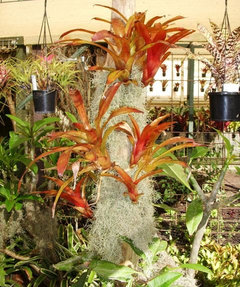
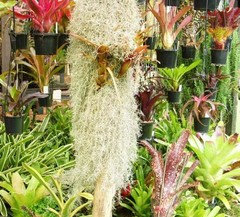
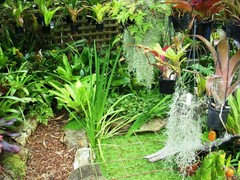
    I do find it can “take over” if you don’t keep it under control as can be seen in the following two pictures Pic.1 shows it about six months after being hung around a mounted plant of Foster's Favorite to hide the ties attaching the plant to the mount. Pic.2 shows the same plant six months later where it is almost smothering the Foster’s Favorite. Pic.3 shows how I use it to give a bit of a natural look among the plants around this frog pond.

    All the best, Nev.


  • 11 years ago

    If I could grow it outside I would! I love in Eastern Washington state, temperatures range from a very dry 110 to a very damp -20 with the windchill factor, maybe a bit lower. And our winters and springs are gloomy and overcast. There is just no chance it would survive outdoors, the price I pay for living where I do. If I want to grow this, indoors is my only option with a bit of climate manipulation on my part. Thanks for the information and the gorgeous pictures all the same!!

  • 11 years ago

    Perhaps in a terrarium?

  • 11 years ago

    Wasn't planning on setting one up, but I do have a ten gallon aquarium not being used. Too bad my leopard geckos are desert critters. Not much plant life to put in with them.

  • 11 years ago

    Leopard geckos?!!!

    OMG please share some pics!


  • 11 years ago

    It will not survive inside.

  • 11 years ago

    Here in Albuquerque, all my tillies, including the Spanish Moss, overwinter inside, like it or not, as they would surely freeze outside at night (as low as 10F, rarely, mostly in the 20sF in deep winter -- sometimes with wind and snow), though I could put them out during the day (50sF), maybe in full sun for a while. Now here it is July 6 and all my larger tillies have been outside for +2 months. We're getting more rain this year (hooray!) and monsoon is here so the air is more humid (ugh!), and as we have very bright skies, all my outside tillies are in a north-facing porch. In late September I'll start watching for colder nights.

  • 11 years ago

    Hi

    I grow several varieties of it and the only situation I've found where it will not grow is in a pot lol It defines obligate epiphyte for sure . I even have it hanging froma coat hanger lol If it breaks off and falls to the ground it will die .

    It occurs as far north as Viginia so it tolerates cold and it's a real nuisance in the deep south. Interestingly as you get south of the lake in florida it almost disappears being replaced by other broms yet it grows very easily in the garden but never seems to spread as it does in the south. I have never been able to tell the types apart except when they flower The native kind as a very tiny green flower while the central american type has a deep purple flower over an inch in diameter .

    Most broms can be grown potted or epi but this one NEEDS to hang . goodluck gary

Sponsored