Software
Houzz Logo Print
aruzinsky

Should I be Worried?

11 years ago
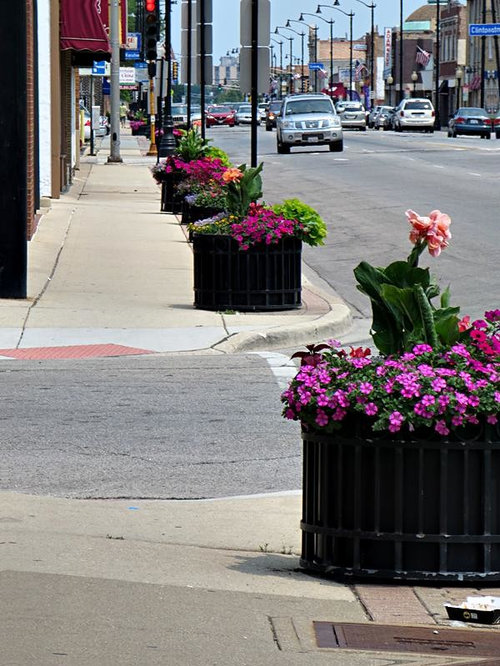
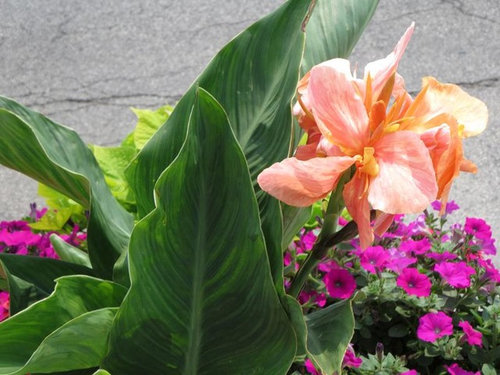
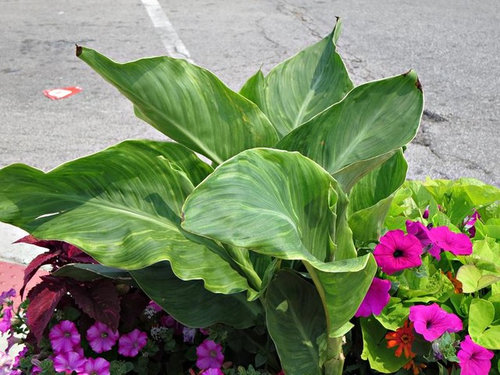
The Town of Berwyn, Illinois has hundreds of planters with virus infected cannas on streets:

As far as I can tell, every single one of these cannas is infected.

My garden is down wind of these planters, about 1/4 mile from the closest. I have a virus free canna collection that I have maintained for decades. Should I be worried?

Comments (14)

  • 11 years ago

    Anyone
    growing healthy cannas should always be somewhat concerned about exposure to
    infected cannas. Virus transmission typically involves transmission via sucking
    insects that move the virus from infected cannas to healthy plants. The further
    apart these plants are located, relative to each other, will certainly decrease
    the random chance of infection. Past experience has shown that healthy
    cultivars, separated several yards apart, show little or no infection if good insecticide
    controls are followed. Obviously your control would only apply to your cannas.

    In your
    case, I think there is a low possibility of aphid’s etc. making that
    transition. Of course that does not mean it is impossible.

    Excellent
    photos and good luck,

    Kent

  • 11 years ago
    last modified: 11 years ago

    It seems to me that insecticide on the infected plants would be much more effective at stopping the spread of disease than insecticide on the healthy plants. Right? I read that mosquitoes drink more plant sap than blood which suggests that they are vectors. What about mites? Mites can travel on the wind. And, the Chicago loop is 10 miles downwind from theses planters.

    Besides the Berwyn government, to whom should I complain? The USDA?

  • 11 years ago

    You would be
    correct in assuming the use of insecticide on the infected plants would be beneficial.
    Unfortunately I seriously doubt you will convince the city fathers to hire licensed
    professional pesticide firms to carry out this request. To the best of my
    knowledge, it is not illegal for you, the city or your neighbors to grow
    diseased plants. From a practical standpoint, protect your plants to the best
    of your ability. Use a good systemic insecticide.

    I would not
    be concerned about virus transmission in cannas from sap suckers. That would
    include many of our beneficial insects such as bees and humming birds. Canna
    viruses simply are not known to be transmitted in this manner.

    How about
    sharing photos of your cannas?

    Kent

  • 11 years ago

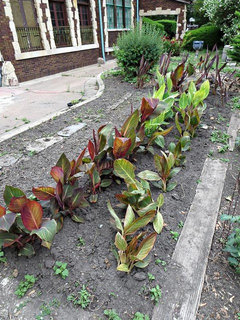
    Taken on 6/4/15:

    Left row, front to back, Tropicanna, Pretoria, Durban.

    Right row: Pink Sunburst

    Behind both rows: Intrigue.

    Kent, do you have a garden and, if so, what do you grow?

  • 11 years ago

    My commercial experience in horticulture is limited to very briefly growing tropical plants for a large commercial grower of orchid cut flowers, circa 1970. As a hobbyist, along with many commercial growers, I attended meetings of the International Heliconia Society in Hawaii during 1987 and 1990. My interest in cannas mostly exists because some cannas mimic the appearance of some heliconias but are much easier to grow.

    I am currently retired and have two chronic pain conditions that hamper movement. Often, I have to take narcotic pain killers to work in my garden. But, I still grow tomatoes because home grown tomatoes are much better than store bought tomatoes. Recently, I planted some plots in my garden with wildflower seeds just to reduce work. For me, the hardest part of growing cannas is washing the sticky clay loam off the roots and rhizomes after digging them up in the fall. That represents a lot of painful labor for me.

  • 11 years ago

    You peeked
    my curiosity with the mention of C. Durban earlier in this thread. Unfortunately C. Durban has a conflicting
    history. Are you growing the variegated leaf cultivar with an orange bloom that
    matches your Tropicanna or does it have similar foliage with a deep red bloom? If
    by chance yours has the red bloom you have a very, very rare cultivar.

    Kent

  • 11 years ago

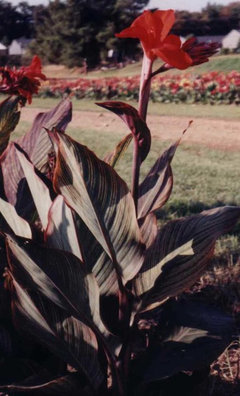
    Yes, I have the latter. Of all my cannas, its rhizomes are, by far, the slowest growing which probably explains why it's rare. Also, rhizome attrition during storage is high. I suppose I should store them in milled sphagnum moss instead of newspaper like the rest.

    I will post better photos of all my cannas in September. Last year, I achieved a personal record for height, Pretoria: 10 ft., and I want to see whether I can duplicate or surpass it.

  • 11 years ago

    You very
    accurately describe the shortcomings of the true C. Durban. Congratulations on
    having this rare cultivar. May I ask when and where did you get this plant?

    My good
    friend Herb Kelly (Kelly Plant World-Sanger, Ca.) received this unnamed cultivar
    from a contact who found it growing near Pretoria, South Africa. This was of
    course several years past. He was kind enough to send me a plant that I
    evaluated for commercial production and as you suggested; its reproduction rate
    was severely limited. I never offered it for sale. I believe Tony Avent (Plant
    Delight Nursery) and San Marcos Growers (California) offered it for sale for a
    short period of time years back.

    Unfortunately
    the name Durban is often listed and sold (primarily in Europe) but is simply a synonym
    for the canna Tropicanna (orange bloom).

    Hopefully
    your cannas are and will remain virus free and you can post photos when
    available.

    I will try
    to attach old scanned photos of C. Durban.

    Kent

  • 11 years ago
    last modified: 11 years ago

    "May I ask when and where did you get this plant?"

    Déjà vu. We had this conversation six years ago when I was "struwwelpeter" here http://forums.gardenweb.com/discussions/1786597/canna-tropicana-an-exotic-beauty-with-variegated-foliage?n=28 , My response was,

    "Durban - I remember getting two rhizomes from two different sources at the same time. One was in trade for Pink Sunburst from somebody in this forum, maybe, 7 years ago and I bought the other from somewhere I don't remember."

    I remember that the forum member with whom I traded had "canna" in his/her user name. Maybe, it was cannacrazy but the dates of cannacrazy's posts seem too recent.

  • 11 years ago

    Touché; what goes around comes around. Thank you for the
    update and link to the past thread. Hope this year’s cannas perform as well for
    you as they seemed to do in that year. I sort of remember that you once posted
    excellent photos of C. Pink Sunburst??

    Kent

  • 11 years ago

    Yes, I remember posting a photo of a potted Pink Sunburst in bloom with a ruler next to it.

    Actually, I would be very disappointed if this year's cannas don't do much better than the cannas pictured in my old post. As an obsessive experimenter, I did something different last year that seemed to improve my cannas' growth. Now, I have to verify that that improvement wasn't random. Don't ask, it's a secret.

    Incidentally, about 2 years ago, North Riverside Mall (Illinois) had a large planting of Tropicanna. The plants were obviously unhealthy but the symptoms did not resemble those of the cannas pictured above. Instead, the leaves looked scorched, shredded and weather beaten and the plants were small. Do you have any idea what caused it?

  • 11 years ago
    last modified: 11 years ago

    A number of
    possibilities come to mind; all would be speculation!

    One possible
    scenario might go as such:

    Small young
    cannas propagated in shade houses in potted containers by large nurseries are
    typically transported to local nurseries or garden centers via enclosed refrigerated
    trucks. These young tender growth cannas seldom are hardened-off prior to
    exposure to their permanent growing location. A local nurseryman or contractor
    picks up the plants and hauls them down the highway in at open flatbed truck at 50 mph to the planting
    site. Describing the plants as appearing scorched, shredded and weather beaten
    would likely describe the results.

    I think the
    above is repeated by many of us when we purchase plants, shrubs and trees
    without giving consideration of the effects until after planting.

    Kent

  • 11 years ago

    No, this was late in the season, long after the cannas were planted in the ground. What should have been a magnificent display was inconspicuous from a distance and an eyesore close up. I thought it might be caused by a different kind of virus. I wish I had taken photos.

Sponsored
NME Builders LLC
Average rating: 5 out of 5 stars2 Reviews
Remodeling Company in New Albany, Ohio