Software
Houzz Logo Print
hzdeleted_19696500

next year's choices

11 years ago
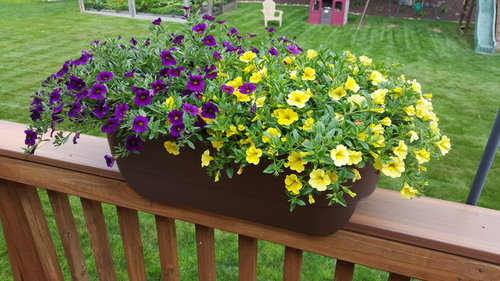
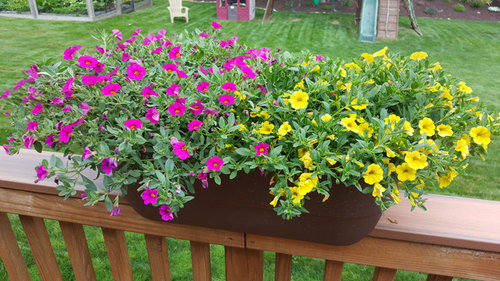
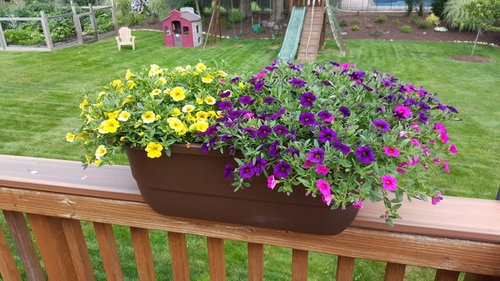
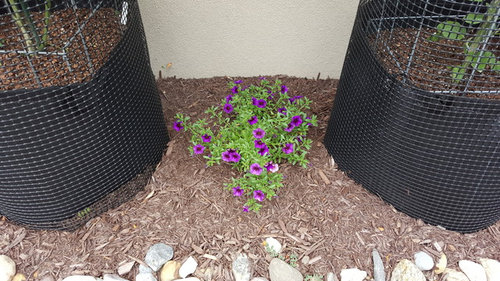
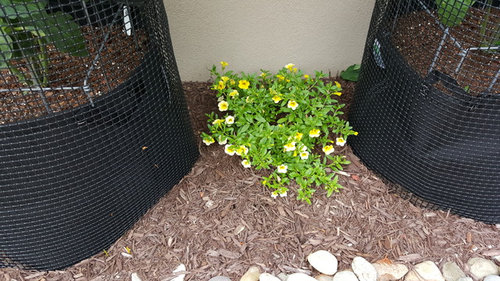
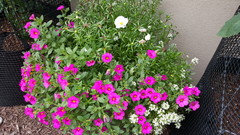
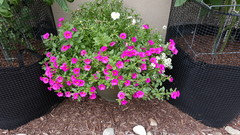
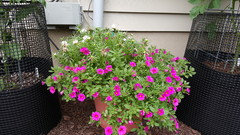
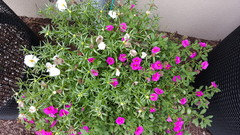
I tried four annual varieties from seeds this season and have come to the conclusion that I absolutely thrilled about the Calibrochoas (both those planted in containers and directly in the ground), so-so enthused about the Portolucas in containers, very disappointed in my Impatiens and realize that Alyssum will easily be overtaken in any containers (when mixed with Calibrochoas and/or Portolucas) but fare decently when planted directly in my landscaping.

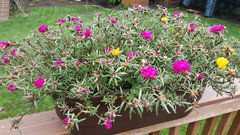
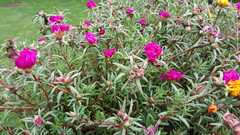
That being said, I'm going exclusively with Calibrochoas next season (I'll be adding the red and white colors as well) unless someone can convince me of something that grows as well as they did with as little maintenance as they require. They are SO much better then regular-size Petunias that I've planted in the past. The photos below will show just how nice they look with very minimal effort.


Comments (12)

  • 11 years ago

    The Portolucas in containers (same growing mix)....


  • 11 years ago

    The Allysum barely visible in the containers that have one plant each of Calibrochoa/Portoluca/Allysum. I pulled out the Portolucas and Allysum last night because they were just being overcrowded.


  • 11 years ago

    Looks great...do you have any problems with flea beetles eating the alyssum?

  • 11 years ago

    I feel like I wrote your post. lol.

    This was my first year growing both Portulaca and Calibrochoa and I was incredibly impressed. I planted about 20 different annuals and those two are by far my favorite, as they just blew me away with their amount of blooms and growth, lack of pests, and need for little maintenance. Next year the Calibrochoa will definitely be replacing most of my petunia pots, if not all of them. (The petunia pruning is becoming overwhelming, as well as trying to control the budworms on them. lol)

    I also planted Dahlias for the first time this year and have truly been enjoying them, although I've come to realize that the ones I put in my very large pots are doing considerably better than the ones in the smaller pots.

    Asters are another annual I tried out for the first time. They are really thriving and have had constant blooms since mid-May. Not much pruning to be done either.

    I agree with you about the Allysum. My other annuals seem to be taking them over. They've stayed very small and our extreme heat has taken a toll on them.

    The one plant that I know I won't plant again next year is Snapdragons. They're all alive and are doing okay but I'm just not getting much growth or blooms from them.


    Like I said above, next year I plan to go overboard with Portulaca and Calibrochoa. Can't wait! Thanks for sharing your photos!


  • 11 years ago

    Snap dragons put on a great show in our cooler climate but don't do well in heat. It's a case of planting for your climate. Snaps are a cool weather plant.


  • 11 years ago

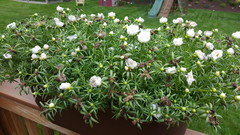
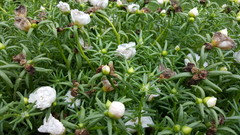
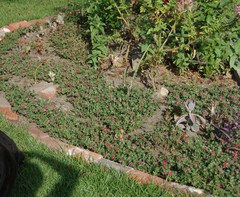
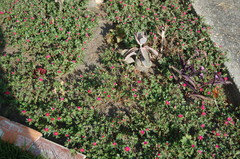
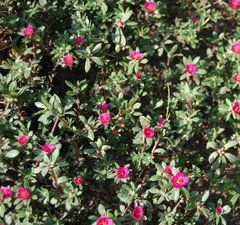
    Jordanmichelle, I did go overboard with Portulaca! I also used some store-bought P. grandiflora (moss roses) and P. umbraticola (ornamental purslane) but they can't compete with the performance of P. amilis, found in lawn. I moved a bunch of them to be ground cover in this new bed since there's no mulch (until I cover it with fallen leaves this fall.)


  • 11 years ago
    last modified: 11 years ago

    Hi Tiffany,

    " ...but they can't compete with the performance of P. amilis, found in lawn. I moved a bunch of them to be ground cover in this new bed since there's no mulch (until I cover it with fallen leaves this fall.) "

    That's ingenious. I don't think we have Portulaca amilis here, although Portulaca oleracea is a native plant (weed) here in Kansas. I guess the obvious disadvantage of your Portulaca amilis is that it has only the one color. I wonder if it is hybridizable with some of the other Portulacas, like umbraticola or grandiflora.

    But you did an admirable and interesting thing with the Portulaca amilis. I guess when you make use of a weed, it is no longer a weed. Congratulations.

    ZM

  • 11 years ago

    TYVM! P. amilis is not native, but such a small, niche-environment plant, I don't feel bad about encouraging/cultivating it. And I can't bring myself to call anything so adorable a weed. DH said he wouldn't mind if the whole lawn was that instead of grass (since he has the mowing task.) If it proves to be perennial like it seems to be, will start working on that next summer, in some areas anyway. The hell strip seems like a good place to do it.

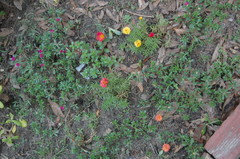
    If hybridization among species is possible, some should show up in this spot next year. Mostly P. amilis & grandiflora, but there's an umbraticola at the top in the middle, with a single flower showing that has an orange outside & yellow middle.

    ☮✌

  • 11 years ago

    Thank you, thank you, Tiffany for providing the ID to portulaca amilis. I bought a $.99 cent pot of this a number of years ago from Lowes. Of course I knew it was a portulaca but it was also "different". Not stringy and weedy looking like the kind usually available. Very low growing and tidy.

    Initially, I carefully made cuttings to have more. It returned the next spring (from seed) and continued to spread. It's now at its boundaries and I put handfuls in the yard recycle bag.

    We had a tree removed, leaving a mound full of roots. Last year as I was pruning the portulaca, I got the idea of tossing the cuttings on this mound. And I do mean toss. I just took handfuls of prunings and threw them on top of the pine straw mulched area. I gave it no aftercare. The portulaca took hold and returned this year to cover the mound.

    Yes, it comes in only one color (so far), but I have no complaints about that bright pink color.

    Earlier this year I saw a few pots of it at Lowes.

    June


  • 11 years ago

    Sounds lovely, June! If you get a chance to share a pic, I'd love to see that! There's also a similar, P. pilosa, which has leaves that are round in cross-section. (P. amilis leaves are flat.) The flowers of the 2 can be identical, especially in mowed areas, but if left alone, P. amilis flowers can get much bigger.

    I was popping back in to say cuttings of house plants can make fabulous "annuals" also. Re-snip in fall to save the above-ground part, or pop out of ground & pot up, if saving is desired.

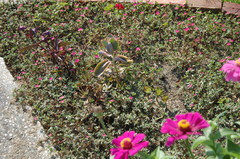
    Tradescantia pallida (purple heart,) lavender scallops (Kalanchoe fedtschenkoi) cuttings put here about 2 months ago. And of course, I always want Zinnias!


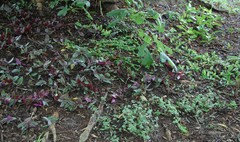
    Tradescantias (zebrina & fluminensis,) with Callisia repens & cordifolia. Pieces put here a couple weeks ago.

  • 11 years ago

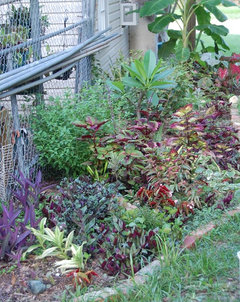
    Most of this was put here as cuttings over the past few months, all stuff that's easy to save for winter if desired. That's my qualification for annuals, that they're really tender perennials, with a few exceptions such as the Zinnias mentioned above. Unless you can spot the 1 tiny Begonia flower, or Coleus blooms "count," there's not a flower here. Just colorful foliage.

    (Sorry about the edge, I promise, it's been trimmed! Poles are there
    temporarily, awaiting time (& cooler weather) to finish a project
    with them.)

Sponsored
Bella Casa LLC
Average rating: 5 out of 5 stars17 Reviews
The Leading Interior Design Studio in Franklin County