Software
Houzz Logo Print
jalcon_gw

Question about JM summer pruning

11 years ago
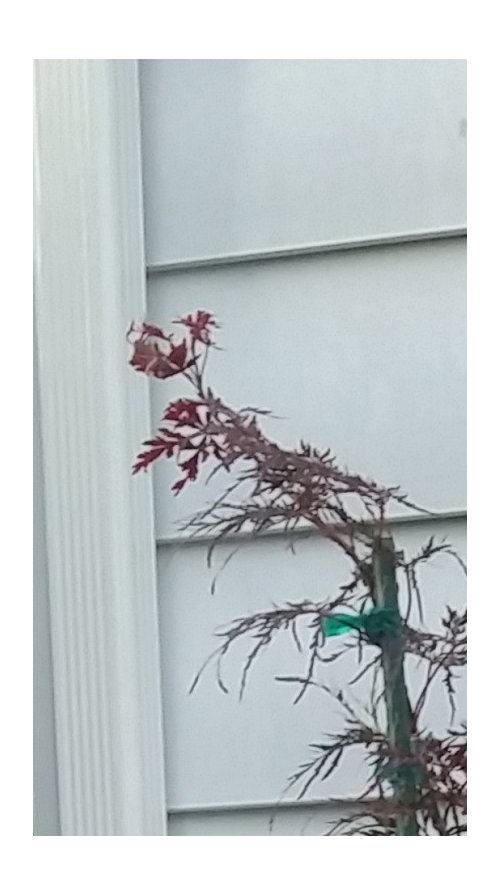
Wondering how JM's react to summer pruning. I know some plants, like a jade plant...if you want a branch to split into two more branches, you simply prune back to a node, and 95% of the time, it will grow two branches there. Are JM's the same? Right now on one of my weeping JM's, there is a small branch, with nut much diameter to it...would barely call it a branch, maybe 1/8" dia. obviously very bendable..anyways it's put on growth like the crazy..like probably 8 inches in the last month. It's very whippy and leggy, and it is just sagging down from the weight of leaves. If I cut it, while it is actively growing, what will happen? Will it branch out then? Or what? I mean I assume after you cut it, that energy has to go somewhere, no? Here is a pic of what I'm talking about, although this is like 3 weeks old, before the branch got alot longer..., now it just drapes over because it is too heavy.


Thanks! So basically, my question is, when cutting new growth while it is actively growing, will it "Y" out? haha.

Comments (21)

  • 11 years ago

    Anyone know the answer to this ?

  • 11 years ago

    Usually, no.

    I prune weeping Japanese maples whenever I have a pair of secateurs with me, no matter the season, but normally not cut the end of a branch or cut it in half unless I want it to grow in a certain direction, usually up. Most pruning involves removing the whole branch. It simplifies things.

    Mike

  • 11 years ago

    Acer buds occur in opposite pairs. Pinching or pruning out the main branch distal to a pair of leaves or buds terminates extension of that branch and can result in the activation up to 6 new latent buds erupting from each distal leaf axil ..... which means up to 12 branches originating from the same point is a possibility, though that's the extreme. Almost always though, you can expect 4-8 branches from the distal bud/leaf pair on a truncated branch. This is why most people won't prune maples unless removing an entire branch. The cluster of branches proximal to a branch truncation creates unsightly congestion as well as an ugly swelling at the base of the cluster.

    If you DO want to truncate branches on maples or prune directionally, it can be done, but it's important to keep up with the surgery it requires to keep things orderly. As a bonsai practitioner, I've altered dental tools (pics) to allow me to handily remove clusters of unwanted buds and new branches so the tree develops in a way that makes it virtually impossible to detect the fact there was any branch terminating brought to play in shaping the tree. For those of you growing Acer in pots who want to keep their trees full and compact, learning how to effectively pinch maples is invaluable.


    Al

  • 11 years ago

    Thank you for that info! So in layman's terms, if I would do as I said and cut that long branch back a few inches, I could expect at least 4 new "stems" to come out from that point? Thanks..

  • 11 years ago

    When you cut off a branch in the middle, the first remaining pair of leaves will usually produce 2 or more new branches from latent buds in EACH leaf axil. Since there are 2 leaves or buds in the pair, you could have up to 12 branches growing from that terminus. To keep your tree looking prime, use a tool to rub off all but 1 branch from each side of the main axis as they form. If the main axis wasn't terminated, you have a trifurcation where 2 branches grow off the living main stem from each side (like a pitchfork). If you terminate the main branch, you want a bifurcation (sling shot, or Y). Bifurcations are much preferred to trifurcations (Ys are better than pitchforks).

    I prune maples back to a single pair of buds on every branch in the spring. as soon as the first leaves form, I immediately pinch out the center. If more than 1 branch forms from either side of the main branch, I rub off all but I branch on each side. As the new order of branches begins to extend, I pinch out the center after the first pair of leaves form on the next order. I also might completely defoliate a JM up to 3 times in a season to reduce the amount of energy the tree has to shoot out those branches with 12" internodes that quickly spoil trees. I often partially defoliate by removing the trees largest leaves or leaves on the strongest branches to keep the tree's energy flow balanced and let light and air movement into the center of the tree to stimulate adventitious bud formation.

    Learning to effectively manipulate trees and control/direct their energy flow adds a whole new dimension to growing .... and what's available in terms of personal satisfaction.

    Al

  • 11 years ago

    Al, do you have any suggestions on where to learn good technique? Books, videos, blogs... I'd like to learn more.

  • 11 years ago

    Same here. It seems very complicated to read but a video/visual would seem to make a lot more sense.

  • 11 years ago

    +1 for what they said!

  • 11 years ago

    I thought it was explained fairly well.

    A video would be better, of course.

    Mike

  • 11 years ago

    I looked through the first 5 pages of videos on pruning maples on YouTube and didn't really see anything I could recommend. I checked my library & found a book by bonsai practitioner Peter Adams called SHAPING MAPLES - Successful Bonsai Techniques. ISBN # 978-1-60402-397-8. It's a 100 page paperback, so it should be cheap if you can find it. It covers the basics. Don't be put off by the word "bonsai". Bonsai guys who know their stuff can transform trees in ways people not exposed to the essence of bonsai wouldn't believe if you told them it was possible. A variety of bonsai techniques are WIDELY applicable to plants growing in containers, whether the plant is treated as a bonsai or not. Many growers over at Houseplants are using techniques I introduced them to as a regular part of maintaining anything they grow indoors that's woody, + many things that aren't woody. Essential to long term maintenance of maples in containers is a good working knowledge of soils, root work, and the type of pruning I described - all basic bonsai precepts.

    The book is out of stock here:

    http://www.dallasbonsai.com/product-p/shaping-maples-successful-bonsai-techniques-by-peter-adams-b215.htm

    but you might find it on eBay or through a used book seller if interested.

    Al

  • 11 years ago

    Thanks Al.. Can't some bonsai /pruning material and knowledge be applied to maples growing outside in the ground as well - such as mine and the original question I had?

  • 11 years ago

    Oh sure. Almost everything I've learned about plant physiology and related plant sciences is a direct outgrowth of my continued quest for improved proficiency in the art. I often explain that one of the reasons I love bonsai so much is, as long as there are trees around in the landscape, I can never be bored - because the minute I start to feel ennui creeping up on me, I start to dissect every tree I see, no matter its size, looking for the trunk line, or style it would want to be as a bonsai, what its fatal artistic flaws might be ..... Nurturing plants is a big part of my life. I have somewhere just south of 200 trees in pots, plus all the nonwoody material I grow. The art is so ingrained in me that I couldn't begin to draw any sort of line between what I would consider "bonsai practices" and what I consider normal care. To me, the degree to which you become proficient at bonsai adds layer after layer of techniques that are extremely useful to all sorts of horticultural applications but not widely understood or taught except in the bonsai community.

    For instance, if I told you I could take a branch from one side of a tree and move it 180* to the other side in a casual forum conversation, you would likely be skeptical, until I explained how its done - then you would say, "Oh yeah - I can see that happening". There are actually 2 ways to do it. So yes - what you learn in any forays into the realm of bonsai will serve you very well in a wide variety of ways related to growing practically anything.

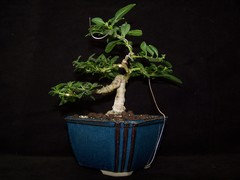
    ..... know what this youngster is?

    Al

  • 11 years ago

    Just a WAG, Japanese Holly?

    Mike

  • 11 years ago

    OMG!! Who woulda thought!! A bonsai'd snapdragon!! Very clever, Al :-))

    I though it looked rather azalea-like - never think of non-woody plants for bonsai but I guess Antirrhinum do develop a semi-woody structure in time. Mine from last season seem to have developed a quite woody base.........


  • 11 years ago

    I would have never guessed that! Never, never.

    Good one, Al.

    Mike

  • 11 years ago

    Thank you for the book recommendation, Al. I appreciate it.

    It looks like Peter Adams has several bonsai technique books in or out of print. Are there others you have and think would be helpful?

    This one is still in print: http://www.amazon.com/Bonsai-Japanese-Maples-Peter-Adams/dp/0881928097/ref=sr_1_1?ie=UTF8&qid=1437885780&sr=8-1&keywords=Peter+Adams

  • 11 years ago

    I have that book as well. I'll give it another look and let you know. It's late here in MI & past my bedtime. ;-)

    Al

  • 11 years ago

    Al,hope I'm not hi-jacking this thread but seeing as it's currently got your attention,may I ask a question?
    What is the best way to ramify(?)a japanese maple purely for propagation?
    I know if you cut back to a pair of buds in spring,you'll get two vigorous branches.When can I cut these two back again to produce four branches and so on.I know if you cut out the growing tip it's too early and will usually terminate growth for that year.Should I wait for two or more successive leaf pairs to appear or even until they mature and have 2ndary buds?or can it only be done once a season?
    Appreciate any advice you can give :)

  • 11 years ago

    Maggie - I guess I don't have the book. I looked at the cover and thought I had it because the cover so closely resembles that of another author's book (Greg Vertrees). Peter Adams is well known for his ability to work maples, and the book looks like it should be much more comprehensive than the one I have, so I doubt you'd go wrong in acquiring it. It should go into a good deal of information on how to manage the canopy so it stays full and true to the tree.

    Houzi - am I to understand you want to maximize the number of cuttings you can take from one tree? Are you going to bury 2 nodes & leave 1 pair of leaves or take dormant cuttings?

    If you pinch out the center, it terminates THAT branch, but you'll get the next order of new branching from the leaf axils of the foliage behind the pinch. If you pinch those too, you can generate up to 10 successive orders of branches on trees like acer p 'mikawa yatsubusa'. I'm working one of those now and can't keep up with it unless I have it on the turntable every week - and I'm defoliating it like crazzy to slow it down and so I can see what I'm doing to even work it. I think all but the most lethargic trees should produce several orders of branches every growth cycle if you pinch. Maybe I didn't understand your question, but, if a bud breaks in spring and pushes a branch with 2 leaves and a center leader and you pinch out the center, it's not the end of the line for ANY extension. If you call the new branch a 2nd order branch, branches or buds that grow from that branch represent the 3rd order. If after you pinch out the center of the 2nd order and the 3rd order branches are growing and extending, on some trees they might generate up to a dozen pairs (or more) of 3rd order dormant buds in new leaf axils, but the internodes could be ugly long. Instead of allowing so many 3rd order leaves/dormant buds to form, pinch the center out of the first set of 3rd order branches so the 4th order forms. The sooner you pinch, the tighter the internodes are. I often use a set of tweezers to separate the newly forming leaves so I can get at the leader to pinch. You can't pinch too soon if you're after ramification. The more nodes, the smaller the leaves become AND the shorter all new internodes will become. Your tree can actually get to the point there are soo many growing apices to channel energy to that all get a very small portion - this = small leaves, very short internodes, and no need to manage for internode length - pruning only.

    Is anyone interested in starting a thread that deals with managing the canopy to keep your trees in shape? I'll answer whatever I can. Maples aren't the easiest trees to manage, for sure.

    Al

  • 11 years ago

    Thankyou so much for your time Al.Yes I wish to maximize the no. of scions I can take for grafting.It sounds like much of what you say applies to bonsai and keeping it all small and tight,am I correct? I need to produce reasonably vigorous growth with preferably not too short internodes.So am I right in thinking I'll need to find a good balance regarding how often/quickly to pinch back...ie perhaps not as quickly as you would,especially for the final pinch? It's good to know it can be done several times a season.
    Thanks again Al,...oh and if you start that thread you'll probably be spending even more of your valuable time on here,I'm sure it would be a popular subject.

Sponsored
Top Choice for Reliable Tile & Stone | Franklin County, Ohio