Software
Houzz Logo Print
willisquirrel

Multiple Questions on Hydrangeas

11 years ago
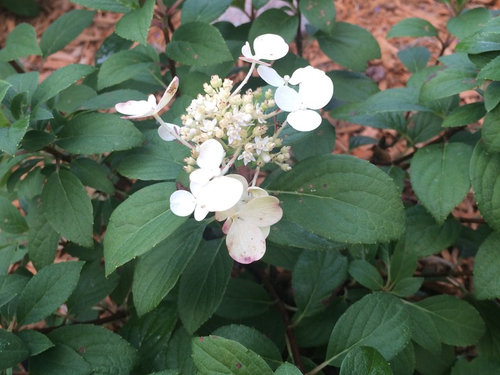
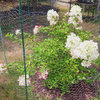
Hello, I'm back w/ more questions about my spring-planted hydrangeas. Hopefully I can attach photos for additional detective work. These are "Little Quick Fire" hydrangea panniculata I'm in zone, and they get mostly sun but a little bit of am and pm sun not much though

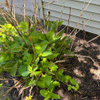
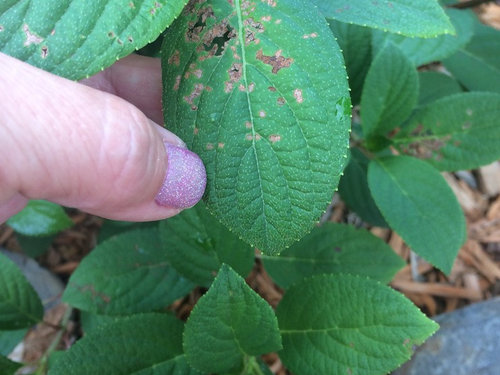
1) The first and foremost question I have involves what kind of pest is attacking them:

2) Is it very common for the first year to be sparse in blooming? Here's a photo of the one bud I finally have coming on one. I have another bud forming on a second but nothing on the third or fourth I just hope it's the youth of the plants?


3) In addition to these hydrangeas, I have two endless summer plants that usually bloom nice (although not as many as I'd like), but those are real sparse in flowering this year. I've done nothing different w/ them this year.

4) My limelight tree hydrangea that I planted last year has profuse buds on it although I wonder if that seems a bit late in the seasoon.

I have been using Miracle Grow Bloom Booster every 3-4 weeks since they were planted.

Thanks for any advice you might give me. You all are so helpful!


Comments (5)

  • 11 years ago

    Looks like Japanese beetle damage (not a big deal).

    Most everyone (east coast at least) experienced two bad winters - late spring frosts that did a lot of harm to Macrophyllas. If we have another bad year next year, I am about to dig up the big leaf hydrangeas up and toss them.

    Limelight (paniculata type) blooms later than the rest. Don't know where you live but Limelight in GA/TN have been in full bloom for at least a couple of weeks now.

    willisquirrel thanked hc mcdole
  • 11 years ago
    last modified: 11 years ago

    Feel free to catch the culprit(s) by checking the plant at random time intervals, including daytime for Japanese Beetles and at night when other nocturnal pests munch. But see the link below for pictures of JB damage:

    http://www.missouribotanicalgarden.org/gardens-gardening/your-garden/help-for-the-home-gardener/advice-tips-resources/pests-and-problems/insects/beetles/japanese-beetle.aspx

    Little QF, like the regular QF, is an early bloomer but, on a new shrub's first year, all bets are off since it depends on what the wholesaler did to the plants. Sometimes they bloom sparsely, other times they do not bloom and other times they are stupenduous. So. I guess what I am saying that as long as the plant looks fine now, ignore bloomage this year and let it work on the root system, which is more important during winter and for the future.

    Like hcmcdole said, winter could have affected the ESs. For example, their first Spring show of flowers is usually their best of the year so if they lost some flower buds during winter, this year would have a poor display. The second set of blooms (ot third depending where you live) would not be affected by winter. I had many mopheads, lacecaps and oakleaf hydrangeas that did not bloom at all and others that bloomed great.

    I suspect you are in the northern states because my Little Lime had blooms back in late May that opened in early June. Down here, that is normal but, the further one goes north, the later they bloom. Anytime in July-August would be ok if you are up north. Make a note of these times in a wall calendar so you remember when the happy occasion took place as this changes every year based on weather issues.

    I prefer to use either a general purpose, slow-release, chemical fertilizers like Osmocote 10-10-10 or 1/2 to 1 cup of either cottonseed meal, composted manure or organic compost as a fertilizer. In the north, you can apply it in the Spring for the whole year. You can also use weak fertilizers like coffee grounds, liquid seaweed and liquid fish as these have many minor minerals. But stop all fertilizing by the end of June so the plant will go dormant in the Fall as it is supposed to. The only thing I would add in late summer or Fall is acidifying amendments -if needed- or more mulch.

  • 11 years ago

    Wow, thank you both for the insight - I KNEW I came to the right place! I live in Wisconsin so definitely north. It's reassuring to know I shouldn't worry too much about the blooms.


    Japanese beetles can be found on my plants in the back, not too terribly many, but I haven't seen those up front where these are. I do note that I've seen these little black shiny bugs hanging out, maybe 2or 3 on each plant at times but I've no idea what they are.

    I didn't know that about not feeding the plants after June so thanks for that as well!

    I'll take all the advice I can get on these - I just LOVE hydrangeas! :)

  • 11 years ago
    last modified: 11 years ago

    Please add your zone and state so people can answer your questions with relevant information

    From NHbabs

    "Go to

    1) Your Houzz in the upper right corner of your screen

    2) edit your profile in the upper right

    3a) under Profile Information I have for my First name (publicly displayed): NHBabs

    3b) under Profile Information I have for my Last name (publicly displayed): z4b-5a NH"

  • 11 years ago
    last modified: 11 years ago

    Houzz added back the option for climate zone for Garden Web not long after the change.

    Hover cursor over My Houzz at top right. Click on Edit Profile. Go to Advanced Settings (located on the left).

    Scroll down to Climate zone and type your own in the box. Adding the state as well as the zone can be helpful, i.e. Louisiana Z8 will not be comparable to my PNW Z8. Click Update to set the preferences. Your zone will then show in parenthesis after your screen name.