Software
Houzz Logo Print
brigarif

What is wrong

11 years ago
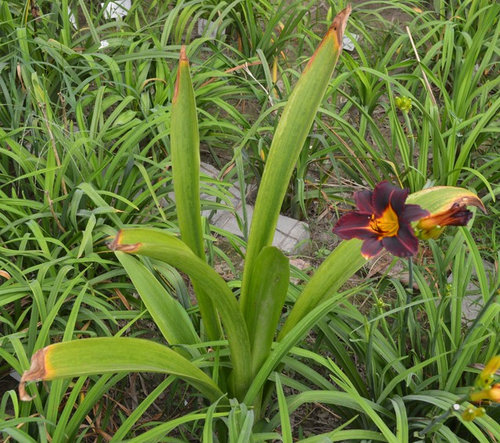
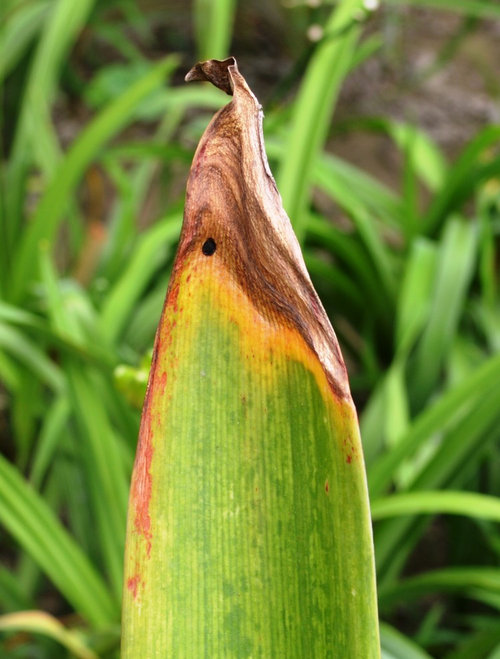
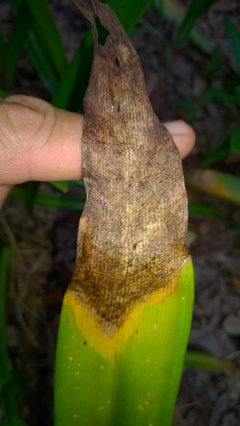
Why the leaf tips of this lone Amaryllis in Daylily bed are burning although the summer this year is mild and rains quite frequent,


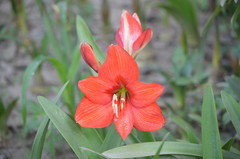
When in flower

Arif

Comments (22)

  • 11 years ago
    last modified: 11 years ago

    This looks like "over-fertilization" to me. The same symptom can be provoked by watering with an overdose of Dimethoate. Either ingredient, whether Insecticide or some compound of the nutrient mix, is transported acropetally, which simply means "towards the tips", and they will cause "burns" if the concentration is too high.

  • 11 years ago

    wow....great answer Hans-Werner. Since this is the lone Hippeastrum in the bed, it is more sensitive than the daylilies. Makes much sense to me.

  • 11 years ago

    Hats off to Guru gi, Hans-Werner That is exactly what I thought. Keeping in view the leeching effect of rains I over fertilised the bed.

    Kristi, Yes I have over a hundred plants of Daylilies and would be sorting, grouping and re-planting them this October.l

  • 11 years ago

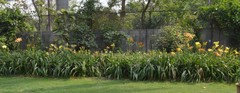
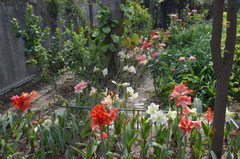
    For Kristi, My Daylily bed,


  • 11 years ago

    They are gorgeous! How long have you been growing them Arif?

  • 11 years ago

    First seedlings were planted 4 years ago and new seedlings added every year.

  • 11 years ago

    The symptoms on your amaryllis, i.e. leaf tip burn, are often associated with too much sun. Happens to those of mine that are in mostly sunny areas all the time. Aside from that you have obvious Hippeastrum mosaic virus, which may contribute an overall lack of vigor...

  • 11 years ago
    last modified: 11 years ago

    With all due respect, sun burn on hippeastrum leaves does not only look differentially, it looks actually characteristically-for-sunburn. It comprises of more or less ovally or irregularly shaped areas anywhere on the surface of the leaves, which will look as if bleached, with some diffused reddish spots on these whitened areas. As regards the mosaic symptoms, it is fair to say that Arif has mosaic virus throughout his collection, and he is brave enough, to not care about what cannot be reversed any more, and his Hippeastrums exhibit the symptoms conspicuously for the reason, that they have to thrive under very hot ambient temperatures in Pakistan.

  • 11 years ago

    Purist will probably shoot me, but I have never seen HMV do any damage to a bulb other than discolor the leaves. The bulbs grow just like the uninfected ones and bloom just a well. The virus is not transmitted via the seeds so you can use them in your breeding program. I think that we will have to accept the HMV as a fact of life until someone comes up with the cure. I have my Komoriya collection purchased this year separated from all the other amaryllis and yet some of their bulbs are showing signs of the virus. I don't think that anyone is immune to it and to destroy a collection that has taken years to acquire because of it is in my opinion overkill. As I said, purists will probably take issue with me, but thirty years of experience has taught me to accept what I cannot change and really other than the discoloration of the leaves does no damage.

    The virus is actually prized in other plants. The plumerias with the virus show streaked blooms and are highly prized for this effect.

    Maida

  • 11 years ago

    Ray, you are absolutely correct, when I consulted with Dr. Bill Zettler, a friend and preeminent virologist (retired) with experience with HMV (it's actually a two virus combination potivirus) here at UF, he said the same, that it probably caused a slight reduction in vigor, but for practical purposes didn't really affect the performance... And of course we all know the story of virused tulips, infected bulbs with the color break fetched fortunes... Concerning the comment by haweha about sun damage on amaryllis, you don't always get the scalded bleached "look", many times tip burn is caused by too much sun, found this out in the 70's when Lex Ritter from Coral Gables shipped a bunch of bulbs from Florida to Honduras and gave them to my dad, we planted them in the full sun, big mistake. I'll go take a look at some of my own that are in the sun and take a picture, but trees have grown larger and I may not have any showing the symptoms... Just looked, I do, I'll try to post a picture. Btw, I'm rooting some award winning "Bobby Fain" variegated camellia cuttings as we speak, you guessed it, they are virused yet considered beautiful and in demand.... I'm also propagating variegated Rhapis palms, my opinion is that the varigation on those is for the most part chimera, however I have seen some Japanese clones that appear to be infected.

  • 11 years ago

    Btw, there exists a method to rid HMV from bulbs. The apical meristem is where cell division takes place, those cells are not infected! So by heating the bulb to increase cell division, and then excising the growing tip and placing it in tissue culture, it is possible to generate a clean bulb from an infected one. I considered doing this to a unique hot pink clone I named "Incredible" some 20 years ago, but never got around to it. Just repotted one of my three remaining Incredible clones yesterday, I keep them separate and use the pollen... And correct you are, of the of the perhaps 350,000 seedlings I have produced, I cannot confirm a single seed transmitted case, though I have suspected it with a few of the miniatures.

  • 11 years ago


    hawea, here is the picture I just took showing what I'm calling sun damage. Looks awfully similar to the pics above... There is only one small area in the center of one bed that gets too much sun and maybe only 20 or 30 bulbs in this spot have this kind of damage. Btw, I've never seen tip burn caused by over fertilization on Hippeastrum, (and I've poured it on 'em) though you are correct, it is common on many other plants that exude excess fluid through the hydatodes...

  • 11 years ago

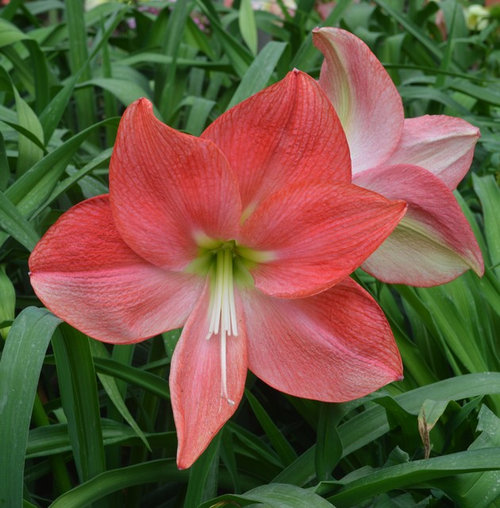
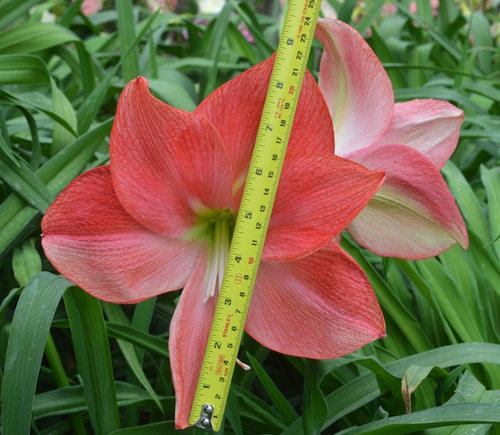
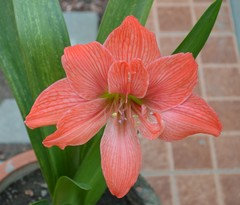
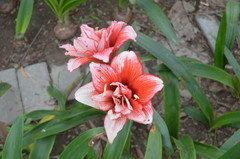
    HMV buried deep in this forum has emerged again. Hans-Warner is right I do not have a bulb which does not have these markings on leaves(and I have them in thousands). This seedling bloomed for the first time and has a 9 inches flower.

    Regarding the tip burning, yes it is more prominent in those exposed to full sun perhaps due to faster water evaporation leading to higher concentration.


    We are happy with each other HMV does not bother me and I am not worried.

    Arif

  • 11 years ago

    Yes, I saw the leaf damage due to excessive drug called fertilizer Kemira .

  • 11 years ago

    What we need is to have the breeders to help eliminate the disease. We know that papilio is resistant to HMV and seems to pass that resistance to its offspring. We don't know how many generations that immunity is good for. Other species may also have immunity. I all fairness to Komoriya Nursery, the variety that is virused was not breed by them just sold by them. But that means that theirs are exposed to it. As most of theirs seem to be only one or two generations away from species, they might be resistant. .I have Madame Butterfly that is out of papilio several places in the garden and have had her for ten years and never had a single problem with her, so it can be done. We just need to make the breeders aware of the problem and have them do something about it. We can do our share by using the varieties that seem to be immune in our breeding and posting the results to this board.

    Maida

  • 11 years ago

    Ray, back in 1985, I found out about the incredible amaryllis collection that Dr Lorz had amassed, and was able to move out here when Dr David Bell, who was breeding mainly amaryllis specie type diploids, moved out of a small mobile home. At the time HMV was fairly rampant in the collection, but over the years I have rouged hundreds if not thousands of virused plants, and have a good feel for rate of transmission, which is low. If allowed to slowly spread unchecked, the rate of transmission increases at an increasing rate, and to nearby plants and those along the bed borders first. I consider it unacceptable to sell plants with virus and toward that end I've greatly reduced HMV, just last week I found a foci that had been left unchecked for a few years and rouged every symptomatic plant. What I need to do is hire some labor to rip up all the bulbs in the old abandoned beds, undoubtedly this is the source. H. papillio is definitely not immune, I have discarded a few double papillio's due to virus. Wayside Gardens sold H. papillio and selfing over years began to yield varying degrees of doubles in the population. It is a great species to cross with, it has good vigor, and is very early. My only complaint is that the flowers from the offspring tend to be of average size, though I'm sure the right combination of genes can yield large flowers on vigorous early plants, I have a few.

  • 11 years ago

    A few other observations on HMV and H. papillio. Obviously the more vectors, in this case aphids, the more rapid the spread.

    Also, when breeding with H. papillio, the scapes tend to be substantial, heavy, and not very short, and the number of flowers per scape lower. Since they bloom earliest for me, they also run the risk of being burned by a late frost.

  • 11 years ago

    Yeah, the propensity to theorizing - it's easy! But first, in most cases, the exact origin of the varieties we have not served. Secondly, known case of serious damage to varieties with alleged involvement hippeastrum papillio.Third, the majority of my existing varieties of Dutch selection have healthy.

  • 11 years ago

    Arif, you have a nice collection, and from the pictures they look good! In what part of Pakistan are you located, my father, Dr Gene Ostmark, was chief of party there on a AID funded reforestation project in the 90's... Regards, Eric

  • 11 years ago

    I am located at Lahore, The great work of reforestation was carried out over the mountains in the north.

  • 11 years ago

    Very interesting, my parents had a wonderful time in your fine country!

Sponsored
Peabody Landscape Group
Average rating: 3.5 out of 5 stars8 Reviews
Columbus' Reliable Landscape Design & Contracting