Software
Houzz Logo Print
zorsyte

Enless Trouble

11 years ago
Hello,

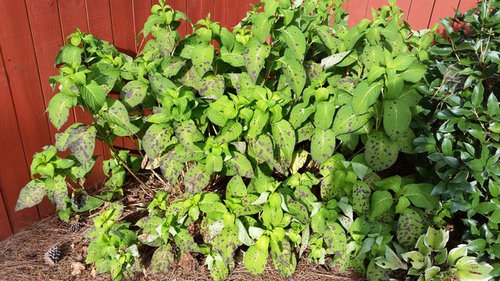
These hydrangeas are about six years old and never really bloomed (three clusters MAX, across four plants). I kept them for the foliage but last year these horrid black spots showed up. They didn't respond to neem oil or Captain Jacks so I cut them to the ground and hoped they'd return. This spring they flushed out again and I was okay with no blooms after the big chop. Now the horrid spots have returned and I don't know what they are or why they're back.

Please help me, I don't want to chop them down again unless they will thrive.

Comments (7)

  • 11 years ago

    PS: Photo was taken late afternoon, thus the wilting leaves. They are up in the morning but afternoon temps in Atlanta can be hot. They're also getting dappled shade from a large pine tree about 15 feet away.

  • 11 years ago

    Thanks for the advice Luis!

    They're in a pretty out of the way spot in the yard (corner of the fence and I don't think I have a more shady spot unless I move them to the front of the fence alongside the house; however, I don't think my neighbors would be thrilled with the view.

    If I understand you correctly:

    - This fungus is in the soil, so not going away even with the best fungicides.

    - The sprinkler head was removed from that location so I've been watering with a hose which is just as bad. I may be able to run a drip line on the ground.

    - There's a creek behind the house and copperheads visit the yard occasionally. I'd prefer not to reach into the thicket to remove dead leaves which sounds unavoidable.

    Given the above conditions would you agree that it's best to pull the plants out entirely and try something different in that area? Or will the soil just keep transferring the fungus to any new plants?

  • 11 years ago

    In my area, cercospora tends to only be a problem on nursery grown plants. Once they are established in the landscape - provided you avoid the overhead watering routine Luis outlined - it is seldom a concern. In areas with high summer humidity and/or heavy rainfall, it may well be more of an issue. The disease itself is not particularly harmful to the plant but a heavy infestation can result in some defoliation and loss of vigor.


    Cercospora only overwinters on infected plant debris, NOT in the soil itself. So if you clean up all leaves and dispose of them in winter and put down a fresh layer of mulch to smother any potential surface spores, you will be one up on the disease.

    A. Newfool thanked gardengal48 (PNW Z8/9)
  • 11 years ago

    Thank you both for the advice.

    The plants were installed years ago by a landscape company so I'm not sure of their origins.

    I went to a reputable local nursery to buy the recommended fungicides and although they had both Daconil and Mancozeb in stock the staff recommended against using either product due to the advanced state of disease. Their recommendation is just "look away from the ugly mess"; that the plants won't benefit from the chemicals and it would be best to just let them be until they drop their leaves for dormancy then clean up the mess - mulch and all, and call it good until next year.

    Like any new gardener I want a fix that's quick-n-pretty but I guess it's growing pains and lessons learned : )

  • 11 years ago

    I had hydrangeas (oakleaf and Annabelle) planted by a landscaper this summer and have the same leaf spot problem.


    Pretty disappointing considering what I paid for them.

  • 11 years ago
    last modified: 11 years ago

    I would never plant anything in the summer but that is because it gets so hot here. After the first few tries, I learned my lesson and quit trying to plant anything here once June arrives.

0