Software
Houzz Logo Print
ryan_blackman48

Citrus Trees - Very Sick

11 years ago
last modified: 11 years ago
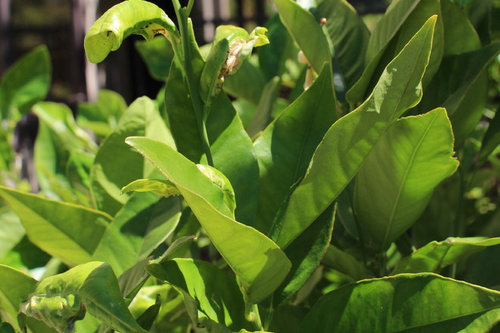
I moved into a new house about 6 months ago that came with about 7 citrus trees.

The trees weren't in the best shape - I bought the house of bankruptcy so there was a lot of neglect.

I drove a few fertilizer spikes into the ground but I didn't help much.

Recently, it occurred to me that it could be a pH problem. We live in the Malibu mountains and the soil is mostly decomposed granite - it's very alkaline. After testing the soil, it was indeed - about 7.8.

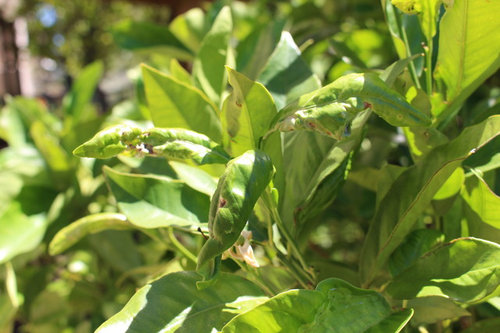
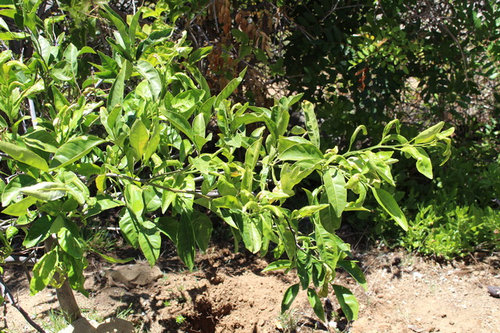
I added some Sulfur acidifier and it brought the pH down to about 7.0 but the trees started to get worse. All new growth is malformed, old growth is yellow. The trees are fruiting for the first time however.

Some more info:

The trees are in full sun all day.
The trees are on a steep grade
Around the time I corrected the pH, I discovered that they weren't getting full water.
Because of the slope, the trees are watered automatically a few minutes daily.

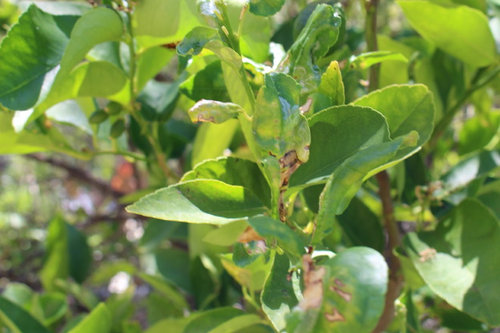
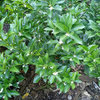
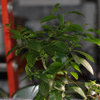
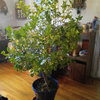
See the enclosed pictures and let me know what I should do.

Comments (6)

  • 11 years ago

    I think the trees look decent actually. The crinkled leaves are indeed citrus leaf miners and possibly Asian citrus psyllid as well. The leaf miners do cosmetic damage. You can control them with spinosad as Humsi mentioned. I don't bother on mine. For Asian citrus psyllid, you might want to use a systemic with imidocloporid as the active ingredient. The tiny moth itself doesn't hurt the tree badly but it is a vector for a pretty nasty disease called citrus greening that has just started cropping up in LA. It's nymphs will also suck on the tender branch tips and make a mess.

    Directly after harvesting the last of the fruit, start pruning any dead wood then criss crossing branches out of the canopy. You will only have a small window between the last oranges and bloom time. You can prune most times during the year but you run the risk of pruning off foliage with fruit on them.

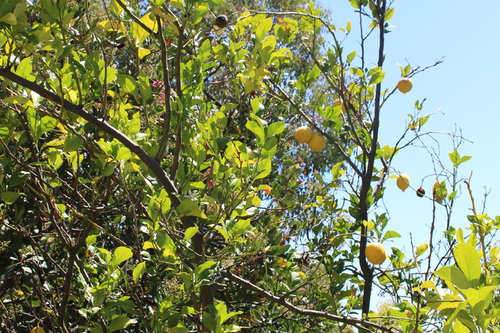
    When were these pictures taken? The second to last pic appears to be a kumquat.

  • 11 years ago

    I took these today.


    It could be, I've only seen 3 of the 7 fruit so I'm not sure what they are. Probably grapefruit and lime.


    That leaf cupping just looks horrible. The leaves are so papery.
    I should have also included a picture of the spotting. Some of the leaves look like they're rusting. Is that also from the pest?

  • 11 years ago

    I'm not sure what the rusting is. It could just be sun damage or it could be insect or even fungus. A pic may help.

    My oranges bloomed and the fruit are the size of tennis balls but my kumquat has just finished blooming last month and set small green kumquats that range from pea size to grape size, hence the reason I think your one tree may be a kumquat.

  • 11 years ago

    I only know that you are never ever supposed to use fertilizer spikes on citrus trees. They burn the roots they are near and don't spread far enough in the soil to fertilize any of the other roots.

  • 11 years ago

    Yes, don't bother with the spikes. Any granular fertilizer should be applied right where the irrigation water is being applied, otherwise it won't be dissolved and get to the roots. Liquid fertilizer can be applied all around the drip-line (that's where the leaves end outwards, and the area inside that). Use a Citrus fert.

    I agree with the folks above on the insects and watering. I'd also strongly suggest using a systemic imidocloprid, Bayer's Fruit, Citrus and Vegetable Insect Control is a good one and readily available in any good Garden Center. The LA area has the confirmed sightings of the Asian Citrus Psyllid which can carry a disease called Citrus Greening that can kill the tree and is a big threat to the citrus growers down there. So far, the A.C. Pysllid in California hasn't been infected with Citrus Greening but it's very important to stop and control the Pysilids at this point so it doesn't spread further.

    I wouldn't worry about the pH really. It's tough to change the soil pH for any length of time anyway especially as our water is often on the higher pH side. 7.5 isn't really that high for citrus, they can tolerate that just fine. One thing you can do which will also benefit the soil is to add a good 4-5" layer of compost around the drip-line, keep it at least 6-8" from the trunk though. It will keep the soil cool in the summer, will add humus and some nutrients to the soil and will improve the structure of the soil over time. The compost will slowly decompose and thin out over each year, this is normal and good. So you will have to add more each spring. Your trees will love you for it!

    I really think your yellowing is lack of food. Get a good citrus fertilizer, not spikes, and feed them according to the label instructions. Check the watering situation, (more at each time, added slower, and let dry a little between waterings), add the compost, feed them regularly, treat for the insects and by this time next year your trees should look great!