Software
Houzz Logo Print
atacedra

Cedrus libani ssp.?

11 years ago

Hi!

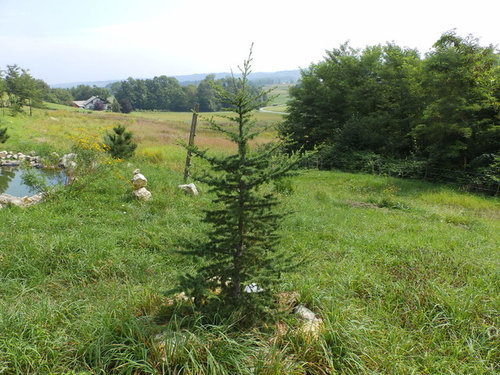
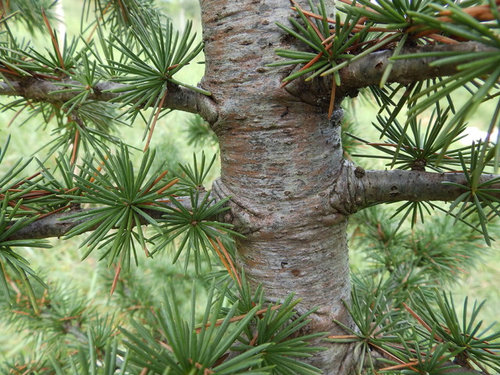
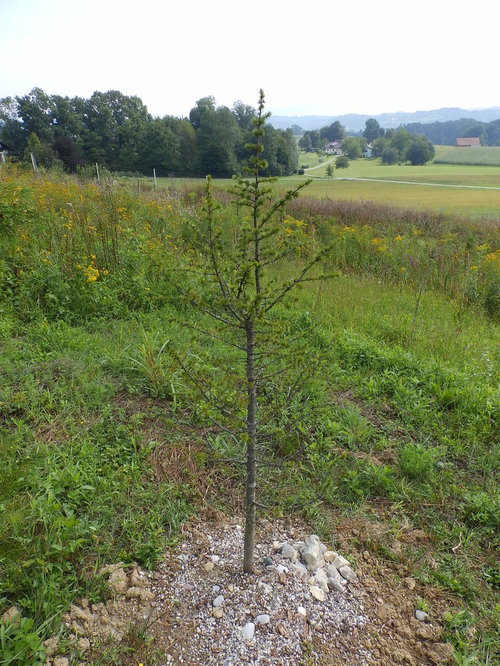
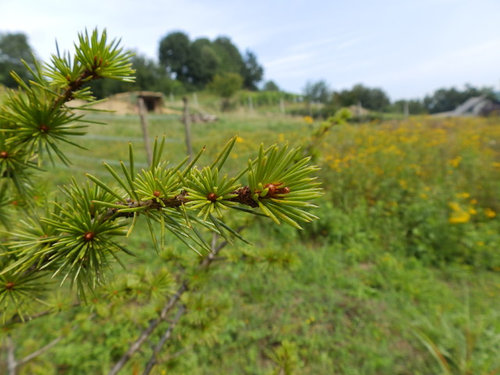
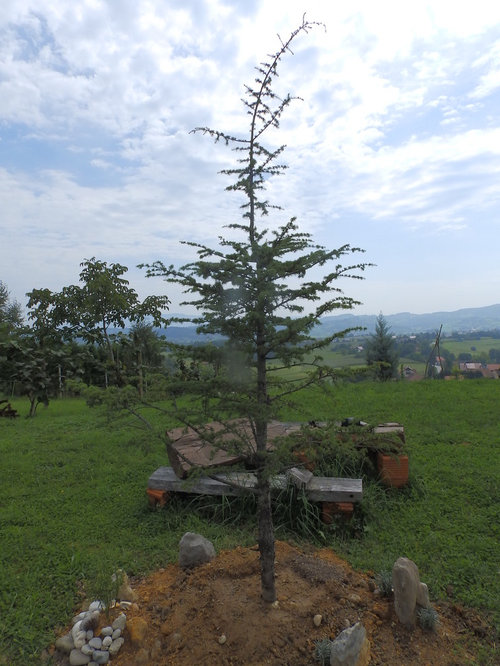
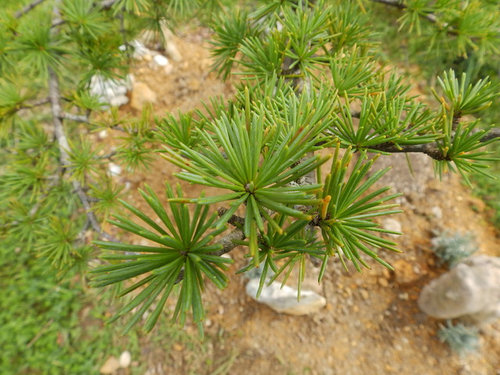
Come upon some Cedars that could use some serious identification. They leave me in the dark with needle length, bark coloration etc. There seems to be so much overlaping... So the first one was labeled as Cedrus atlantica (from tree nurserie), the second one as Cedrus libani (a collegue raised it from seed), the third one comes from abandoned nurserie and was therefore not labeled. Hope to provide you all with worthwhile photographs. (whole tree then detail)

Please share your opinion i'm all ears.

thanks

dm


C. l. atlantica


C. l. libani


C. libani ssp.


Comments (2)

  • 11 years ago
    last modified: 11 years ago

    Yes, to an extent the Mediterranean cedars tend to blend together. Perhaps one of the more consistent characters is ssp. brevifolia and ssp. libani having stiff needles with sharp clear spines on the end, with ssp. atlantica not being nearly as cactus-like when touched.

    That said, since Cyprus cedar has short needles and is located farther west it may not always be as different in this respect as Cedar-of-Lebanon is - I don't know that I have ever tested this with the small number of known ssp. brevifolia trees seen here. (And then there is the matter of Turkish cedars supposing to be intermediate between Lebanese and Atlas cedars!). The two types that really separate out are Himalayan cedar and Mediterranean cedar, with the commonality within the Mediterranean populations presumably being a basis for reducing the elements within them to ssp. ranking.

    Also it is suspected cultivated stock has become mixed in at least some instances, with hybrid seedlings having been raised and planted. When you bring together wind pollinated trees that are probably closely related there can be a lot of funny business, for instance seed of Asian birches gathered from western gardens and arboreta is often pretty consistently hybrid in nature - due to crossing with B. pendula.

  • 11 years ago

    yes i agree things get rather murky even with 'pure' old trees, especially when the 'glauca' factor gets removed and you're in the pool with all green trees. or vice versa when really old Cedrus libani 'glauca' kicks in and really spices the whole thing. i have to admit that C. atlantica green form is really hard to find here. coastal area is dominated with C. deodara, inlands C. atlantica glauca takes its place. C. libani is a rarer find... C. brevifolia nonexistant, i believe.

    that's way i'm really interested where upper trees belong..

    here is a picture of two C. libani young trees growing in arboretum Pivola. their needles are really long - reaching toward deodara territory, and really spiky. and the habit is also of great interest, they must be 5m+

    immossible to be confused with C. atlantica glauca growing near by. (their habit not color!) but the thing is - i read sometime ago - a study on mediterranean cedars and their kinship, i can't remember where i found the text - i would add link - i will if i find it again - the point is that they came to conclusion that C. libani growing on Mt. Lebanon has the shortest needles matched by those that are know as the Cyprus cedars (brevifolia).

    C. libani with C. atlantica glauca on the right


0