Software
Houzz Logo Print
lcdollar

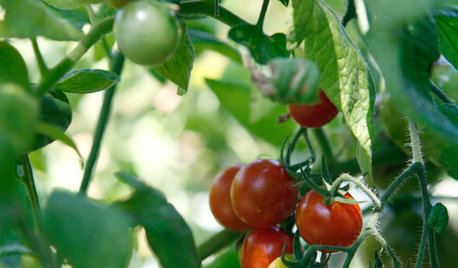
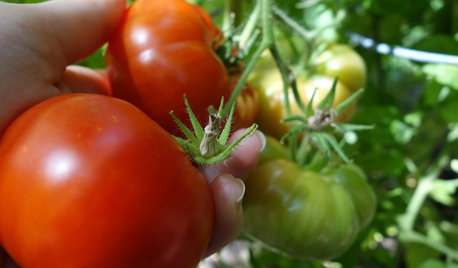
I had a good tomato year

11 years ago

and I also did not have to spray for worms, both the hornworm and the one that bores into the top of the tomato , not once did I do that. Unusual for my garden.


Sooo, I start looking at was different from past years. We did have those big rains in May, but June and July were much like last year , weather wise.


I planted okra this year, first time I've done that in 20 years.


And this was the first year I've planted zinnias and marigolds in my garden. And I picked those varieties purely by accident. Bought six different flowering plant seed packets, and they were the only ones that came up from seed.


I did this to see if attracting pollinators really does help my tomato production. And yes, it does, I had more tomatoes per plant than ever. A bumper crop.


Sooo, did the zennias and marigolds, in some way, keep the worms away also ?

Comments (10)

  • 11 years ago

    Good for you and your bumper crop! I never had an interest in flowers (until I met Lisa) but for pollinators. I got hooked up. I planted marigolds and zinnies for the first time, this year.

  • 11 years ago

    I also had another good year with matoes, primarily because I planted a bunch later than usual and avoided the rain and cool weather that plagued the first bunch. However, some of the varieties I tried out won't be there next year. I also started out trying not to use "wire enclosures" for support and that was a mistake, probably because I'm not there every day to train.

    Hornworms didn't show up until late July due, I guess, to the weather. I just relocated them with some unwanted matoe branches down by the creek, hoping they could finish turning into beautiful moths.

    One thing I have noticed this year is I'm getting too many ripe but small fruits from some of the varieties.

  • 11 years ago

    Congrats on the great harvest.

    I have found that the hornworm, cutworm and tomato worm populations fluctuate a lot. This year, they've been the worst here that they've been in all but one year since we moved here. I don't know why. We were extremely wet and flooded in May and June so maybe that allowed their populations to grow more earlier in the season. They haven't been as much of a problem in the latter half of the summer when we turned very dry.

    Tomatoes self-pollinate and self-fertilize internally within the flower even before the flower blooms, so pollinators aren't even necessary for pollination to occur. However, after the flowers bloom, pollinators can contribute to pollination (or cross-pollination) for any flowers that weren't fully pollinated/fertilized while closed.

    I grow tons of flowers within my veggie garden to attract pollinators and other beneficial insects to the garden, and that generally means I have plenty of the beneficial (and very tiny) wasps that prey upon hornworms. I think that is the reason that hornworms rarely damage my tomatoes even though I have tons and tons of the white-lined sphinx (and other types of sphinx) moths around all my night-blooming flowers every evening. For all the moths we see in the hornworm family, we rarely find a hornworm on a tomato plant. It is likely your zinnias and marigolds helped your plants by attracting the predatory wasps that prey upon hornworms. I'm the odd gardener who grows many night-blooming plants on purpose specifically for the sphinx moths and other night-flying moths because we love all the moths so much. I think I get away with it because other flowers I grow attract enough beneficial insects to keep the caterpillars under control to such an extent that they aren't found on the tomato plants much---some years not at all.

    My tomatoes produced great all summer despite having almost no rain at all for the last 7.5 weeks (0.13" here in that 7.5 weeks), and the tomatoes did get smaller as the summer went on. I spread my planting of tomato plants over a very long period of time. The first 4 rows of plants went into the ground in late March, and from those plants we were harvesting the first fruit by latest April, and heavy loads of fruit from late May through late June. That's when I did much of my canning. I continued putting more plants in the ground through late April or maybe even the first week of May, so those plants were coming on strong in July with heavy loads of fruit after the earlier plants were slowing down. I finished most of my canning by mid-July and then just started freezing or dehydrating the excess tomatoes. My fall tomato plants went into the ground in either latest June or earliest July and are blooming, but it still is too hot here so they're dropping blossoms instead of setting fruit. We're back in drought, so my expectations for a good fall harvest have faded quite a bit.

    I always see my tomato fruit size fall as the season goes on. I think it partly is that the latter half of the growing season is so very dry, and likely also that the plants are devouring nutrients in the soil and may be getting a little underfed as we move into mid- to late-summer. I always mean to feed them in mid-summer, but generally just don't get around to it. I think feeding them well then might keep the fruit size from diminishing if rain is continuing to fall in a good amount (which almost never happens here). Usually by the time the tomato size is falling, we've about overdosed on tomatoes and I just don't care if the fruit are smaller by then.


  • 11 years ago

    Had to be the wasps that took out the catapillars, I had a bunch of them buzzin round the garden.


  • 11 years ago
    last modified: 11 years ago

    The predatory wasps that specifically feed on hornworms are braconid wasps and they look like tiny fly-sized bees. I hardly notice them until I start seeing their white cocoons on the bodies of then-dead hornworms. I'll link a page that has photos of what a hornworm covered in braconid wasp cocoons looks like. This year I saw a cocoon-covered hornworm body fairly early in the season when it was raining a lot and knew then that I wouldn't have to worry all that much about hornworms even though I was seeing a lot of them. Sure enough, as summer went on the hornworm population on the tomato plants just disappeared. We still had lots of tomato fruitworms, but I grow so many plants that losing an occasional tomato to them isn't the end of the world. I just throw the wormy tomato on the compost pile and either it decomposes there or some wild animal finds it at night and eats it.

    Braconid Wasp Cocoons on Hornworm

  • 11 years ago

    Thanks Dawn, maybe this year was an aberration, but I'm gonna plant zinnias and marigolds next year :)

  • 11 years ago

    I was hoping Dawn had a remedy for tomato fruit worm. I have so few tomatoes I resent sharing. I've been spraying some with bt hoping to stop them before they go too far. Then of course there are the army worms. Knock wood, I have seen no horn worms. I do have zinnias, but the marigolds and cosmos have never bloomed! It has been a weird year.

  • 11 years ago

    The remedy is to spray your plants regularly with Bt so the hornworms will ingest it (hopefully by chewing on leaves and stems before they find the tomatoes) and die within the next 24-48 hours. While it takes them a while to die, they stop feeding almost as soon as they ingest the Bt. Bt has a pretty short life when exposed to sunlight, so you do have to spray the plants pretty regularly. The other remedy is to try to plant your tomatoes plants as far as possible from the area where you had tomato plants last year and as far as possible from the area where you grew (or are growing) corn. The caterpillars we call tomato fruitworms when we find them on tomato plants are called corn earworms when we find them on corn plants or in our ears of corn. I try to grow corn in the back garden or the corn cage and tomatoes in the front garden, but this year I put corn in the front garden because only it has raised beds to keep the corn raised above this year's flooded ground.

    I generally don't spray Bt because I love butterflies and moths, and it is toxic to all of them, not just to the caterpillars I don't want eating my plants. I grow many, many plants in my garden specifically for butterflies and moths, including several types of night-bloomers for the sphix moths (who are the moth we get from various hornworms) so it would be extremely counterproductive to then spray any part of the garden with a product that would kill them. So, it is my choice to leave my corn and tomato plants unprotected, and to try to attract braconid wasps so they can prey on the hornworms and fruitworms/corn ear worms. Or course, the predatory type wasps also will feed on other types of caterpillars, including those of my beloved swallowtails (I grow fennel, parsley and dill for them), but that at least is a natural process.....so when they come to my garden, the moths/butterflies are still at risk from natural predators but not from Bt.

    Some years I spray brassica crops with Bt to protect them from cabbage worms but that is so early in spring that's there usually are not any other sort of desirable moths/butterflies out that early, or at least not many of them. It is easier to just cover the brassicas with row cover since they do not need to be left uncovered for pollination to occur. It is harder to cover corn or tomato plants, long-term, to get the fruitworms and hornworms off them due to their large size. I plant so many tomato plants per year (at least 100, down from much larger numbers a decade ago) that I could lose a lot of fruit and not really miss it. If I only planted 10 or 20 plants and still expected to get as many tomatoes as I need to do our annual canning, I'd likely have to spray the plants with Bt in a bad year to ensure a good crop. I almost never have a bad hornworm or fruitworm year----maybe twice in a decade. It just seems like this is one of those bad years though.


  • 11 years ago

    Thanks for the comments. I wish I could check on my veggies every day, but 4 days a week catches a lot. I've pulled up about half of my matoes but the butternut is about ready and the new plantings of collards, carrots and lettuce are coming on despite the heat. But I've had to put up protection from the deer there as well as outside my 8 foot fence which they poke their heads throu to chew on the cowpeas. We'll live.

    Made a mistake planting corn. Tried to keep it from shading the other plantings in the large bed so planted it on the slope west to east. Can't seem to keep the higher ground corn going. Next year - north to south on the same elevation. Learning.

  • 11 years ago
    last modified: 11 years ago

    I hope you don't have to drive too far to check on your veggies. That's a lot of extra time and effort.

    It's been such a odd year. We haven't had rain to speak of in 8 weeks now and all of a sudden grasshoppers are just starting to show up in my garden, which is irrigated and fairly green. The hoppers' timing is odd. Usually they are awful in July and early August, but by late August their population is falling fast....I guess as they age and die. Now, here it is early September and they're just arriving.

    Nothing this year has seemed normal or right. I am hoping for a more typical or average year next year.

Sponsored
Peabody Landscape Group
Average rating: 3.5 out of 5 stars8 Reviews
Franklin County's Reliable Landscape Design & Contracting