Software
Houzz Logo Print
late9sound

How to make my lawn soft

10 years ago
last modified: 10 years ago

My soon to be home on an acre lot currently has very tough dirt with full of bermuda (i think - will post pictures tomorrow ) and weeds. I dont know why the dirt is so hard, maybe due to the lot had been sitting there for years without maintenance or watering. How can i make our lawn soft and easy on the feet so my young kids can run around playing and wont hurt themselves if they fall. Should I put a thin layer of sand on top of the "hard dirt" and use weed killer sprays to get rid of weeds and hoping over time, new grass and, regular watering and soft sand will soften the yard? Or do i neef to completely remove the hard dirt, laying new soils and turrf.

Any suggestion is greatly appreciated.

Comments (15)

  • 10 years ago

    OMG I'm so glad you wrote in before doing anything. You don't have much of a window to do anything this year. When do you move in?

    You are very likely better off picking up a neglected lawn than one that has been overdosed with fertilizers, herbicides, insecticides, and fungicides. The best way to start is to take care of the lawn like it is supposed to be taken care of. I don't really care about the weeds at this point - just make it all green and growing. It often happens that people write in and with one little correction, all their problems go away. So here's the basics of lawn care as I have gathered them from this and other lawn care forums.

    Basics of Lawn Care

    After reading numerous books and magazines on lawn care, caring for lawns at seven houses in my life, and reading numerous forums where real people write in to discuss their successes and failures, I have decided to side with the real people and dispense with the book and magazine authors. I don't know what star their planet rotates around but it's not mine. With that in mind, here is the collected wisdom of the Internet savvy homeowners and lawn care professionals summarized in a few words. If you follow the advice here you will have conquered at least 50% of all lawn problems. Once you have these three elements mastered, then you can worry about weeds (if you have any), dog spots, and striping your lawn. But if you are not doing these three things, they will be the first three things suggested for you to correct.

    1. Watering
    Water deeply and infrequently. Deeply means at least an inch in every zone, all at once. Infrequently means monthly during the cool months and no more than weekly during the hottest part of summer. Do not spread this out and water for 10 minutes every day. If your grass looks dry before the month/week is up, water longer next time. If that does not work, then you might have to water more than once per week during the summer's hottest period. Deep watering grows deep, drought resistant roots. Infrequent watering allows the top layer of soil to dry completely which kills off many shallow rooted weeds.

    You will have to learn to judge when to water your own lawn. If you live in El Paso your watering will be different than if you live in Vermont. Adjust your watering to your type of grass, temperature, humidity, wind, and soil type. It is worth noting that this technique is used successfully by professionals in Phoenix, so...just sayin.' The other factors make a difference. If you normally water 1 inch per week and you get 1/2 inch of rain, then adjust and water only 1/2 inch that week.

    2. Mowing
    Every week mulch mow at the highest setting on your mower. Most grasses are the most dense when mowed tall. However, bermuda, centipede, and bent grasses will become the most dense when they are mowed at the lowest setting on your mower. In fact there are special mowers that can mow these grasses down to 1/16 inch. Dense grass shades out weeds, keeps the soil cooler, and uses less water than thin grass. Tall grass can feed the deep roots you developed in #1 above. Tall grass does not grow faster than short grass nor does it look shaggy sooner. Once all your grass is at the same height, tall grass just looks plush.

    3. Fertilizing
    Fertilize regularly. I fertilize 5 times per year using organic fertilizer. Which fertilizer you use is much less important than numbers 1 and 2 above. Follow the directions on the bag and do not overdo it (unless you use organics in which case you may overdo it without fear of hurting anything).

    At this point you do not have to worry about weed and feed products - remember at this point you are just trying to grow grass, not perfect it. Besides once you are doing these three things correctly, your weed problems should go away without herbicide.


    Back to me, now. This is almost certain to raise other questions. Please feel free to ask away. If, after a few weeks of good care, you still worry about how hard your soil is, please ask. The solution is simply to spray with shampoo, but if you don't need it, then you don't need to do it.

  • 10 years ago
    last modified: 10 years ago

    Thank you so much for giving me these tips and insight. They guestimate that the house will be done end of September or early October this year. I will start out watering the lawn one hour a week to see how that goes - Water will be coming from the well so maybe this is OK? Will cut grass as low as I can as I think Bermuda like it that way. Fertilizer, humm, will have to find organic stuff from Lowes, Home Depots, etc... I sure will report back to you after a month or so to let you know if the lawn still hard. Thank you.

  • 10 years ago

    Wait! Is this new construction? I was thinking you're inheriting someone else's lawn. I'll wait for pictures.

  • 10 years ago
    last modified: 10 years ago

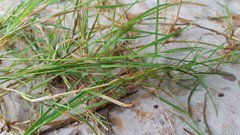
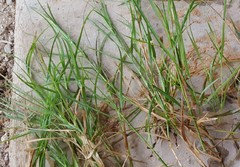
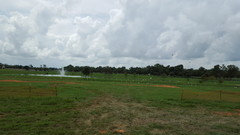
    It's new construction. Here are some pictures of the backyard and the grass - it maybe bermuda or is it weed


  • 10 years ago

    I say lay good Bermuda sod & use less water. If you're on a well, st Augustine will need extra water at the worst times. Bermuda can easily go a few weeks dry & obviously likes your land if it's occurring naturally.

  • 10 years ago

    the green thing in the picture, is that bermuda grass or weeds. 65% of those are on my lot

  • 10 years ago

    Looks like a larger type of bermuda, like a farmer would plant for hay, but it's tough to tell from the pic. If you're in Texas or another southern state, it's a safe bet. What general area is the new house? Obviously we don't need to be too specific...

  • 10 years ago
    last modified: 10 years ago

    The house is in richmond, tx. It's good to know that we already had bermuda....that would save us lot of money to resod. Thanks

  • 10 years ago

    Oh no! Bermuda is not bermuda is not bermuda. If you have coastal bermuda, which is used for hay, that stuff is the antichrist mutation of the normal (weedy) common bermuda. It's not suitable for a turf. At the other end of the scale, the angelic mutation is Tif 419. This is what they sell as bermuda sod. It is one of the best turf grasses you can get. Any mix of those three types of bermuda is going to look like weeds. Tif bermuda sod costs about 1/2 what St Augustine sod costs.

    Before I get into more detail, what are you looking for in a lawn? Do you want the yard of the month quality lawn or just cover the mud with green? Are you willing to spend more for a really nice turf, or is the up front budget a concern? Are you willing to water deeply once a week in the heat of summer? Are you willing to mow 3x per week during the growing season? Are you willing to fertilize once a month, every month? As long as you have plenty of sun (you do), then something can be tailored to fit your needs. Are pets or children going to be playing on the lawn? Any sports being played on the grass?

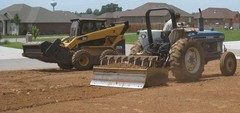
    Since this is new construction, after the rest of the construction crews leave, the builder should perform what is called, finish grading. He will bring in a tractor with a box blade to provide drainage away from all the buildings toward whatever low spot has been designated. The soil and greenery you're seeing now will be buried in that process. Here's what it looks like...

    So the landscape you're seeing now should be a distant memory when the contractor leaves. If finish grading is not built into your building contract, it's worth the money to get your drainage perfect. It would be a shame to have rainwater flowing into the house (I've seen it happen). And if you have rocks in the soil, I believe that device on the front of the Skid Steer in the background of the picture is used to pick up the rocks, collect them, and drop the soil back through a screen. Do you know if finish grading is in your contract?

    Late Sound thanked dchall_san_antonio
  • 10 years ago

    Well there you go, the man has a point. Put in your French drains & pipes now too, because it's a pain to do later.

  • 10 years ago
    last modified: 10 years ago

    Thank you reeljake - what is the name of your office/company. We may need your help if things are overwhelmed for me to DIY.

    dchall_san_antonio, what we want is a nice looking yard for pleasing view., Pets and children would be playing on the lawn. Upfront cost is a concern as my wife are very budget conscious. We don't mind doing the deep watering as we are using well water but fertilize and mowing often are not my thing. Our backyard is south facing and we would have full sun all day long on the back.

    In regard to site prepping - Our builder will do that and lay turf but only on portions of the house. They do full front yard, 10 feet on the sides (left and right) and 10 feet on the back (they will be using tech turf as you suggested on other post.) Other than that, it's on me to finish grading on the remaining area which is largely the backyard as shown in the picture - that whole area is pretty much flat. I don't think they will touch any part of the remainder 10 feet perimeter which they are responsible to lay sod.

  • 10 years ago

    Oh no, sorry if I was unclear, I do 401k plans for biz owners, not landscaping. In fact, I don't even have any clients who are landscapers. There's 1000 good ones out there though. I'd just ask your neighbors who they used at first. BTW, that site is screaming for some hi quality low cut mowing stripes on a nice Bermuda sod lawn if you ask me--Full sun like that & it'll spread like crazy!

  • 10 years ago

    I got you now reeljake. Bermuda is nice but would required two or times cutting a week. I dont think I am up to that challenge :-)

  • 10 years ago

    Nonsense, I only mow my Bermuda once a week on Tuesday. I've read that twice weekly stuff 1000 times too, but its not really accurate. Keep a sharp blade & every 7th day is no problem. I mowed every 4 days when I first moves in & it does look awesome, but any grass would look great mowed that often.