

Help with soil analysis results?!?!
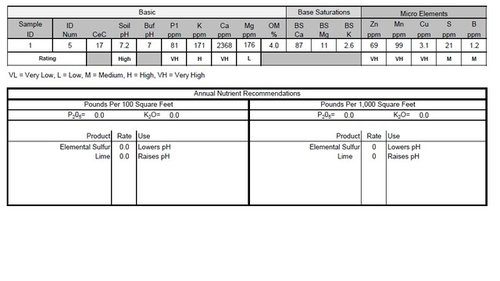
I'm hoping someone here can help me with my soil analysis results. After several years of watching my roses not thrive I finally got a soil analysis done, but i'll be honest I don't know what to do with my results. I could figure out what the elements tested were, but what do I do now?!?
Grace e
(cross posted to the rose forum)
Comments (17)
 10 years agolast modified: 10 years ago
Hi Grace: Let's summarize your report: Calcium very high at 2,368, with high saturation at 87. Potassium high at 171, but the saturation is low at 2.6. Phosphorus is very high at 81. Magnesium is low at 176, with base saturation of 11.
For trace elements: Very high in zinc at 69, very high in manganese at 99, very high in copper at 3.1, medium in sulfur at 21, and medium in boron at 1.2.
Soil pH is 7.2 - near neutral, that's great !! You are in zone 6b, Indiana. That's high-rain & high-snow area. In rain, the 1st thing that got leached out is nitrogen (mobility of 10), then potassium (mobility of 3), and last is calcium. I'm concerned with the LOW base-saturation of potassium at 2.6. Check out CandadianRose Thread "Worm Leachtate" where I outlined the plan for MORE BLOOMS, and healthier roses.
If you don't have pets around, I would recommend cocoa mulch (high in potassium and magnesium). That stuff is safe IF water-in immediately, to wash away the chocolate scent which attracts dogs. Cocoa mulch is poisonous to dogs. I get the best blooms with cocoa mulch (pH 5.4). Red-lava rock is another one high in potassium, adequate magnesium, plus boron and iron. Red-lava-rock (pH 8.2) is sold for less than $5 per 40 lbs. at local stores. pH of rain is 5.6, so that would neutralize the alkalinity of red-lava-rock.
People use Epsom salt (magnesium sulfate) for magnesium, but that's high in salt. A better alternative for magnesium is wheat-bran, sold for less than $1 per lb. at health food store.
Too much calcium: Causes deficiency Magnesium, Potassium, iron & others.
http://www.clemson.edu/public/regulatory/ag_svc_lab/soil_testing/cec.html
" The percent base saturation tells what percent of the exchange sites are occupied by the basic cations. If calcium has a base saturation value of 50% and magnesium has a base saturation value of 20% as shown above, then calcium occupies half o f the total exchange sites (CEC) and magnesium occupies one-fifth of the total exchange sites (CEC)."

dregae (IN, zone 6b)
Original Author10 years agoThank you for the information. I will check out the thread you mentioned! A lot of my roses exhibit signs of calcium deficiency is that because of the high ph level?
Related Professionals
Greensboro Landscape Architects & Landscape Designers · Chicago Landscape Architects & Landscape Designers · Utica Landscape Architects & Landscape Designers · Lima Landscape Architects & Landscape Designers · Tucson Landscape Architects & Landscape Designers · Fort Collins Landscape Architects & Landscape Designers · Lufkin Landscape Contractors · San Angelo Landscape Contractors · Seattle Landscape Contractors · Florence Architects & Building Designers · Mountain Home Architects & Building Designers · Springfield Architects & Building Designers · Ottumwa Architects & Building Designers · Olean Architects & Building Designers · Coeur d'Alene Architects & Building Designers- 10 years agolast modified: 10 years ago
Hi Grace: Neutral pH is at 7, you are very close to that at 7.2. Nothing wrong with your soil pH, it's near neutral at 7.2 ... plus roots secret acids to unlock nutrients even in my high pH of 7.7 ... plus rain water pH is acidic at 5.6.
How can I tell when my roses need calcium? When I get less petals in the blooms. Potassium deficiency is easier to spot: oldest leaves are brown & yellowish, plus roses become stingy & don't bloom. You DO NOT have calcium deficiency since your soil test shows VERY HIGH in calcium at 87 saturation compared to only 2.6 saturation for potassium and 11 saturation for magnesium. If your roses don't bloom much, that's a clear sign of potassium deficiency.
Potassium deficiency: Yellowing and necrosis of the lower leaves, starting from their tips or their margins & Decreased blooming & Thin young shoots. Too much potassium will cause Nitrogen or Magnesium deficiency.
Potassium deficiency is described by Haifa as "marginal chlorosis, progressing into a dry leathery tan scorch on recently matured leaves. ... increasing interveinal scorching progressing from the leaf edge to the midrib as the stress increases ... most of the interveinal area becomes necrotic, the veins remain green and the leaves tend to curl and crinkle on older leaves."
Calcium deficiency: Young leaves are distorted, with curled margins and tip or with brown spots. Old leaves are dark green.& Terminal bud necrosis. Stunted root growth. Too much calcium will cause deficiencies in Magnesium, Potassium, zinc, iron & others.
From gardening know how: " A calcium deficiency plant is notable for its stunted growth in new leaves and tissues. Brown spots may appear along the edges and grow toward the center of the leaves."
http://www.gardeningknowhow.com/garden-how-to/soil-fertilizers/soil-and-calcium.htm
Calcium deficiency as "Growing points of plants damaged". Haifa site listed calcium deficiency as wilting of leaves' tip: "Plants under chronic calcium deficiency have a much greater tendency to wilt than non-stressed plants.
*** From StrawChicago: I don't recommend applying sulfur, since most sulfur like Encap, has calcium, which you don't want when your soil is super-high in calcium.
Calcium (Ca)………………………………………..11.0%
Sulfur (S)……………………………………………… 49.0%
http://encap.net/lawn-mineral-nutrients/fast-acting-sulfur/#tab-id-3
- 10 years ago
Hi Grace: MichaelG in the other forum (Rose forum) also posted on how calcium spray helps with botrytis and balling ... I used to believe in that myth until your soil test shows high in calcium, yet you still have balling. I put tons of gypsum (22% calcium and 17% sulfur) in the hole of Duchess de Rohan. But Duchess de Rohan balled badly when we had tons of rain.
I suspect magnesium has to do with prevention of balling. My soil is exceedingly high in magnesium, no balling whatsoever for many years, unless I mess up the balance with too much gypsum (sulfur mess up even worse, killing earthworms). In my last house of acidic clay, also high-in-magnesium, no balling with 15 varieties. In my current house of alkaline clay, even higher in magnesium, no balling in the 70 varieties (many Austin roses with zillion petals, plus Old Garden roses).
I agree with Sam NOT to believe, nor listen to anyone's dictate, unless they have solid proof that it works in their garden. Even then, what works in their garden (sulfur spray, or calcium spray, or Bayer) DOES NOT work in everyone's garden, especially when folks don't need it. My philosophy: listen to your roses, rather than anyone else. That's why I post resources on identifying plants' nutrients-deficiencies to help folks to spot problems in their roses.
I don't recommend anything, unless I test it for many years in my garden. Even so I don't tell people what to do, since their garden is different than mine. Agree with Sam that don't follow anyone, unless they have proof: pictures that it works. Also roses vary vastly: some like it alkaline (Dr. Huey-rootstock), some like acidic like multiflora.
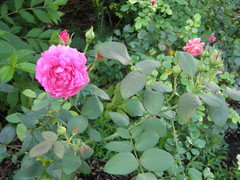
Below is Wise Portia, which likes it alkaline. For 3 years it would black-spots, unless lime is given. Once lime is given, it becomes vigorous and gives tons of buds. Since Wise Portia likes it alkaline (with dark-green leaves) I gave it garden lime (pH over 9), red-lava-rock (pH 8.2), and pea gravel (pH over 9) in my clay soil of pH 7.7. Here's the result: tons of buds, less than 4 hours of sun, pic. taken September 15. The morale: Listen to each rose, they all are different from each other:
- 10 years agolast modified: 10 years ago
Sam: People are so hung-up on soil pH, when they don't realize that roses are different from each other: French Romantica roses bloom tons with my soil pH of 7.7, and with tap water pH of 8.6 ... I posted plenty of pics. of 60+ buds on Liv Tyler in hot August. But Multiflora roses like it acidic, so I don't buy them.
Roses grafted-on-Dr.-Huey bloom plenty in this alkaline heavy clay, and they are healthy too. Only when acidic rain at pH 5.6 hit, that they come down with black spots. Like that Intrigue Rose (grafted on-Dr-Huey) at Walmart, tons of buds, super healthy & watered with pH 9 tap-water.
Magnesium helps with photosynthesis, so when it rains with less sun-shine, and if magnesium is NOT available, blooms can't open. Flowers need sunshine to open properly. Here's an excerpt from below link, which has the best pics. of magnesium deficiencies:
" Conditions such as, low soil pH, low temperatures, dry soil conditions and high levels of competing elements, such as potassium and calcium, reduce the availability of magnesium. In addition, in acidic soils, elements such as manganese and aluminum become more soluble and result in reduced magnesium uptake. Other positive-charged ions, such as potassium and ammonium (nitrogen) may also compete with magnesium and reduce its uptake and translocation from the roots to upper plant parts. Therefore, excessive applications of these nutrients might prompt magnesium deficiency.
Since magnesium is mobile within the plant, deficiency symptoms appear on lower and older leaves first. The first symptom is pale leaves, which then develop an interveinal chlorosis. In some plants, reddish or purple spots will appear on the leaves."
http://www.smart-fertilizer.com/articles/magnesium
There's the danger of adding sulfur (has 11% calcium) or gypsum (22% calcium): it upsets the nutrient-balance. Re-posting info. from horticultural links:
Potassium deficiency: Yellowing and necrosis of the lower leaves, starting from their tips or their margins & Decreased blooming & Thin young shoots. Too much potassium will cause Nitrogen or Magnesium deficiency.
Too much calcium will cause deficiencies in Magnesium, Potassium, zinc, iron & others.
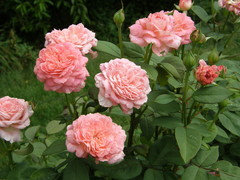
From Straw: below is Liv Tyler, with 60+ buds, pic. taken in hot August with temp above 80 degree. Soil pH is around 8. That has plenty of VERY ALKALINE horse manure. No gypsum nor sulfur was used in the planting hole, only peat moss (pH 4) and alfalfa meal (pH 5.8). I decide NOT to use gypsum and sulfur after I see how it kills earthworms. I still use gypsum for my tomatoes, which cracks if not enough calcium.
dregae (IN, zone 6b)
Original Author10 years agolast modified: 10 years agoThanks for the warm welcome. I like to ask for advice on gardenweb because you usually get good advice but every garden is different so I use the advice to do my own research before I try anything.
This year a lot of my roses showed the yellowing of the leaf margins (I think that's the correct term, but I'm tired so fill in the blank if I'm wrong) as well as small rather bland blooms. I had been told we didn't have a magnesium deficiency here by other gardeners in my area(not sure how they figured that) but after a whim of trying out Epsom salts with my normal application of fish emulsion wow did my roses ever perk up. The colors were vivid, the bloom size was finally to size and the fragrance went from pretty to wow. So between the yellowing/chlorotic looking leaves and the big boost I saw from the Epsom salts made me very curious about my soil thus the test.
So I have now got a lot of advice to get me started on perfecting my garden, but I will pose one final question if this was your garden what would you do??
- 10 years agolast modified: 10 years ago
Straw
Wow very good info. I agree on not using the gypsum and sulfur.
Like you said Straw. "Only you know your own soil and conditions".
I agree in this case (with Grace) Sulfur isn't the magical answer. THE SOIL TEST DIDN'T RECOMMEND SULFUR.
If only a little was used the worms will be OK. I personally wouldn't use it. I just use coffee grounds peat moss on my blueberries that like 5.5 pH.
Most gardeners use compost. There is no way you can supply every nutrient in the right amount. The life in the soil works with the plant. The compost has the life in the soil.
- 10 years agolast modified: 10 years ago
Agree with Sam that balanced & complete fertilizer like compost is best. Compost contains trace-elements which deepen the colors, better than molasses or kelp (I tested all 3). My neighbor grass is DEEP green, thanks to 1/2 compost and 1/2 soil for his lawn, that was done many years ago, when he stripped off the pale-grass on very alkaline clay to get his driveway bricked.
My policy in this forum is total honesty, same with Sam and Jim. I post daily pics of my roses, and DATE them. I post pics of failed experiments. Jim posted his sister's rose dropped all leaves from BS, versus other 100% healthy roses that he has. I left other forums since there are too many control-freaks and ego-freaks telling people what to do, without sharing about their own garden, or post any pics. Or folks would post only their best pics., taken during spring, and argue rather than testing any products.
Grace: Back to your question "if this was your garden what would you do??" I would strive for balance, rather than applying any particular nutrient. Take Epsom salt, I already tested that in 2011. My soil is super-high in magnesium, but I dunked cut-blooms into vase with Epsom salt. Too much of one thing isn't good: blooms wilted sooner, Radio Times' scent went from fabulous to sewage. That's the OPPOSITE of your observation regarding Epsom salt (magnesium sulfate). That proves too much of one thing isn't good. The problem with Epsom salt is the salt-content.
Calcium, be it lime, sulfur, or gypsum will BLEACH out the color of blooms. I tested all 3, and the biggest damage came with sulfur: earthworms are killed instantly, plus sulfur zap all other beneficial insects and bacteria which control pests.
In my 2 decades of growing roses with 80+ varieties, only one rose came down with Rose Rosette Disease (RRD) .. that was Grandma's Blessing shrub, a multiflora-parentage which likes acid. Since my soil pH is 7.7, I applied sulfur twice to that in spring. When the pH drops, less calcium and potassium available, which means THINNER tissue, and more susceptible to pests' invasion, be it aphids or RRD mite.
Sulfur at 49% sulfur and 11% calcium: kill earthworms, kill beneficial bacteria that fix nitrogen, and make tissue-thinner, more susceptible to RRD. I get the same result of wilted leaves, thinner leaves when I drop the pH of my alkaline tap-water with vinegar. Early this spring I saw RRD on Pink Traviata, a French Meilland rose, at Cantigny Park. That was the first time in 20 years of frequent visits to that park. Also saw tons of sulfur granules scattered on the ground. At first I thought it was gypsum, but upon closer inspection, it was sulfur. I also brought a sample of the rose park's soil to test its pH. That chunk was coated with sulfur. In red-cabbage juice, the chunk of soil turns pink instantly (very acidic), but upon 3 hours soaking, the inner-alkaline-elements of the soil chunk was released, and the final result was alkaline, around pH 7.4. Folks who recommend sulfur don't confess to how many RRD roses they have. Where's honesty to help others?
I agree with Sam on compost for DEEPER colors. There are many things that provide magnesium in a balanced ratio with other nutrients. Take alfalfa meal, NPK 2-1-2, pH 5.8, it has magnesium. Take cocoa mulch, NPK 3-1-4, pH 5.4, that has lots of magnesium, plus many trace elements. Take wheat bran, balanced NPK, plus lots of magnesium. Any greens would be high in magnesium, esp. mint leaves. There's an organic rose grower who harvest mint, just to mulch her roses. Mint is very invasive in my high-magnesium soil. All of the above magnesium-source BEAT Epsom salt, with zero salt, plus trace elements in a balanced nutrients.
Confirmation on Epsom salt taking away the scent came from SteveinAustralia, who e-mailed me in HMF to tell that he applied Epsom salt to his roses, and the scent went away on Valencia. Before apply any stuff to roses, I always test with cut-blooms in the vase first. I put cut-blooms with calcium citrate, I expect the scent to be lessened, but it stayed strong, plus lasted longer in the vase. Epsom salt has 10% magnesium and 13% sulfur, neutral pH. Epsom is an inorganic salt, and after my disaster using salty kelp to deepen the bloom's color, I don't recommend anything salty. Also the 13% sulfur is an acid, which balances out the 10% ALKALINE magnesium.
Folks also argue that gypsum is neutral pH with 22% calcium and 17% sulfur, but when gypsum is used along with acidic rain (also supplies sulfur) .. the double-dose of sulfur, from gypsum, plus acidic rain, caused thinner leaves, and roses breaking out in black spots. It happens so many times, that I use dolomitic lime (has both calcium and magnesium) for roses that like it alkaline (the ones with dark-green leaves). My soil test showed that I'm barely adequate in calcium. Sulfur, as in rain water (pH 5.6), or decaying organics bring down the pH and UNLOCK nutrients in soil, which account for better scents.
The reason why Epsom salt DID NOT work in improving scent in a vase was I used that with my alkaline tap, pH 8.6, so sulfur was neutralized, and the only effect left is alkaline magnesium.
- 10 years ago
For years rose growers have been using alfalfa for fertilizer.
Also , Straw just mentioned a rose growers who mulches with mint leaves.
I believe in my garden the magnesium is rich in my homemade compost which is mostly leaves.
- 10 years ago
Every year I collect leaves and shred them with the lawn mower. I go around and get 15 to 20 of those big paper bags filled with mostly leaves. In March they are shredded and put in the compost pile and mulched in the rose garden. I worry if I use too many. In 3 weeks , I see no more leaves. They have all turned to soil.
dregae (IN, zone 6b)
Original Author10 years agoI tried the leaves here, but I was finding they weren't decomposing fast so last year I tried something different. I read a book that recommended keeping the leaves out of the compost because they take to long to decompose. Instead all the leaves are collected and in my case I made a bin out of some metal fencing about four foot tall and 5-6 feet across and as we got leaves we added them to the bin and kept compacting them down. we probably filled that thing a good half dozen times and then we just left it no turning etc and now a year later it is some of the most rich smelling stuff it looks like what you would find on a forest floor and in the spring I will be adding it to my garden.
So are leaves a good source of magnesium?
- 10 years agolast modified: 10 years ago
Sam: you are right about alfalfa for magnesium .. grass are the "green part" of compost. But leaves are considered "brown part" or carbon source in compost pile.
Grace: Leaves are not a good source of magnesium, if they are grown in magnesium-depleted soil.
Info. on Alfalfa: (Medicago sativa)also called Lucerne, is naturally high in many essential vitamins and minerals, including A, D, E, K, and even the full family of B vitamins; biotin, calcium, folic acid, iron, magnesium, potassium.
Info. for magnesium from below link: "mineral magnesium, is essential for glossy, green leaves and good growth. The more potassium a plant needs, the more magnesium it also needs, and too much of one without balancing amounts of the other can create a deficiency. Potassium deficiency shows up in a lack of blooms, poor flower color, and weak, spindly wood. Magnesium deficiency shows up in older yellow leaves, or chlorosis. But constantly giving our hibiscus potassium to keep them blooming with big colorful flowers, we can actually create a magnesium deficiency that stresses the whole plant.
http://www.hiddenvalleyhibiscus.com/care/magnesium.htm
Best source of magnesium: wheat bran, which has only 4% calcium, 34% iron, 89% magnesium, 59% phosphorus, 20% potassium, 28% zinc, 29 % copper, 64 % Selenium, and 333% manganese, and only 1% salt. Magnesium is a stronger anti-fungal agent than calcium, but zinc leads the pack in anti-fungal agent, along with copper and selenium.
http://nutritiondata.self.com/facts/cereal-grains-and-pasta/5742/2
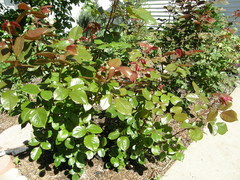
Below is very glossy leaves on Sweet Promise rose in my super-high magnesium soil at pH 7.7. Tons of blooms on that rose despite tap-water pH of 8.6. French Romantica roses are very good in secreting acid to unlock nutrients in alkaline clay.
- 10 years agolast modified: 10 years ago
Here's a good picture of magnesium deficiency, which is diffused yellowing on oldest leaves:

From Wikipedia: " Magnesium deficiency may be confused with zinc or chlorine deficiencies, viruses, or natural aging since all have similar symptoms. Adding Epsom salts (as a solution of 25 grams per liter or 4 oz per gal) or crushed dolomitic limestone to the soil can rectify magnesium deficiencies. For a more organic solution, applying home-made compost mulch can prevent leaching during excessive rainfall and provide plants with sufficient amounts of nutrients, including magnesium."
From StrawChicago: I inspected Espoma bag of "Garden Lime" sold for $10 per 5 lbs. at Walmart ... It's dolomitic lime with both calcium and magnesium. It's the same gritty stuff that I applied to my roses. I notice that my roses get glossy leaves with "Garden Lime", but DO NOT get glossy leaves with gypsum nor sulfur, since neither have magnesium like Espoma Garden Lime. Below link shows the amount of calcium and magnesium in Espoma Garden Lime:
http://www.domyownpestcontrol.com/msds/ESPOMAGARDENLIMEPRODUCTLABEL.pdf
- 10 years agolast modified: 10 years ago
The ratio of nutrients is important. Re-post what U. of CA found in rose-tissue: http://www.ipm.ucdavis.edu/PMG/PESTNOTES/pn7465.html
For low-ratios, it would be 3 Nitrogen, 2 Potassium, and 0.2 Phosphorus, plus 1 Calcium and 0.25 magnesium. For ppm it would be 50 iron, 30 manganese, 30 boron, 15 zinc, and 5 copper.
So magnesium is needed in 1/8 the amount of potassium, and 1/4 the amount of calcium. Phosphorus is needed in 1/10 of potassium.
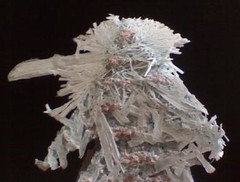
Found why cut-blooms wilted faster in a solution of alkaline tap water and Epsom salt: the salt crystallized, and prevented water from flowing upward the stem. Epsom salt is best USED IN ACIDIC RAIN WATER, to prevent its crystallization in alkaline condition. Also it crystallizes even more in cooler temperature. I tasted it, it's bitter & salty as many sites stated, so less is best for plants.
To make Epsom salt crystal, See excerpt from link below:
http://masterofhort.com/2014/05/myth-50-use-epsom-salt-on-by-c-l-fornari/
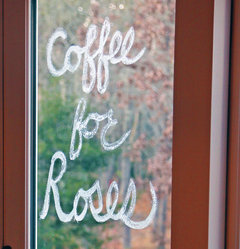
Although the crystalline structure looks rather like table salt, Epsom salt is actually magnesium sulfate and contains 10% magnesium and 6% sulfur. Because of Epsom salt’s crystalline nature, it will form frost-like patterns on windows or mirrors when dissolved in liquid and painted on glass. This can be fun for holiday decorating or creating winter scenes.
½ cup water
½ cup Epsom salt
3 or 4 drops dishwashing detergent (this helps the “frost” stick on the glass)
Bring the water to a boil in a saucepan. Remove from the heat and add the Epsom salt, stirring until it is completely dissolved. Add the drops of detergent and stir again. Let this mixture cool down before using or it will drip excessively, but apply before it starts to crystalize in the pan. Paint or daub it on your glass surface using a paintbrush, cotton ball, micro-fiber cloth, or even your finger.
- 10 years agolast modified: 10 years ago
The crystallization of Epsom salt troubles me, if someone applies Epsom salt to the soil, it will crystallizes immediately, unless the soil is VERY ACID, and the temp. is hot. Crystallization, or hardening of soil is already done through unstable calcium hydroxide (added by water-processing plant to deodorize tap-water). So the watering of alkaline tap water, plus applying Epsom salt, will result in more crystallization, and more compact soil. Compact soil means less potassium available, less potassium means smaller blooms.
I lean toward organics for nutrients, like alfalfa, wheat bran ... these organics decompose, and release acids so the nutrients can be absorbed by plants in chelated-form, rather than INSOLUBLE minerals like crystals made by applying Epsom salt. My family take magnesium everyday in different forms: magnesium citrate (bound with citric acid) dissolve in water, but if not consumed immediately by a warm human body, it crystallizes at room temp. Magnesium oxide doesn't dissolve well, and requires stomach acid to be utilized. Magnesium chloride, from sea water, is in chelated-form, so it's a liquid and easily absorbed by the body. If you think your plants need magnesium, it's best through ORGANIC, chelated form as in fish emulsion, rather than Epsom salt which crystallizes and hardens soil.
Potassium needs oxygen to be available, otherwise it remains in solid-form and can't be utilized by plants. To get big blooms on roses, fluffing up the soil with woodchips is enough to aerate (provide oxygen), and making potassium more available for bigger blooms. Here's an excerpt on below link "Soil Aeration and Oxygen Level: Air is necessary for root respiration and K (potassium) uptake. Root activity and subsequent K uptake decrease as soil moisture content increases to saturation. Levels of oxygen are very low in saturated soils. Unavailable Potassium: Depending on soil type, approximately 90-98% of total soil K (potassium) is found in this form. Feldspars and micas are minerals that contain most of the K. Plants cannot use the K in this crystalline-insoluble form. "
Soil compaction and too much rain, will result in saturated soil, and less potassium available. Another way is to use high-nitrogen fertilizer, which will bring down potassium further, resulting in smaller blooms.
That's why sulfate of potash works so well, it's in SOLUBLE form, readily uptake by plants. No matter how much fertilizers is used, if the soil is compacted by crystallization of Epsom salt, the blooms will be smaller.
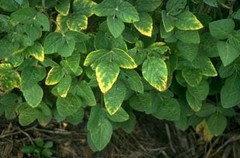
Below is a picture of potassium deficiency in soybean. My soil-booklet stated that 1/3 of soil are deficient in potassium, but magnesium-deficiency is very rare, and occurs mostly in sandy soil:
Below is a picture of Epsom salt which crystallizes at room temp, I don't think plants can use such crystals. All it does is to harden the soil, and make it more compact, plus less oxygen for root-growth. Nutrients is best in organic & chelated form, like liquid fish-emulsion, humic acid, or compost.
http://chemistry.about.com/od/growingcrystals/ht/epsomcrystal.htm




User