Software
Houzz Logo Print
addicted2plants

When coco coir goes awry....

10 years ago
last modified: 10 years ago
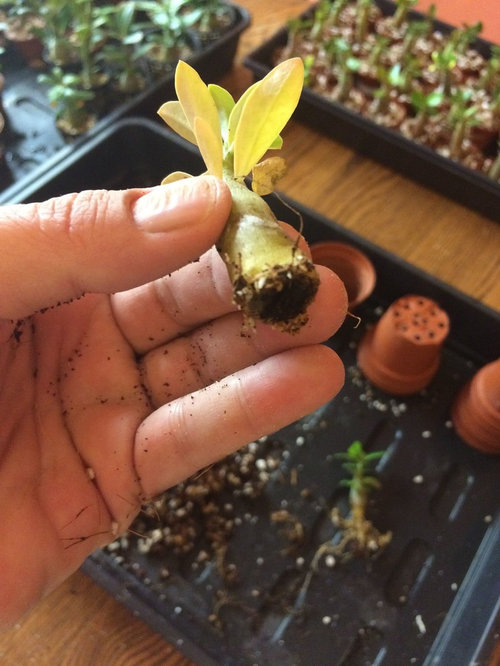
Hi friends. I am always singing the praises of the coco coir. I love it, all of my plants love it. However there are some important details to be aware of when using it. This weekend I discovered that I had forgotten to sift my coco coir in the last batch of media I made (a 32 gallon trash can). There are multiple grades of coco coir. The fine stuff I only use for sowing seeds to about 3 months. Then they upgrade to the larger pieces. The coco coir pieces comes bundled with some fine coir and sand inside so it must be sifted to get the fine particles out. I failed to do this and the result was catastrophic. I found a yellow unhappy seedling and unpotted it. It looked like there was raw cake batter in the bottom of my pot. This prompted me to go on an unpotting mission and inspect the roots of everything. What I discovered was quite alarming. Many were lost. Some were chopped (removal of all roots). All were replanted. This fella below is a goner. Word to the wise, don't forget the most important step in your process!

Tracy

Comments (23)

  • 10 years ago

    Sad Tracy that you lost so many. What's your advice? Should we discard the coco powder of fine dust and use only bigger chunks? Would that be safer?

    addicted2plants Southern IL USA thanked Sinha
  • 10 years ago

    Noooo! I am sorry, Tracy. :-( How many was lost?? Did your seedlings get bottom heat? At hot temperatures (say 85+F), root rot is seldom seen, even if actively growing adeniums sit in moist soil 24 hours a day.

    I use coir/coco peat as well but I never had any problems like the one you mention. You actually sift your coir?

    addicted2plants Southern IL USA thanked User
  • 10 years ago

    Great save, though, Trace! And it even rhymes.

    Pagan

    addicted2plants Southern IL USA thanked User
  • 10 years ago
    last modified: 10 years ago
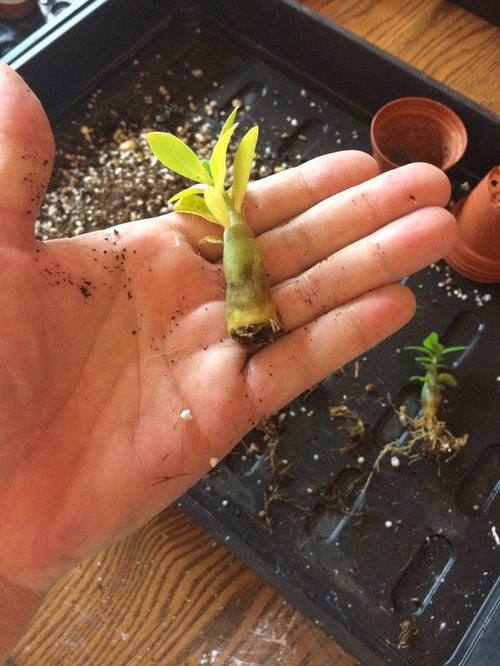
    These seedlings were not getting bottom heat. I have been using fluorescents for all of my seedlings until recently. They provided sufficient heat to warm the plants, or at least I thought that they did.

    The fine coir that I use for sowing seeds I do not sift. The larger coarse coir I do sift because it contains a bunch of sand and smaller particles. This is what I found in the bottom of my pots. It worked its way through the gritty larger particles and basically clogged the bottom which was not drying completely. I threw away about a dozen seedlings. I chopped the roots off completely on about another dozen. Only time will tell if the others will bounce back. The good news is that I have plenty of seedlings and as Pagan pointed out it could have been worse if the discovery was made in winter. Thanks for your positive note Pagan.

    Tracy

  • 10 years ago

    Bummer but on the plus side experiences makes us all wiser :-)

    addicted2plants Southern IL USA thanked Phil UK zone 8b
  • 10 years ago

    Sinha I sift the finer coir into my bucket of fine coir for sowing seeds. When I encounter the dust particles and sand I sift this off and discard it. I would make sure that you are looking for it and can recognize the difference and make sure your mix doesn't contain a large amount of the fine stuff. If your plants are looking happy I would just make sure when repotting to sift out the fines.

  • 10 years ago

    Coco coir killed three plants of mine.Now I use large pieces of it straight from the coconut at the bottom of the pots and kind of line it along the sides.The centre I fill up with manure+coco coir pieces. But I inspect these everyday to see if the plants are happy or not.I am using this medium in few of my seedling pots only.The bigger plants are all in gravel+ manure.One seedling as a test case is planted in brick dust+manure only just to compare with the others. So sad tou lost so many seedlings even though you have many more. Hope the chopped root ones make it! best wishes

    addicted2plants Southern IL USA thanked Sinha
  • 10 years ago

    your soil mix is to damp for the seedling, it starts from the bottom and starting climbing to the stem, and it will topple over,in some cases it the leafs will stay green and sometimes re-root themselves

    addicted2plants Southern IL USA thanked Jericson Pastor
  • 10 years ago

    I'm glad this didn't happen to your Grow-out batch. I know they're all important, but hopefully these weren't too much so.

    addicted2plants Southern IL USA thanked jedobaTX9b
  • 10 years ago

    Oh no Tracy, this is terrible. Like Jericson said, they might re-root if the rot hasn't reached up too far and you haven't discarded them already.

    addicted2plants Southern IL USA thanked Nicholas C.
  • PRO
    10 years ago

    We use coir in out propagation mix (about 65%). We do not use the powder since it does not let enough air circulation in the mixture. the plants stays in the propagation mixture until the plants are 6 months old (caudex of about .5" wide). Out of a 1,000 seedlings 90% of them make it through the 1st year. We plant in Mid March through April time frame and by June/July (about 2.5 months after sowing the seeds) the seedlings are placed in 2" pots using the same soil mixture. The pots are placed in a 80 cell tray with a 2nd tray under it so water is retained so the adeniums are constantly in very wet conditions and the plants love it (we are in southeast Florida - tropical environment). Root rot is caused not by wetness but the inability of the roots to get air flow in the soil mixture. Roots can be constantly wet if they get good air flow around them. They grow in that environment until they are approximately 6 to 7 months old (caudex of about 1") when theyr are transferred to 3.5" pots.

    AdeniumRose
    company <a href="www.adeniumrose.com"> rare and unusual cactus,
    succulent plants</a>.

    addicted2plants Southern IL USA thanked AdeniumRose Company LLC
  • 10 years ago
    last modified: 10 years ago

    Where I am going to school for my Horticulture Degree we stopped using Coir all together, students were having a hard time looking at it and deciding whether it was wet or not and would end up over watering. We have too many plants to hand check all our plants to make sure they are dry. We recently just stopped using perlite in our mixes for annuals and perennials we now use rice hulls instead. As far as succulents we use small pumice. I personally still like perlite for my succulents. As far as using rice hulls in replace as perlite for other plants it really helps to strengthen the plant ( i think because of all the silica in it ) at least thats our observation. Good luck with your plants though!


    How old are your seedlings if you don't mind me asking?


    addicted2plants Southern IL USA thanked Bob Davis
  • 10 years ago

    Tracy, sad....ha? I feel you because taking care the seedlings take time. But thank you for the info, we are learning from this.

    Marie

    addicted2plants Southern IL USA thanked Marie Tran
  • 10 years ago

    Thanks for your support and comments everyone.

    Bob they were between 12 and 16 weeks old. All recently replanted, so the fact that they didn't look perky was expected. Fortunately these were seeds that didn't cost $1+ per seed.

    Tracy

  • 10 years ago

    I have never grown from seed before until now (adeniums that is) I hope mine are that size in that many weeks. yeah the seeds can get pricey, I'm hoping that after this spring I will be able to just take seeds from my own plants. but its always fun to get a pack of new adenium babies in the mail.

    addicted2plants Southern IL USA thanked Bob Davis
  • 10 years ago

    Seedlings are a challenge. Once the weather cools down I begin to leave
    mine to really dry out. However, I have lost many seedlings to rot like
    that. Hang in there my friend. If your seedlings are in a cooler
    climate just cut down on the water. I am doing that right now.

    addicted2plants Southern IL USA thanked ladylotus
  • 10 years ago
    last modified: 10 years ago

    Something else I wanted to mention for those growers that are newer. I make huge batches of media at a time. I find that as I work my way through a container, it gets ground up into powdery bits. This means that I have to sift it again! You see, sifting is the key to keeping particle size uniform. I ALWAYS sift my perlite, it is the worst about grinding into a powder. I always sift my oil dry/DE component and pumice too. I sift the growstone when it gets toward the bottom of the bag. Keeping the particle size uniform will provide the best root zone possible for your plants.

    Tracy

  • 10 years ago

    Looking at your post and im wondering if my seedlings are not drying out enough.

    addicted2plants Southern IL USA thanked Dain (Zone 5a, high NM Desert)
  • 10 years ago
    last modified: 10 years ago

    If you are having doubts I would gently check the roots on one of the seedlings Dain to see how they look.

  • 9 years ago

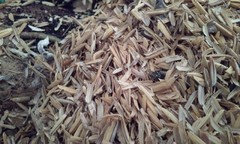
    Bob Davis wrote: We recently just stopped using perlite in our mixes for annuals and perennials we now use rice hulls instead.


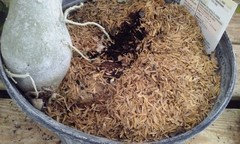
    Bob, lately, I've noticed rice hulls in a lot of plants for sale in my area. Saw it recently in some rose cactus (Pereskia grandifolia) and this adenium:


    Carol in Jacksonville, Florida

  • 9 years ago

    I sowed alot of seeds i never use coco choir peat .I use coco coir fine perlite,and cactus mix with heat mat i have just purchased a large mat but I have found the moisture build up is quite high so I'm leaving the top of my grow tent openot. I was having average germination results till I started using a heat mat they are very cheap I have got my fingers crossed for you.

  • 9 years ago

    What are the different grades of coir, in terms of size of the particles?

    Does anyone sell a pre-filtered product that gets out all of the dust and leaves sizes that are good for container gardening?