Software
Houzz Logo Print
leava

Safe containers to grow veggies in ?

10 years ago

So my very kind and generous husband bought me a small greenhouse for my 61st birthday since physical limitations keep me from in the ground gardening and gardening keeps me sane.Hey he is so wise :) I have ordered a couple of books on greenhouse gardening but am researching containers.I read that cement mixing tubs worked well.But one person said she called the manufacturer who said BPA did not release into soil from the tubs.Person 2 said they called and were told other toxins released into soil.I can buy plastic frosting buckets from the bakery for 50 cents each.Don't know if they are safe.Seems like wood flats from untreated wood are safe but spendy.Plus they would seem good for seedlings but not deep enough for mature plants.Am googling on this of course but wondered if others could give me insight ???I grow organically and don't want chemicals from containers.

Comments (19)

  • 10 years ago

    I've used 5 gallon plastic buckets for lots of things, but not planting. They become weak as they degrade. I'd imagine they release something into the soils after a while.

    Some of the greenhouses I've seen that I like have raised beds bordered by rocks. Certain rocks can be mineral-rich. Spendy, too, but permanent.

    leava thanked chickencoupe
  • 10 years ago

    i am not using the ground in the greenhouse, i will grow all in containers waist high or so on benches.

  • 10 years ago

    Waist high is doable. Anything I have in the planter at waist high gets more attention. Mine is 8" and most things do pretty well at that depth given enough space. But the wood is rotting and needs replaced.

    leava thanked chickencoupe
  • 10 years ago

    Leava, First thing....Happy Belated Birthday! Also, what a sweet guy Jeff is. I hope you enjoy your lovely gift.

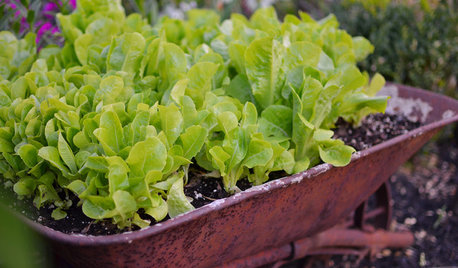
    I grow lettuce in concrete mixing tubs and have done so for several years. I like that I can carry them out of the greenhouse in spring when it is getting too warm in there and put them on a table that gets filtered/dappled shade. Doing that, I often can keep some of the more heat-tolerant lettuce varieties going until almost July, which I cannot do when growing in the ground. On the list of things I worry about, the breakdown of the plastic tubs is not even on my radar. While some plastic pots in which I grow flowers have obvious signs of the plastic breaking down, I've yet to see that on the concrete mixing tubs----perhaps because most of the time they are in the greenhouse under the 50% shade cloth that blocks some of the UV rays and the rest of the time they're in dappled shade. I agree with Amy's conclusion that they probably are safe to use.

    There are many food-grade plastics available, like the frosting buckets. They couldn't sell frosting in those buckets if they weren't food-safe. They will break down, but I have used them for years and years before seeing obvious signs that the plastic was deteriorating. With any container like that, be sure you drill plentiful drainage holes in the bottoms of the containers.

    In my greenhouse, I mostly grow crop-type plants in molasses feed tubs given to me by a friend who is both a rancher and a gardener. They come filled with sweet feed for cattle that he uses as a feeding supplement in winter, and are more or less the same size as whiskey half-barrels. They are heavy when filled with a soil-less growing mix, and I add half-rotted wood and leaf mold, gathered from my woodland, to the bottom 6" of the tubs before then adding a soil-less mix. The half-rotted wood and leaf mold contain the living microorganisms needed to break down organic fertilizers into components that plant roots can absorb and use. I make sure the feed tubs are where they're going to stay more or less permanently before I fill them with anything because they are too heavy to easily move otherwise.

    I also sometimes grow things in grow bags and my favorite brand is SunLeaves. They have two kinds of plastic---a black plastic on the inside the blocks sunlight from reaching the roots themselves and white plastic on the outside to reflect light and heat so the bags, growing medium and plants roots don't overheat as easily. I bought a case of 100 grow bags online from Worm's Way about 8 years ago and still am using them. They are strong and sturdy and have held up really well.

    Greenhouses heat up much more quickly than most people think so keep that in mind when growing things inside of one. I keep 50% Aluminet shade cloth on mine year-round. Even with that shade cloth, on a sunny winter day, if I forget to open both greenhouse doors and all four vents shortly after sunrise, the temperature inside the greenhouse can reach 140-145 degrees after just an hour or so of sunlight. Those sorts of temperatures will damage your plants and will encourage spider mites so be sure you properly manage your greenhouse's sunlight/heat from the start. I only have actual living plants in my greenhouse from roughly late October or early November until April because it gets too hot the rest of the year, even if I am running a ventilation fan. Some years even April temperatures are too much and I move my plants out to tables in part-shade during the day and then carry them back into the greenhouse at night if the temperatures are going to be below freezing.

    You know, you also can grow plants in containers in full sun in the summertime outside the greenhouse. They will stay much cooler and have better air flow outside the greenhouse. I have a friend with a bad back and he puts molasses feed tubs on benches and on an old, sturdy picnic table and grows tomatoes and peppers in those all summer long. They get afternoon shade, which helps them cope with the very hot temperatures in July and August.

    You also might consider building a salad table from wood and growing your lettuce and other greens in it. I have some containers inside my fenced garden at the west end where we get shade in the afternoon and also at the east end where we do not. Because my garden has become increasingly infested with voles ever since the awful summer of 2011, I grow a lot of stuff in containers (with hardware cloth cut to fit inside the bottom of the container to keep voles from coming in through the drainage holes) in the garden to keep the voles from eating my plant roots and killing the plants.

    Here's a document that describes the use of salad tables:


    Salad Tables

    Lettuce and greens grow fine in fairly shallow soil (like in the concrete mixing tubs). In winter and spring, I sometimes grow lettuce, mesclun mix, mustard greens, cilantro and kale in a cattle trough that has legs. It isn't elevated as high as table level since it is a trough meant for feeding animals, but if I had wanted it that tall, I would have put it up on concrete blocks before filling it with the soil-less mix. I've also grown lima beans, bush beans, onions, garlic, leafy herbs, flowers and dwarf tomato plants in my cattle feed trough. It is not in the greenhouse but I have it set up close to the house so we just have to step out the door and walk a short distance to harvest greens and herbs from it. I've been using it for 5 or 6 years now and love it. I wish I had 6 or 8 of them, but they're not cheap so I have only the one. Because the unrelenting summer sun and heat are so hard on plants in the cattle trough, I have it set up where it gets direct sun only until about 1 p.m. in the summer. I still have to water it daily (sometimes twice daily in the worst heat) but the plants are happier than they were when it was in full sun all day long in the summer months. Then, when I am growing in it in winter, we move it onto a concrete slab on the south side of the garage so the plants get plenty of sunlight and warmth. I have to put bird netting over the plants in the winter time (I'm rural, you're not, so this may not be an issue for you) or the cattle trough becomes a deer trough.

    I hope you enjoy your greenhouse. There are many ways to grow plants inside a greenhouse. The main way I use mine in late winter/early spring is to hold flats and flats of seedlings I raise both for my garden and to take to the Spring Fling every year. Between the plants that I grow in it all winter long (including some fruit trees in containers) and the flats of spring plants, it is always jam-packed with plants. In the hot season from roughly April to late October, it is empty, if you don't count the field mice, snakes, grasshoppers and mosquitoes who move inside and occupy it in summer. (I don't know how they tolerate the heat, but I do leave the doors open so nothing living gets trapped in there and dies in the summer months.)

    Dawn

    leava thanked Okiedawn OK Zone 7
  • 10 years ago

    thank each of you for the helpful input.dawn do you drill holes in the bottom of the molasses tubs ?? and what kind of soil less mix do you buy like brand name and store found ? thanx bunches

  • 10 years ago

    Here is a link to help identify food grade plastic Food grade plastic.

    leava thanked AmyinOwasso/zone 6b
  • 10 years ago

    i got 5 total frosting buckets just now.50 cents each.1 large 4 small.yay

  • 10 years ago

    The Self Watering Kiddie Pool Grow System! check this out - I tried it this year, and it worked great for tomatoes

  • 10 years ago

    I bought the .50 walmart bags, then I read thay didn't hold up well. I wanted them for asparagus starts, so they would be in use for a year. What did you use?

  • 10 years ago

    I have been using 3 since spring when I put tomato transplants in them, The bags are still ok, but I guess we'll see next spring. I had some gimme black ones (Ace hardware?) and they DID fall apart after a year. Liked the system with the kiddie pool cause I could move it if necessary. However, instead of a pool, I had a plastic half barrel with holes 2 inches up from the bottom. I added water daily. No weeds, but they did require a cage, and I didn't have to dig down into rocks and clay.

  • 10 years ago

    I have a lot of potted plants each year. But my resolution for next year is to simplify watering. This is one option.

  • 10 years ago

    I just don't like the bright blue of the bags visible in my yard. Guess I'll try disguising them next year with burlap. and spray paint the kiddie pool with the camo paint.lol

  • 10 years ago

    Some people put down some sort of wall, doesn't need to be tall, and put plastic over it. So a square of 2x4s with plastic over it. Then bags or pots sit in that. Gives you options besides square. You can make your own bags using landscape fabric if you can sew. I considered that, too.

  • 10 years ago

    Gardeners will find a way!

  • 10 years ago

    Leava, We drill a ton of holes into the bottom of the molasses feed tubs. Tim does it for me and he usually drills them all about the size of a dime. It is very important for the water to be able to drain well. Excessively moist soil causes more problems in terms of disease than soil that drains well. To prevent the soil-less mix from draining out of the bottom of the containers, I cut a layer of landscape fabric in the shape of the tub and put it inside on the bottom of the tub before filling it with a growing medium.

    You can use any soil-less mix that is high-quality and drains well. Remember that purchased soil-less mixes are, by nature, sterile and contain no nutrition to speak of unless the manufacturer has added some sort of nutrient/fertilizer to the mix. For many years, I largely made my own using Al's 5-1-1 formula from the Container Forum, although I tended to substitute other organic material (generally home-made compost, mushroom compost or thoroughly composted cow manure) for the peat moss. Now there also is an Al's Gritty Mix that is similar....but different (of course). For pine bark fines I used a bagged product sold at Home Depot that often is labeled as Soil Conditioner. It is just a mix of humus and bark fines. While many people on the Container Forum search high and low for just the right ingredients, I just do the best I can with what I find readily available in stores near me. By "near me", I generally mean at stores in Ardmore or Gainesville, either of which is dozens of miles round trip because there are no stores actually near me that carry gardening supplies. Sometimes if there is an ingredient I really want and cannot find, I'll go as far as Denton or Lewisville to get it, but only if I'm only going down there for something else anyway. Turface can be hard to find, but there are other ways to get your grit if you're making the gritty mix, and expanded shale is sold in nurseries I go to in the D-FW metro area. I also have used chicken grit, which is available at farm supply stores. And, I want to add, that while Al's Mix is formulated to drain well (and that good drainage is why people love to use it), we often have the opposite problem here where temperatures in the 90s-100s daily for months on end make everything dry out too quickly, so I try to find a balance between a mix that drains well during occasional heavy rainfall but also retains moisture well in insanely hot summer weather. That means that in years when I expect extra-heavy rain, I try to make a mix that drains extra well or in years when I expect constant dought, I try to make a mix that retains water better than usual.

    Remember that I also layered old, half-rotted wood from our woodland at the bottom of each molasses tub to help nourish the microbe herd in the container so that organic fertilizers would be effective. The old half-rotted wood soaks up moisture and holds it really well, so that's a case of killing two birds with one stone. Sometimes I just buy and use Miracle Grow soil-less mix. When I do that, I prefer the Moisture Control one because our summers here tend to be very hot and far too dry, so the plants in containers need all the help they can get when it comes to moisture retention. While I prefer to garden mostly organically, I don't have a problem using a soil-less mix with a pelleted sythetic fertilizer in it. Because we have to water containers so frequently here in the summer months, it can be hard to keep the plants well-fed without a pelleted fertilizer. There are, by the way, pelleted or granual type fertilizers that are organic, and they are what I use for my tomatoes. I can't think of the exact name now, but one of the ones I buy comes in a round bottle that sort of looks like a large tomato. I also use the Espoma Tomato-Tone and Garden-Tone fertilizers, which are organic, both in containers and in my raised beds. You do have to add these to the container frequently as they get used up or leached out quickly during periods of heavy rainfall or heavy irrigation.

    I'm not sure what brands of soil-less mix stores near you carry in bags other than the uniquitous MG brand that is found everywhere, but if you are trying a brand that is new to you, I'd suggest buying one bag first and testing it before buying a lot of an unknown brand. Some of the stuff sold cheaply in bags at stores is just junk that isn't suitable for growing plants in. I will say that the worst stuff I ever bought was the Miracle Grow Organic mix. There was something wrong with it, and I wasn't the only person who thought so. I bought it and tried it in the first few years after it was introduced. It stunk to the high heavens and I believe they had used chicken manure or something similar in too high of a ratio and it killed plants right and left. I tried one bag the next year. Same issues. I waited a couple more years and tried it again. Same issue. Never bought it again and never will. ProMix makes absolutely the best stuff, but it is hard to find and pricey.

    And, by the way, always, always, always wear gloves when handling potting soil/soil-less mixes of any kind. Because they are sold in bags, air flow often is restricted while they are in the bags and dangerous microbes can grow in the mix inside the bags including the ones that cause Legionnaire's disease. Just by handling the mixes with your bare hands, you can contract some really nasty diseases, including some fungal diseases that are almost impossible to get rid of once you have them. I've heard some real horror stories over the years.

    Finally, I have had the best success with container gardening of veggies in the summer when I have put them on a drip irrigation kit and a timer. That ensures they get watered enough when I'm busy canning or away at wildfires a lot. While I prefer to stand and water them with a hose so I can check the moisture level in each container before watering it, the reality is that doing that often takes up more time than I have. A drip line system on a timer can be adjusted to water more or less often as needed, but it ensures the plants still get watered during times when I am very busy with other things.


    leava thanked Okiedawn OK Zone 7
  • 10 years ago

    This is Diatomacious Earth (DE). It can be substituted for perlite in potting nixes. I believe I found the info in the container garden forum, but I can't find it right now. The gist of it is that perlite not only absorbs water, but holds oxygen when soil is wet. DE has lots of holes and irregular shape and accpmplishes the same thing. Gardeners also use it as a pesticide, though the pieces in this are larger than the ones in the pesticide l bought. I researched this and it is not the kind of DE used in pool filters. It is safe to use in the garden. Auto Zone sells it for absorbing oil spills. I used it this spring when I had to replant my tomato pots. DE at Auto Zone

    leava thanked AmyinOwasso/zone 6b
  • 10 years ago

    I know that people use it in their potting mixes but I never have, so I didn't mention it. As far as I know, Ultrasorb and products like it that are manufactured to be used as absorbents are not food grade, and I don't want to put something like that in my garden or even into my containers. It is likely that the DE in the Ultrasorb probably is perfectly safe, but since it isn't food grade, it isn't tested so we cannot know that for sure. Years ago when people started using the Ultrasorb and similar recommended products to make Al's gritty mix, some people bought other brands that didn't work as well, especially when used for seed starting. I don't know what the difference was between the Ultrasorb and the other brands that accounted for the difference, but it might have been a purity issue or that the other products might have been made from saltwater diatoms and had salty residue or perhaps some sort of additive that the Ultrasorb didn't have. Perhaps the Ultrasorb is from freshwater diatoms. There used to be a kitty litter brand that was made out of DE too, but I don't remember its name or if the people who used it in their gritty mix were pleased with it.

    I do use the finely-powdered food grade DE as an insecticide sometimes. Actually, though, I guess I haven't even used that in years. I think I have some tucked away in my potting shed somewhere. With the finely powdered food grade DE, the sharp edges of the tiny particles slice the cuticles of insects that make contact with it and then they dehydrate. It is pretty effective, but I use is sparingly because anything that can harm pest insects also can harm beneficial ones. I used a lot of stuff like that DE back in the beginning that I don't have to use any more because now I have a good balance of beneficial insects along with the pest insects so I don't do much pest control any more. I try to just let the good guys eat or otherwise kill the bad guys. I only step in and help if there's not enough good guys to control the bad guys, or if the bad guy is something like SVBs or Squash Bugs for which there is not enough good guys in the world to control them all.

  • 5 years ago

    FANCY NANCY Zone 7

    Appreciate all the input.

    Has anyone seen Leon Stone's method on YouTube of using cattle feed tubs? Or has anyone tried the self guttering method? Curious if successful. I was recommended by my extention office. Easy method to not have to water so much. I'm considering it because of my heavy depleated soil & gopher problems galore.

Sponsored
Peabody Landscape Group
Average rating: 3.5 out of 5 stars8 Reviews
Columbus' Reliable Landscape Design & Contracting