Software
Houzz Logo Print
bacdj

Catalaya stem rot

10 years ago

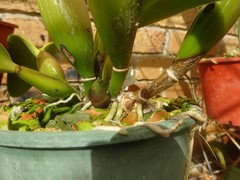
I have had orchids for many years and in recent years I have lost a lot of catalayas because of stem rot where the stem leaves the main plant. It just goes a brown colour in the vicinity of the join to the main plant and gradually dies, but over a long period. I tend to cut it back and it grows again but seems to have the virus in it and it happened again and eventually dies. I have gone from a couple of hundred orchids to about 20, but I must agree that I don't pamper them like I used to. Is it just me or is there a fungus/virus that they get that I can spray for. I have tried a fungicide and other sprays intermittently, but it still persists. Brian DJ

Comments (12)

  • 10 years ago

    Another try at Photo:

  • 10 years ago

    Try This because even though the photo inserted in to the reply it did not seem to reproduce: http://s1359.photobucket.com/user/bacdj/media/Orchid%20Rot_zps478upl1l.jpg.html

  • 10 years ago

    The AOS put out a booklet on orchid disease which is a compilation of articles from their magazine. In it they mention that this type of rot could be caused by mineral deficiency. It could also be fungal or bacterial infection, hard to say which since they look the same. It could also be a virus but I think viruses tend to show as weird leaf spotting patters or flower deformities.

    I would try a fertilizer with trace minerals or some Epsom salts and treat with something that works for black spot. Usually you can use something made for roses.

    bacdj DESJARDINS thanked James _J
  • 10 years ago

    Your pic...

    When Houzz is slow, its really slow. Took a minute to load the pic from PB.

    tj

    bacdj DESJARDINS thanked tsugajunkie z5 SE WI ♱
  • 10 years ago

    Where do you live? What zone, what conditions is this plant growing? Very hard to be helpful without that information.

    Thanks,

    Jane

    bacdj DESJARDINS thanked jane__ny
  • 10 years ago

    I live in Queensland, Australia, sub-tropical climate. I report every few years. My watering habits are irregular these days and fertilizer usually consists of liquid fertilizer sprayed on the foliage as well as some in the pot.

    Sorry for the delay in replying, but it is school holidays and amongst other things we have grandkids taking up some time.

  • 10 years ago
    last modified: 10 years ago

    It could be it is in need of repotting. I have had that happen before. The orchid has new growth. A healthy sign. If you repot show some pictures of what is in the pot as you go. Good luck

    bacdj DESJARDINS thanked shavedmonkey (Harvey in South Fl.)Z10b
  • 10 years ago
    last modified: 10 years ago

    You might have been subject to those unusual torrential rains that fell in Autumn in parts of Queensland. Cooler than usual and excessive dampness might have been enough to make the base of a pseudobulb rot.

    bacdj DESJARDINS thanked arthurm2015
  • 10 years ago

    Most potting material will degrade and turn into dirt. If nothing is done, the next phase is the plant will grow on the outside of the pot. A self mounting. It will survive and do well if it gets a lot of water. Like any other mounted orchid.

    Orchid roots need air. Yours do not have any. I've recently converted to all lava rock. I still have a few more pots left to convert. It works for me in my climate with my habits of care. I think my methods would kill a lot of plants in colder climates. My guess. I admire people growing in harsh cold climates. I think it would bee to hard for me.

    In repotting a few questions need to be considered of what will work for you. How often are you available to water? What is your climate like? If you experience cold temps, how do you winter them?

    Clay pots breathe and hold less water. Plastic holds water. Degradable potting material needs to be replaced every 2 to 3 years. Mounted with no potting materials needs the most water. Clay pot with lava rock is next. clay and degradables next. then plastic etc.

    If you have never repoted successfully get help. Go to a local orchid society meeting. They have the best advice and know the local tricks. A lot of those people like orchids more than people. They will help!

    bacdj DESJARDINS thanked shavedmonkey (Harvey in South Fl.)Z10b
  • 10 years ago
    last modified: 10 years ago

    In the good old days, clay pots were the only ones available. Now you never see them on the show bench or at monthly meetings.

    As for the Lava Rock it is a valuable addition to some mixes. If say, you live near Cairns you would find that growers use more arid ingredients such as Lava Rock or even basalt chunks in mixes.

    I think you are somewhere in the south, maybe near Aranbeem orchids. All their orchids are in plastic pots with treated pine bark as the main ingredient in mixes.

    I stand by my initial guess that heavy unseasonal rain plus not talking to your orchids enough is the reason for your problem.

    Added via edit.

    Here is a snippet from the University of Google.

    "

    in 1818, William Cattley imported some tropical plants from Brazil. He noticed what looked like a kind of bulb amongst the packing material, and he decided to nurture it in his greenhouse to see if it came to anything. This gorgeous flower - known as "The Queen of Flowers" was the result."


    So all you have do is to add an "a" onto Cattley and presto it is easy compared to some horrible orchid names. There are plenty that are really difficult to say.


    bacdj DESJARDINS thanked arthurm2015
  • 10 years ago

    At our monthly meetings most are clay. All the commercial growers use plastic for financial efficiency. The cost of the pot and more in shipping due to weight. From my personal experience clay is much better. But I know many successful people that use plastic. But the majority here use clay.

Sponsored