Software
Houzz Logo Print
lincann

Limelight hydrangea looks terrible

11 years ago

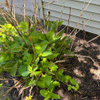
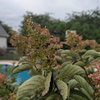
My 4 year old Limelight has had a hard time this summer. It is planted in my back garden where it gets sun most of the afternoon. It has always done well, had healthy color to leaves, excellent annual growth and loaded with long lasting blooms . . . until this summer.

Derby City (6B) experienced record rainfall followed by heat and drought. It bloomed on schedule, but about July or August I noticed the leaves took on a pale appearance and most of the blooms had a scorched look that ended in me cutting many off. What is usually a shrub so dense I can't see through it is now sparse and unhealthy looking.

I'm wondering if the leaf color and over-all sickly appearance is due to the early heavy rainfall leaching nitrogen from the soil. Weakened, the blooms then just followed suit. Does that make sense?

Please share a good regimen for getting this guy back on track and for anything I can do now to help it through the winter. Thanks. annie

Comments (5)

  • 11 years ago
    last modified: 11 years ago

    While too much rain could cause some of that damage, I would think that the heat and drought would have had more to do with what you see now. The time of the year also does not help since the plant is getting ready to shut down and its leaves will not look nice anyways. Not as many leaves as before, not as dark as before, not as ??? as before. L and LL like to "show their legs" by the end of the growing season anyways.

    As a safety check, check the soil pH too, to see if the soil needs to be acidified a bit. I sometimes have to perk up my hydrangea leaves with amendments this time of the year.

    Then make a note for Spring 2016 to add a layer of about 1/2 inch of composted manure or organic compost to make sure there are no nitrogen issues. It is too late to try to mess around with nitrogen issues for my tastes. But if you want to add a fertilizer with 0% nitrogen, >0% phosphorus and >0% potassium at half or a fourth the label recommended amount, that would be ok. In specially hot summers, uneven watering can contribute to the "bad" look of the leaves so try to maintain 3-4" of mulch and try to keep the soil as evenly moist as possible.

    lincann thanked luis_pr
  • 11 years ago

    Well, there you go ! I've been following your advice and always find it to be sound. Thanks.

    I think you're right on about the water - too much or not enough - only thing missing is my name this year ! Also the time of year - just don't remember them 'showing their legs' this early.

    You said - "I sometimes have to perk up my hydrangea leaves with amendments this time of year." What do you use and would it work for me in zone 6B? We're expecting our first frost on Friday morning - so wondering if the timing is right for amendments ? Also, not sure I understand NPK at ALL ZEROS - what would that be?

    Had thought I might hit all the shrubs with either Holly Tone (soil test showed 7.0-7.2) or maybe some Milorganite and include the lawn and all the beds. Have used the former a lot, the later never, but morpheuspa (someone else I listen to) swears by it. What say you???

  • 11 years ago
    last modified: 11 years ago

    I was referring to amendments to acidify the soil. You do not need to worry about this if your soil is acidic though. I always apply them in my alkaline soil in Spring but I re-use them -usually, not always- near the end of Summer to the start of Fall. Some years the leaves are fine. Other times, they are turning yellowish with the leaf veins still dark green. I have a Greenlight, liquid amendment that has 0-0-0NPK 0% nitrogen, 0% phosphorus and 0% potassium and that I can safely apply at any time with no concern about making the plant break dormancy due to nitrogen being applied late in the growing season. Other products that you can apply to acidify the soil -in case you want to try them- are greensand (an organic alternative), iron sulfate or aluminum sulfate. Other brands of liquid iron-chelated compounds are good too. The liquids will need to be reapplied after rains and on certain frequency; but they react and fix the yellowing problem faster. Any of all those products will be fine as hydrangeas themselves have no preference.

    I generally apply the amendments always in Spring and when needed by visual confirmation in the Fall. Hydrangeas tolerate alkalinity to a point so if notice the issue now, I would give them some. I only use Holly Tone in Spring when fertilizing; now I would try their Soil Acidifier Product instead:

    http://www.espoma.com/product/soil-acidifier/

    This time of the year, you want to let the plants go dormant at the appropriate time and nitrogen can interrupt this. So, I look at the product label to make sure that it has no or almost no nitrogen (if the NPK Ratio is displayed in the label). Milorganbite should be ok; it has about 4% iron. Smells a bit so maybe that will keep some hydrangea pests away too.

    These amendments can be applied at any time but I would not mess with them when the soil is frozen for sure. And these late in the growing season, if they are easy to apply then go for it or else do like Garfield the cat and leave it for later (Spring). ;o)

    lincann thanked luis_pr
  • 11 years ago

    Excellent rundown on all I asked. Plan to walk the yard tomorrow and make note of leave/vein color. Also took note of your comment about composted manure for spring - great idea and really in need of just that. Will probably wait until spring when I get my steam back to do the needed amendments. Always full of myself then, but by late fall I've pretty well run out. Thanks again. Annie

  • 11 years ago

    I know the feeling of being pretty well run out. We get daily 100 temperatures thru the summer and, when Fall arrives, it feels great but all the energy is gone!

    lincann thanked luis_pr