Software
Houzz Logo Print
susanpetzer01

Please help!! Split Leaf Philodendron - yellowing, mushy leaves

11 years ago
last modified: 11 years ago

Help! I need some advice! I bought a split leaf philodendron a few weeks back. Now the leaves are slowly turning yellow, now mushy and slimy - as if they were literally melting away.

I had initially repotted it, since the container and soil it came in was saturated with water. The pot contains rocks in the bottom so the plant's roots are not sitting in water. I used organic potting soil. I placed the plant in my bedroom with a North facing window. It gets about 4-6 hours of afternoon sun, so i placed the plant about 6 feet away from the window, against the bedroom wall. Where it gets plenty of INDIRECT light.

I gradually cut back on the watering thinking maybe this yellowing was due to 'overwatering' ...i allowed the plant's soil to now dry out and removed the affected leaves. Please help me! I've been looking for a Philo for years!! Finally found one and now my baby is dying...I really love this plant!! I took pictures but for some reason it won't upload with my post.

Any idea on causes and what to do to nurse my split leaf back to health again...

Comments (10)

  • 11 years ago

    Where do you live? What zone?

    Try increasing the light. A North facing window might not be sufficient unless it is a large window.

    Do not water until almost dry. Probably repotting at this time of year set the plant back but you may have bought it with a lot of rotted roots from overwatering, poor light at the store. Many times these plants live for months in stores without adequate light and decline.

    I am assuming you live in the US? Try giving the plant more light. If you live in a climate which is warm, put it outside. Air circulation will help dry it out.I live in Florida and they grow here like weeds. I'll be happy to send you some.

    Jane

  • 11 years ago

    Hi Jane! Thanks for reaching out to me! I live in Fort Collins CO. Elevation 4700ft. Dry air so I've been misting my plants 3x a week or so when I remember.... Sun is strong here due to the high elevation in the mountains. I have a large 6 ft across bedroom window which lets in plenty of light. Will she burn if I put her in the living room? Bright sun 10 - 12 hours a day (my Cane plant is flourishing).

    I've considered putting her outside during the day where its warm (70's), however the nights are cold here now (in the 40's) ...also I hear they dont like being moved. I took pictures of her and what the room looks like where she is at...not sure how to upload them

    Just want to save my Philodendron...

  • 11 years ago

    Everything sounds good. Great light, I envy your large windows.

    My guess is that your plant suffered root damage. This time of year is not a great time for plants to make growth. I'm trying to decide how I would proceed.

    When you repotted did you get a look at the roots? Were they rotted or did you see white roots?

    If you saw viable roots try to carry the plant over until Spring. I don't know how long ago you repotted.

    I live in Florida now and they grow outside crawling up the trees. I was shocked because I used to grow them in NY and they never got as big as they do outside on the trees.

    Don't worry, try your best. Don't overwater and give them good light. I wouldn't even spritz until you see them begin to recover. Hold back on all water.

    Good luck,

    Jane

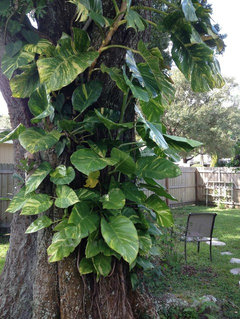
    Growing up my oak tree.


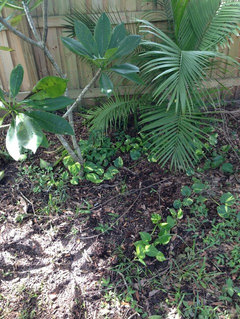
    Crawling all over the ground. Notice the beach sand which is what we call 'soil' in Florida.

    susanpetzer01 thanked jane__ny
  • 11 years ago

    Hi & welcome, Susan! Is your plant Monstera deliciosa? If so, it's different from what is in Jane's pic, (Pothos AKA Epipremnum aureum.)

    You mentioned rocks in the bottom of the pot, but is there a drain hole for excess water to escape? If not, there could be a lot more water in there than you think, and/or a build-up of tap water and fertilizer substances could be making your plant ill.

    You might find something of value in another discussion about the same kind of plant:

    http://forums2.gardenweb.com/discussions/3438852/training-an-old-split-leaf-philodendron?n=5

    Leafy tropical plants do not take well to becoming too dry, they are moisture-loving plants from a moist environment. It's even more critical for these kinds of plants to have a chunky/porous/airy soil so they can stay moist without their roots rotting from lack of oxygen. Letting plants like this dry to combat potential root rot is a much more difficult endeavor than using a different kind of soil that would allow you to keep the roots moist, while also having plenty of oxygen so they don't rot.

    The info here goes into much more detail about that:

    http://forums2.gardenweb.com/discussions/1490818/good-growing-practices-an-overview-for

    susanpetzer01 thanked Tiffany, purpleinopp Z8b Opp, AL
  • 11 years ago

    Hi Tiffany/Jane


    Thank you for writing back to me. Sorry its taken me so long to respond - been a bit hectic at work.

    Yes from looking at the pictures I think it just might be a Monstera Deliciosa??... Still don't know what the problem is with her. The roots were white and healthy despite bringing the soggy soaked plant home from the store. Do you think the organic potting soil would be too heavy for this plant? maybe not allowing enough oxygen to get to the roots? I put biggish rocks at the bottom of this pot about halfway up so that there was no way the roots would be sitting in water. I only give about a cup of water twice a week to the plant. Heading into winter so I didn't want to over water her. I see new growth though which is encouraging


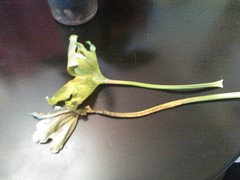
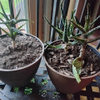
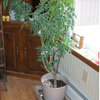
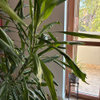
    See attached pics -1) this is a picture the affected leaves..they go yellow then turn to a mushy slimy brown .2) then a picture of the room my monster is in with the big window that lets in quite a bit of light. 3)Then a picture of the plant itself including the "pot" its in.. Let me know what you think


  • 11 years ago
    last modified: 11 years ago

    Susan - Tiffany is pointing you in the right direction with her comments pertaining to root health. You simply can't hope for a healthy plant unless you can provide an environment conducive to a healthy root system; and even if you could make every other cultural factor that influences your plant perfect, it wouldn't make up for or counteract the limitations imposed by a sick roots.

    Using rocks as a drainage layer can be counter-productive or it can be helpful, depending on what's going on in the bottom of the pot. Used as a drainage layer, they are almost certainly counter-productive. Used as ballast, they can range from somewhat helpful to very helpful, depending on how they are situated in the pot. I'll try to illustrate with a little science.

    In the picture above, PWT means perched water table. Perched water is water the soil holds so tightly, it won't drain from the pot by the force of gravity alone. Most commercially prepared soils hold from 3-6" of perched water, meaning that if you water fully, until water is exiting the drain hole, after the pot stops draining, the bottom of the pot is fully saturated with water. Since water and nutrient uptake is energy driven and requires oxygen, you can easily imagine what effect the lack of oxygen has on root function.

    If you add a "drainage layer" water simply perches in the soil above the drainage layer (see the middle picture). Obviously, that's worse than the first picture because there is considerably less 'healthy' soil for the roots to use in the middle pic than in the first pic. Using ballast correctly reduces the amount of soil that the PWT can occupy. There is less soggy soil, so less excess water in the picture with ballast than in either picture, so even more ballast would be helpful. The problem is, the ballast doesn't fix the soil that causes the excess water to be retained. It just uses physics to reduce the amount of excess water the soil CAN hold. Are you still with me?

    What we CAN do, if you're up for it, is put together a strategy that will help you rid your planting of SOME of the limitations causing the problems that are related to water retention.

    The links that Tiffany left are good primers and can provide something of a framework of knowledge that can be expanded upon. With a little effort, you can very quickly learn to avoid all the most common pitfalls that bring people here, looking for help. I don't want to assume anything, so I'll keep an eye out for a reply and what you think of what I said.

    Thanks for the referral (thread you linked to), Tiff. ;-) I DO notice when you do that, and want you to know I appreciate it.

    Al

    susanpetzer01 thanked tapla (mid-Michigan, USDA z5b-6a)
  • 11 years ago
    last modified: 11 years ago

    Hi Al! I completely understand what you mean with Perched Water Table and Ballast. It is starting to make sense in my head....just not sure yet how to put it into action.

    Maybe i need to go back and a) revisit the type of pot my baby is in (obviously needs better drainage, B) soil type - I think the organic potting soil is too dense/tight and needs to be broken up somehow and made lighter, maybe by mixing with another potting medium that allows better airflow and better drainage? and c) need to check the roots and see if they are still white and healthy. I am DEFINITELY open to coming up with a strategy with you on improving the "water retention" issue with my Split Leaf

    Ill look through the info on the links Tiffany referenced as well as do more research on ballast/PWT before I make a move. Just been a bit hectic at my new job so I'm learning little bits at a time.

    The plant is sending out new shoots which is encouraging at least. Thank you both for your time and advice!!!

  • 11 years ago

    Sorry, Susan, thought you were describing a different plant. Of course since we moved to Florida, I'm always amazed seeing all my 'houseplants' growing outdoors. These plants grow as landscape plants all over where I now live. They grow quite dry.

    Personally, I would try to keep the plant alive over the winter and do a repot in Spring. Let the plant dry out, don't water until you know the soil is dry down to a fingers depth.

    These like to dry out and they do take bright light.

    In the Spring, when the weather stabilizes, you could mix some wood chips or perlite into your potting mix. That will open it up and let it dry out faster.

    Try to move it to a bright window and cut back on your watering. These are tough plants. Wait for Spring/early summer to do any repotting. You don't need to 'jump through hoops.' The plant can wait until Spring.

    Jane


    susanpetzer01 thanked Jane
  • 11 years ago

    Good luck & good vibes to your plant, Susan!

    Jane, I look forward to seeing more of your FL pics around the forum!

    The Philo under discussion in this post is at its' very edge of hardiness here, where one can reasonably hope the roots stay alive, but not guaranteed. Going to take the leap and not dig mine up, been in the ground since March.

    susanpetzer01 thanked Tiffany, purpleinopp Z8b Opp, AL