Software
Houzz Logo Print
vlk20

Help identifying leaf spots on pieris japonica

10 years ago
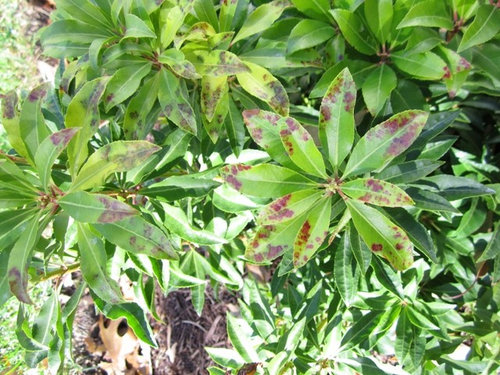
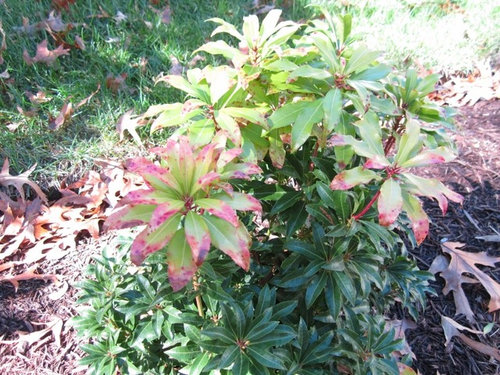
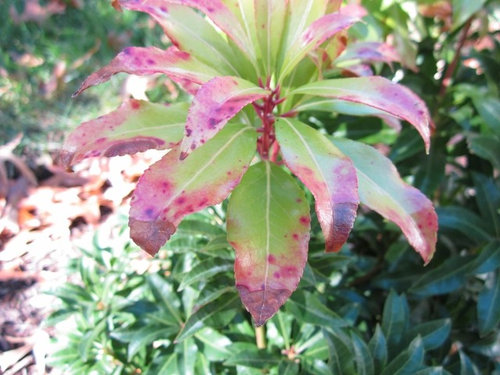
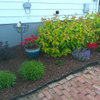
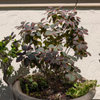
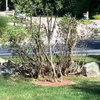
We just planted these "Mountain Fire" pieris a month ago (new planting area, using a mix of the original sandy soil, humus/compost, and "shrub soil") , and I'm noticing these spots on the new growth. Since these are such slow growers I don't want to prune off the affected branches, and I am hoping that someone can identify this problem so I can treat it. The first photo is of one plant, the second & third are a plant about 4' away. Help, please?


Thanks!

Comments (19)

  • 10 years ago

    transplant shock ... perhaps improper planting .. and probably improper watering ... hope you didnt fert it also ....


    see link for suggestions on all


    ken

    https://sites.google.com/site/tnarboretum/Home/planting-a-tree-or-shrub

  • 10 years ago

    Thanks for the link, Ken. This really makes me mad (especially as I am still recovering from the planting 40+ shrubs, grasses, and perennials over a 2 week period only a month ago!).

    I checked out the link and I did everything correctly, but I knew this since I've been planting stuff for over 30 years. The only thing I didn't do is plant in native soil, which is crap (sand-clay) so I used a mixture of other soils along with the native stuff. Shoot.

    So what do I do? Leave it alone and see what happens? Almost everything else I planted is doing well (although I still have my fingers crossed, and will do so over the winter).

    BTW, no fertilizer on anything until next spring.

    *sigh*


  • 10 years ago

    Pieris, like its rhododendron cousins, is subject to a number of fungal infections which cause the sort of leaf discoloration shown in the photographs. There are fungicides which can prevent it, but none, at least that I am aware of, are curative. Most growers just live with it as such infections are not a serious threat to the plant's overall health. Removing fallen leaves may be somewhat helpful in preventing re-infection next year. Chances are you did nothing wrong in planting, watering or soil preparation. Environmental conditions over which no gardener has any control such as humidity, temperature and rainfall do play a role. Leaf spotting may be very minor in some years and more noticeable in others.

  • 10 years ago

    An exception I would add to the above is the possibility of phytophthora ramorum, the pathogen responsible - in another form - for Sudden Oak Death as the cause of the spotting. Laboratory analysis is really the only way to differentiate p. ramorum from the many other infections which look very similar. It's highly unlikely that p. ramorum infected plants are still being circulated with the rigorous inspection and reporting systems in place, but it might be a good idea to contact your state agriculture department to see if there have been any incidences of infected plants showing up near you.

  • 10 years ago

    Thank you, akamainegrower. I am going to send off a couple of leaves for lab analysis. We have a lot of huge oaks around here. My husband mentioned that there were a few small spots on the leaves of the worse-looking plant when we bought them, but otherwise it looked healthy and was larger than the others so we decided to purchase it. If it is phytophthora ramorum, I will have to contact the nursery immediately.

  • 10 years ago

    "If it is phytophthora ramorum,"

    Quite unlikely, as akamainegrower indicates. And SOD presents differently than that on pieris anyway.

  • 10 years ago

    Nice to know, thanks gardengal48. I did print out and fill a form for the plant path department at the state universtiy, and will send a couple of the leaves for analysis. I'd just like to know what this is, and if I can do anything at all. We had the same pieris at our home in PA and they were drop-dead gorgeous; I was hoping that amending the soil and giving them a similar growing site would produce the same results at our new place.

  • 10 years ago

    Please let us know the result of the lab test.

  • 10 years ago

    Don't feel bad about amending the soil, either. Pieris, azalea, rhododendrons and other ericaceous plants definitely require a loose, acid, highly organic soil and will not do well without one. If you have such soil naturally, amendment is not necessary. In other soil types, amendment or planting above the native soil rather than in it are the best things to do. Nurseries such as Whitney Gardens, Singing Tree, Rarefind which specialize in rhododendrons have good online planting instructions that go beyond the overly generalized "no amendments ever" mantra.

  • 10 years ago

    It looks like they may have come from a shady area or grown under shade cloth before you planted them in more sun than they were used to. Looks like sunburn to me when the leaves were just emerging, maybe coupled with a lack of water at that time. Did you fertilize them when you planted them?

    I really like the Pieris japonicas and have a lot of them.

    Mike

  • 10 years ago

    Receved from the plant pathology department:

    I received the leaves of the Pieris japonica that you sent in. I did not find any plant disease or insect pests. Since these shrubs were planted just this season, in September, I believe this is stress due to transplanting and establishment of new shrubs. The red color is a sign of stress in plants, and the marginal browning could be water related. I do not recommend fertilizer on newly planted shrubs because they have not had a chance to put out new fine feeder roots. Also the same with water, probably twice a week should be good enough unless the weather is very dry and windy. Some of these plants are pH sensitive, so it might be a good idea to check your soil and make sure the pH is not too high. I would try to be patient and reevaluate these shrubs in the spring.

  • 10 years ago

    "I do not recommend fertilizer on newly planted shrubs because they have not had a chance to put out new fine feeder roots"

    If only every piece of wholesaler-grown container stock in the country came with this notice attached.

  • 10 years ago
    last modified: 10 years ago

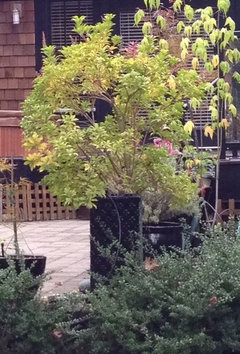
    I have a very similar issue going on (leaves look the same) except that my Pieris plant has been in a container for several years and probably is stressed out because it's too big for the plant. Would it be okay to repot it now? I'm in zone 9 Victoria BC. Is it too cool now if it's going into a container?

  • 10 years ago

    Do you mean too big for the container? If so, it very well could have been too dry a time or two this summer.

    Yes, you an repot now into a larger container. Use potting soil instead of garden soil.

    I love Victoria and Vancouver Island and have visited it many times over the years. I have some friends in Sidney.

    Mike

  • 10 years ago

    Thank you Mike. I will re-pot later today if the weather permits. We had drought-like conditions in the summer but now the winter rains have returned. It's been in this container for a few years and no doubt the soil is depleted.


  • 10 years ago

    (And I am happy to hear you enjoy the place I live as much as I do!)

  • 10 years ago

    That IS a large one to be in a container!

    Yes, looks a little low on nutrients. Have you tried Osmocote? It's a time release fertilizer.

    Mike

  • 10 years ago

    No, I've never seen Osmocote available in my garden centers until last week in a 50 lb bag! I'll start with repotting and I'm sure it will be great! I just wanted to make sure it's not too late in the fall to do it. Thanks again for your advice.