Software
Houzz Logo Print
jamshed_gw

Please identify tree/shrub growing crazy big

10 years ago
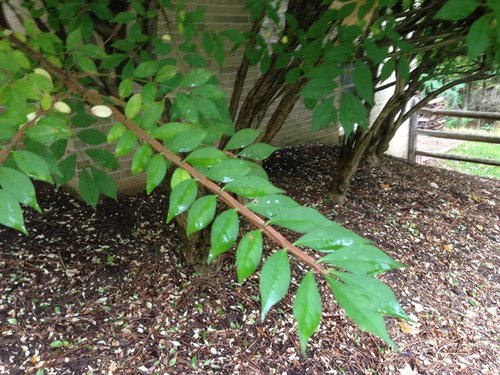
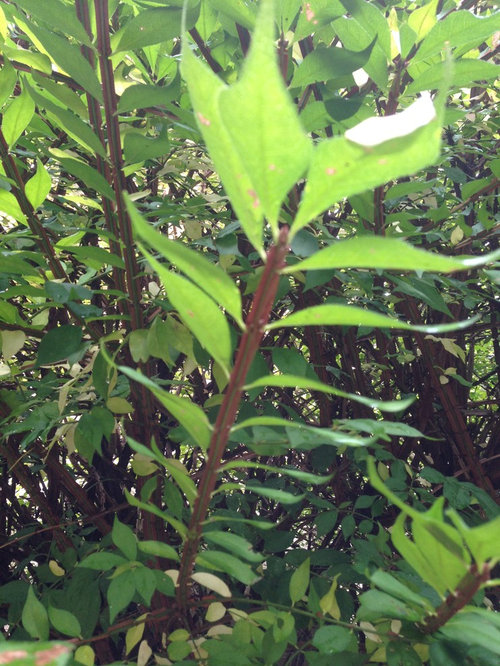
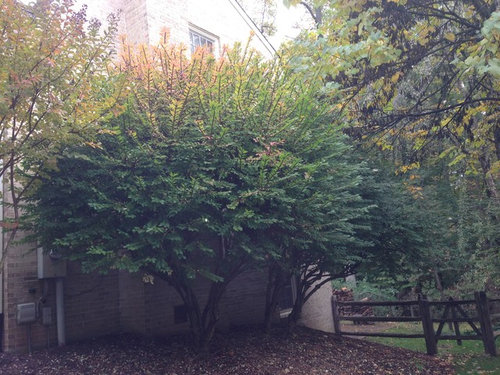
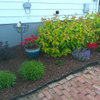
There are three of these growing on the side of our house and getting a bit out of control. What are they, and how much can I trim them back?


Comments (21)

  • 10 years ago
    last modified: 10 years ago

    Something evergreen would be better in that planting location anyway. In USDA 7 you should have many possible choices. If you are instead going to hang onto these - at least for awhile - you can saw them down quite low and have them shoot back up again quickly. They look much better handled this way than lopped back part way or hedged.

    Jamshed Mulla thanked Embothrium
  • 10 years ago

    Thanks, gardengal48 and Embothrium. We live in MD (suburban DC). I am not sure whether this is invasive in this area or not. I believe it was an original planting when the house was built in the 1980's. I actually like the plant, but just wanted to know how to care for it. I have trimmed it back pretty significantly several years ago and it has always come back with a vengeance. I do not want to go through the trouble of pulling it out, though. It is not bothersome even when it grows because it is on the side of the house that has only one window on each floor and it can be easily trimmed to keep them clear. Most of it covers the utility boxes and chimney which isn't particularly pretty anyway. That side of the house faces my neighbor's garage, so there is no major interference on their side either.

    Anyway, thanks for the identification and advice.

  • 10 years ago


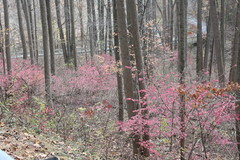
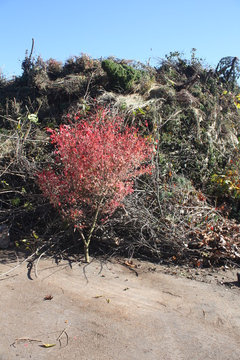
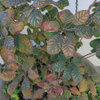
    jamshed, here's what you do in about two weeks. Travel around your local parks and wooded areas and notice all those red shrubs. They are winged euonymus like those in this pic in a Maryland Park. The Belt Woods near Bowie was a pristine, virgin forest prior to 1982. It's a long story but Gov Hughes brought the logging to a halt. The remnant that is left is fractured parcel and the understory is heavily infested with Winged Euonymus. As soon as you can get your hands on a chairsaw cut those weeds at ground level and paint with full strength herbicide. BTW when you replant don't cover your chimney cleanout.

  • 10 years ago

    sam_md, I am no expert, but can you please explain why it is necessary to eliminate these "weeds" as you say.

  • 10 years ago

    You eliminate them because they are invading the woods. They are invasive!

  • 10 years ago

    jamshed please join us tomorrow night at the Wheaton Library 11701 Georgia Ave. Maryland Native Plant Society members like me will be happy to answer your question.October MNPS meeting

  • 10 years ago

    Euonymus alatus is one of the most common of problematic invasive species, listed as such in at least 26 states (mostly along the east coast but also into the Midwest). Its sale is even banned in several states. It is considered invasive by the ease with which it reproduces - birds devour the fruit/seeds and disperse them over a large area; the germination rate is very high and the plant is extremely adaptable to a wide range of growing conditions so it can flourish just about anywhere. And does, invading forests and natural areas and out-competing native species and altering habitats.

    You may never see any sign of it reproducing readily in your garden, but that does not mean it is not happening in other areas close by. It is just not a recommended plant to maintain and grow in the areas where it is considered invasive - that's why all the suggestions to remove and replace with something else.

  • 10 years ago

    get rid of it.. you can do so much better ...


    but if you insist.... you could cut it to 3 inches.. and it will be just as big in 2 or 3 years ... a true weed tree ... as in.. grows like a weed ...


    ken


  • 10 years ago

    Looks like a good spot for camellias. Just sayin'

  • 10 years ago

    I always thought of this as a decent shrub, and even somewhat doubted its invasiveness. That is, until I saw a certain woods in this state's vacation-land Door County, just overrun with winged Euonymous. More recently, found wooded ravine right in this city with many, many plants coming up. So, I'm a believer now and would not hesitate to suggest someone get rid of theirs. Incidentally, Euonymous atropupurea, the native shrub from that genus, is a much under-used plant, full of much charm. Plus, it's got one of the best common names in all of botany-eastern wahoo!

    +oM

  • 10 years ago


    Here's what I do with BB when I get my hands on them. Pic taken at our local composting facility. Stem was cut flush to ground and painted with concentrated herbicide. There is a spot in our local state park where the understory is solid with these weeds.

    Jamshed Mulla thanked sam_md
  • 10 years ago

    Thanks, sam_md

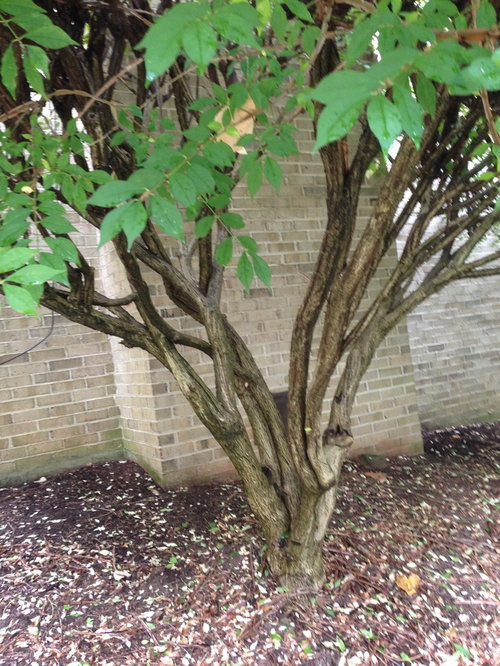
    I plan on cutting does the BB's after the leaves are down (almost there). Does anyone know how difficult they are to uproot? Mine have probably been here since the house was built (in 1979) so the stems (trunks!) are 3-4 inches around.

  • 10 years ago

    Most I've seen have a big, dense, and very fibrous root system. Yours are quite large-I'd expect the worst, although that said, I'm sure it's a doable thing. In addition to shovel, I'd have loppers and mattocks at the ready.

    +oM

  • 10 years ago

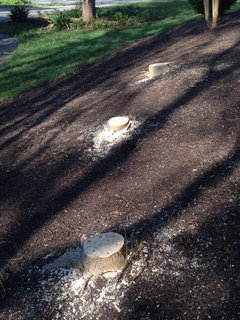
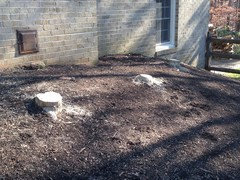
    You will be happy to know, it has been taken care of.

    Here are the pics:

    https://www.dropbox.com/sh/nutb5lza1j2ezct/AACpxsPSKlIl48lYbhN_vG89a?dl=0


  • 10 years ago

    Good job. So again, it is/was an attractive plant-no question there-but its proven invasiveness makes further use in the trade verboten-I think.

    Not going to drag this convo down into the weeds, but there is a huge amount of controversy overall about invasive exotic plants and their true impact. Again, not going to get into details but suffice to say, I believe each and every case must be considered on its own merits. I am one of a group of researchers and practitioners who believe some of the poster-plants for exotic invasiveness have actually never been proven to displace native species. But that said, the shrubby ones that I'm aware of all seem to create real and lasting problems.

    +oM

  • 10 years ago

    Thanks, all. The deed is done and there is no turning back. :)

  • 10 years ago

    Great job! It's always nice when folks take the warnings about plants that are invasive seriously. Be aware that they have the capacity to resprout from the stumps next season unless you have painted the top edge of the stump, along where the bark meets the top, with herbicide that is rated for the purpose. Alternatively, you can just go out there once a week or so all next season and remove all the sprouts, and eventually the plant will give up.

  • 10 years ago

    Not the most attractive solution, but it does work. Place some heavy duty black plastic over the stumps and weight it down with rocks. Takes a couple of seasons, but it works.

  • 10 years ago
    last modified: 10 years ago

    You could let them start regrowing and spray any regrowth around July, with a max-dilution of any typical herbicide and some extra surfactant to make sure it is absorbed. (1/4 tsp dishwashing liquid per gallon)

    I myself would use triclopyr because it's so good at killing brush.

    Wait a sec, I see you drilled holes so I guess you applied herbicide and they are already dead.

  • 10 years ago
    last modified: 10 years ago

    All you have to do is cut the re-growth off repeatedly, while still small and the stumps will run out of steam. By the time you mix up and apply a spray, clean the sprayer each time you could have just done some more snipping. (And pruners aren't toxic).

    Unless the spray kills them with one or two applications. But even then you are left with a bunch of spray concentrate you don't need, have to dispose of - unless there is a lot more spraying you want to do elsewhere on the property.