Software
Houzz Logo Print
monika_hack

Front yard design help

10 years ago
Hi all,
first of all thank you for taking your time and reading this.
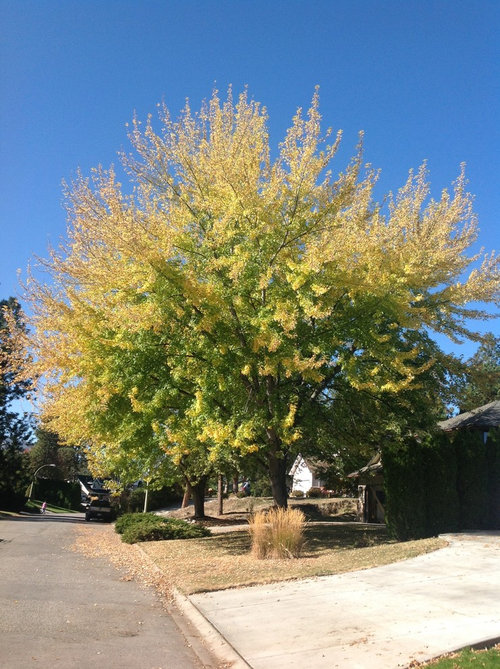
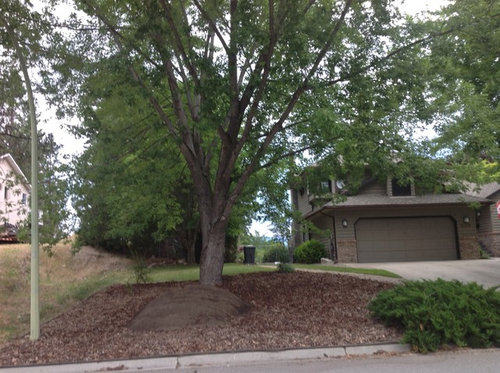
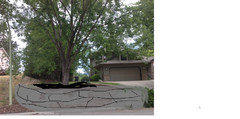
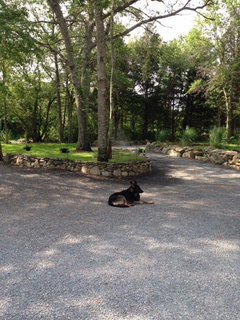
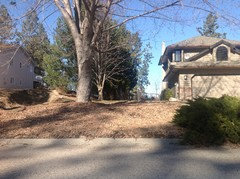
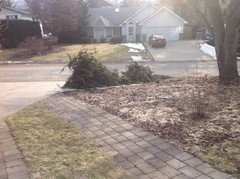
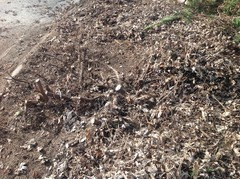
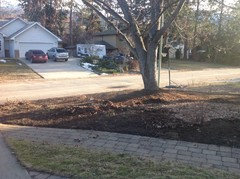
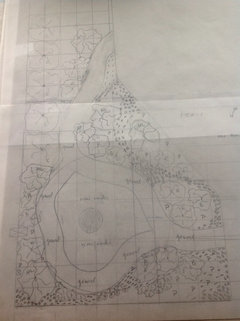
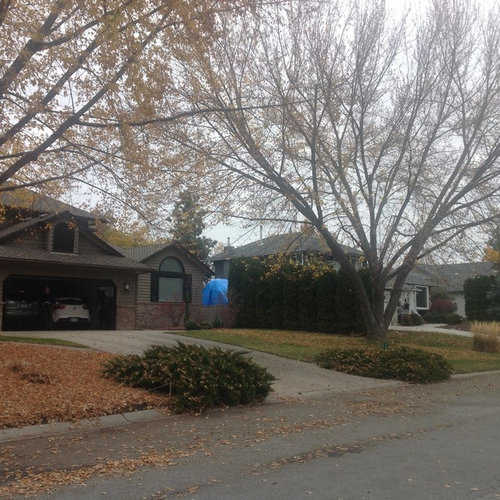
Our house was built in 1988 and is located in the Okanagan Valley in British Columbia with dry and hot summers, little rain and moderate winters. The former owner placed two Silver Maple trees in the centre of each front yard part. Meanwhile the anchor roots are pushing through and the grass and the hair roots of the trees compete for water. Last year we decided to kill the lawn on the left side with cardboard and rough bark mulch. This is done, but now we have difficulties to decide how to go on. It's extremely hard to get into the ground because of all the roots and we have a lot of shade in summer, but the shade is not rally very dark. We want to keep the trees and we would like to do most of the work ourselves as we really like to it. I came up with some drawings, but I'm so unsure about which way to go. I would love to hear all kinds of ideas. Right now we only killed the lower part of the left lawn. Measurements appr. 12x12 yrd. The lawn is 22 yards deep with a change in width. The first picture shows parts of both front yards with the driveway in the middle. Second show the right tree, photo taken from the right side. The driveway that can be seen in the front is our neighbours. Third picture left side with parts of the house. I have to mention the "tons" of leaves we get every fall and that we need them to come off, somehow. Maybe you can help us here? Thank you in advance, Monika

Comments (44)

  • 10 years ago
    That is great idea when it comes to choose plants. We tend go Xeriscape as much as we can, but there are not too many Xeriscape plants for shade. Right now we hang in limbo with just the layout, or the structure, or the design of this space. Thank you for your comment!
  • 10 years ago

    Those trees are humungous. You need to trim them and keep them trimmed. I am not a garden expert, but they are bordering on being a danger. If you want to keep them hire a tree expert to come out and come up with a solution.

  • 10 years ago
    Thank you for your advice. The trees get pruned regularly, thinned out and reduced in length.
  • 10 years ago

    Trees can't just be planted anywhere in the landscape, and one of the primary reasons is that their roots don't always play nicely with other below-ground or surface elements.

    In fact, over time, aggressive root systems can cause serious damage to landscape structures and utilities, most importantly our homes.

    Here are a few common northern trees with particularly invasive or aggressive root systems: Silver Maple (Acer saccharinum) - shallow and dense roots, plant well away from homes and forget about planting any gardens nearby!

  • 10 years ago
    Well, it seems to be indeed a topic. I agree that the trees are way to big and the roots are already a problem. Our summers are really hot and the shade is appreciated be everyone who needs to park his car. Till now it seems that your response to our problem is to remove the trees?
  • 10 years ago

    Appears that the dilemma is do I want to provide shade for my visitors or is my priority to take them out and save my lawn and my back in the fall?

  • 10 years ago
    The trees cool the house as well.
    The comments I received so far are not even close to my question about the layout or design.
    This is not helping. I think I close this thread. Thank you.
  • 10 years ago

    I would hesitate before removing both trees knowing how hot and dry it gets in your part of the world. I would consider a compromise and remove the one in the area that still has the grass intact. That way you have one area of deep shade and another more open area. Talk with a local nursery, master gardener or garden designer about attractive well behaved small trees or shrubs that work well in your area to replace the tree and convert that area to a xeriscaped garden including native plants, bulbs, rocks and ground cover plants or mulch.

    Meanwhile back to the original maple tree: native ferns do well in dry shade, early bulbs that flower before the tree leafs out would also be an option. Again, a local garden expert can give you tailored advice for dry shade plants in your area. All those maple leaves are a gold mine for mulching! If you bag them up, and water them well in the bags, stash them somewhere out of sight for the winter, by spring you will have nicely rotted leaf mulch.

  • 10 years ago

    Not a landscaping pro but this worked for me:

    If you want to the roots to not grow/crawl around on top of the ground, they need seek/find water below ground.

    When there is little rainfall, the ground does not get wet deep and roots seek water where it is -- near the surface.

    The roots of trees feed about the same distance from the trees where its limbs reach.

    You could try digging long a ditch about two feet wide and two feet deep near that point where the roots will feed and creating the equivalent of a septic tank drain field (gravel filled in to within a few inches of the top of the ditch w/pipe that has holes in the bottom of it just barely covered in gravel.

    Add some of the black flexible pipe to your nearest gutter downspout, burying it just below the ground and connecting it to the drain field pipe. Cover the pipe from the downspout and the drain field with several inches of dirt.

    Adding a layer of roofing paper over the pipe and gravel will make it less likely the dirt above the pipe will wash down into the gravel and fill in the pipe holes with dirt.

    The rain or any water you pour into the gutter will water your trees below ground and the roots will seek out that water -- not just stay near the surface.

  • 10 years ago
    last modified: 10 years ago

    Oh, just noticed that you were cutting off the thread, too bad! I think that the work you have done so far is great. Getting rid of lawns and replacing it with mulch like you are doing is a good idea. Were you looking more for creative design ideas? I like to look at natural areas for inspiration (camera helps) and then try to integrate those into the city/suburban garden so as to blend the transition from the wild into the "edge of the wild" mixing native with hardy garden perennials, shrubs etc.

    Good advice above re. dealing with roots, also piling on the mulch and leaf mould really helps as well. Happy gardening!

    PS Re the leaves: we leave our grass a little long for the last cut of the year, if you have a grass catcher, just mow over the grass and leaves and it will act like a vacuum cleaner and you will have even more organic matter for your mulch collection.

  • 10 years ago
    Hi mramsay,

    thank you for your suggestions. This could be a way to do it. We were already thinking of removing one tree, but hesitated because it is symmetrical, balanced.
    I know the Okanagan Xeriscape organization well and I'm a member. They installed some really nice draught tolerant garden in the city. Thank's again. Appreciated.
  • 10 years ago
    Hi suezbell,
    it seems to be neat idea and I'm glad to hear it worked for you. I guess about 3/4 of the tree drip line is covered by concrete or is on the neighbours property, which is a work in progress for years. When we dig in the ground we find hardpan after a foot and when we fill it with water the water stays for more then 8 hours, does not move a bit. Fortunately there was a lot of dirt added over the years. Thank you for suggesting!
  • 10 years ago
    Hi mramsey again,

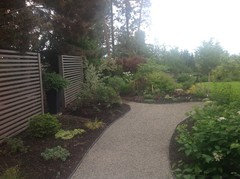
    I was a little disappointed with some of the first comments. They just missed the mark. Here is a picture how my garden entrance looks behind the left large front yard tree to give an impression. And behind the shed behind the screen are two big compost bins we build for the maple tree leaves.
  • 10 years ago

    That is your garden? Look great! To deal with hardpan you are more likely to get improvement by layering humous on top rather than more soil. There is a lot of interesting new information around amending soils with micorrhizal fungus, aerated compost teas etc. The old school advice was to double dig or till which usually makes things worse. It's a little technical but this article has some good info re improving soils. http://ohioline.osu.edu/sag-fact/pdf/0010.pdf

  • PRO
    10 years ago

    I like the idea of a native garden that was mentioned by Trim Spaces.

  • 10 years ago

    I think that your original post should have been more specific, it said we want to keep the trees.

    When someone mentioned something about cutting or triming or removing , there is a sense of unfriendliness from you. Then you say, we were thinking of getting rid of one of the trees.......You should have said this initially, as well as sharing your drawings.

    You know this is a difficult dilemma and the advice is free, and Houzzers want to help, but share your information - so that we can.

  • 10 years ago
    Hi We Rite it,

    would you mind to explain the native garden concept a bit more?
  • PRO
    10 years ago

    You had mentioned you were from BC, I am sure there are native plants from your area that would look good combined with the tree. You had mentioned that you have already removed the grass from the area, why don't you try a small garden and see what it looks like. I would never remove the tree myself. I hope this helps..

  • 10 years ago
    WeRiteIt

    Yes, it does. It gives me confidence to go on and not give up and go back to lawn again. Thank you!
  • 10 years ago

    I would build a stone retaining wall about level with the rest of your lawn and fill it and then add a nice dark mulch. Not an expensive job and will make your home really stick out!

  • 10 years ago

    Also, what roof do you have?

  • 10 years ago
    Home owner

    Can you specify your suggestion with the stone wall? I mean where would you put it and how ( like straight, curved, wavy)?
    I hope it's not too much to ask!

    The roof colour is black, the house is Barn Board - some mud tone, the windows are black as well.
    Thank you!
  • 10 years ago

    hard to explain and draw.... i would build a retaining type wall out of a stone of your choice. Back fill dirt behind the wall to help support the wall and level your yard. You could always grow grass or mulch around the tree. You need to taper the wall to where the yard is level and also curve around the corner of your property...


  • 10 years ago

    don't mind Rocko, but look at the wall behind him to the left. I built the wall and had it filled in. I eventually got some grass growing. You would have to decide on the type of wall. There are retaining wall systems you can buy from large retailers versus using indigenous stone like i did.....was also free.

  • 10 years ago
    Hi Home Owner,

    your wall with the trees and the gravel looks really nice. I like it. I'll sit down again with some drawing paper and try to imagine. Did you do the planning yourself? And decided how to shape it while you worked on the project?
    It does look good!! Thank you.
  • 10 years ago
    Oh, home owner!
    Just now I realized you did a drawing and that is great. Thank you for your effort and idea and help. I like Rocko as well.

    Really, thank you!
  • 10 years ago
    last modified: 10 years ago

    The silver maples are native trees, and you'll see in nature that the ground under them is almost completely bare. They have shallow roots, and kill most stuff above them, even other native plants.

    And if you add soil over the roots and try to grow stuff in it, it will damage the tree. Those roots are meant to be on the surface. You might get a few ground covers to grow, but it's hard on them. Try ajuga (bugleweed) or golden creeping jenny. Or just mulch it and it will look fine. If you want to add interest, large pots are the way to go.

    Here's a link to a discussion link

  • 10 years ago
    Thank you partim. Very helpful, especially the link to the gardenweb forum.
  • 10 years ago
    I love your big shade trees! Your work at removing the grass and mulching is wise. Better to accept the lovely shade (and no grass) than try to fight it.

    I am a believer in Sunset Western Garden zones. Looks like you might be in their zone 2B (but check the link here to be sure). With that information, you can search their plant lists for things that thrive/survive in shade and can compleat with tree roots.

    http://www.sunset.com/garden/climate-zones/sunset-climate-map-eastern-northwest
  • 10 years ago
    Thank you Carol!
    I'll do and thanks for the encouragement. I know we're zone 4 as we live up the mountains quite a bit and the winters are full of snow but on average it's not extremly cold. We have only little rain that made us think about Xeriscape.
  • 10 years ago

    Cheer up. At least you know you can grow junipers. Or whatever it is. I am in California, USA. Like you, I am restricted in what I can grow due to the shade. It seems that a lot of xeriscape type plants need sun. I expect if will be harder even for you, due to your winters. Boxwood is is a low water plant. Mine grows in filtered shade. Like you I have a tree blocking the sun but the tree does not have a dense canopy. Some boxwood can take zone 4. I will probably end up planting more just because I know it can live.

  • 10 years ago
    emmarene,

    that's great advice as boxwood grows here as well, is hardy and evergreen. Maybe thats the way to go with evergreens instead of Xeriscape. Something to think about. Thank you!
  • 10 years ago
    I suspect you are USDA zone 4 and not Sunset zone 4. What I like about Sunset is how they look at much more than simply how cold it gets in the winter. They look at moisture, growing season, and other factors to really help you fine tune your plant selection. I know if I simply went by the plants for sale in my local garden center, I would be making LOTS of mistakes.

    Let us know what you end up doing.
  • 10 years ago
    Well,
    Happy New Year to all of you.
    I'm very often disappointed to not get any information about how a planned project went. Houzz members just cut off the dialog after receiving great advice. I intend to keep you posted. Right now everything is covered in snow, but my mind started to think about our front hard again. In my next post I'll let you now about what I learned so far and what the next step will be. I hope you'll enjoy it. And again thank you for all your help!
  • 10 years ago
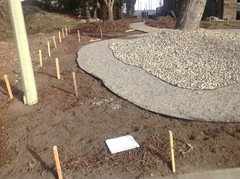
    I started to clear the front yard. Removing the age old juniper and the bark mulch that killed the grass was much easier than expected.
    I did a drawing for this part of our front garden. And my husband and I really like it. We have to be selective when it comes to choosing plants as the deer just see our property as their pantry.
    The next steps will be:

    Remove the rest of the bark mulch and put it at the designated area to kill the rest of to lawn.

    Buy edging for the gravel path - done.

    Dig holes for the plants. This will be very time consuming. We have lots of stones here, so no auger. And in some areas after a foot or so I hit hardpan. But this part is extremely important. I want my shrubs to have good soil around them when I'll plant them.

    The plant holes, measuring and laying out the pathway should be done by end of March. Gravel and dirt early April and plants afterwards. Sounds like a good plan!
  • 10 years ago
    And that is my plan for the left side of my front yard.
  • 10 years ago
    I had the same problem with my garden, 2 ex large maples and have one on my new property. What I did was make a large sitting area with a bench and a chair, the to create a bit of privacy, added a few shrubs and hosta. To compete with the roofs, I dug huge holes, not easy! ,the got the biggest tree containers I could find, put fine screening in the bottom to prevent the roots from getting in, then put the (black) containers in the holes, added compost and potting soil and a handful of bone meal, then the plant then more compost and soil to within a couple of inches of the rim. Put the deep enough so the pot doesn't show too much but not so deep that the tree roots will encroach. I use a natural colour bark mulch for the seating area and a black mulch for the garden. Hope this helps. I'd hate to see such beautiful trees come down!
    Heather
  • 10 years ago
    The trees are gorgeous and look healthy and well maintained. Some people see big trees near a house and have a knee jerk reaction to take them out or trim them to death. The trees have enormous ecological value & also add value to your home.

    I suggest going to an independent nursery & asking about native groundcovers that thrive in dry shade. Getting rid of the lawn was an excellent choice. You could do a very simple design with some boulders , ground covers and native bunch grasses for movement.
  • 10 years ago
    Thank you for your thoughts and comments. I was thinking about how to protect the new plants from the ubiquitous tree hair roots. To go with big containers seems a great and long lasting choice, what a great idea. Thank you!

    Out trees get pruned, but we probably have to think about thinning them out. Next pruning wouldn't be before fall this year.
    And yes, grass and trees...doesn't work in the long run. The tree wins!
  • 10 years ago
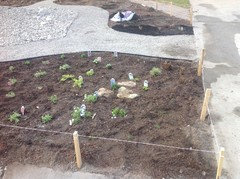
    Some of the work is done.
    The front part of the left side of our front yard is done. The plants still look tiny, but that will change over time.
    Unfortunately the deer cross our front yard frequently as it is a short cut on their way down to the lake. We know we can't change that and think about putting stone on top of the plant beds once the plants are established. Therefore we're also thinking of converting our existing irrigation system to drip irrigation.
    That's all on this journey and we're very happy with the result. Thanks again for your advice and help.
  • 10 years ago
    Pictures:
  • 7 years ago

    Very interesting, all these suggestions and what you have done. Any updates on how the project is doing two years later?!