Software
Houzz Logo Print
oklamoni

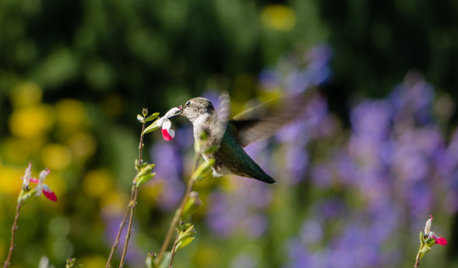
pineapple sage loaed with bees today

10 years ago
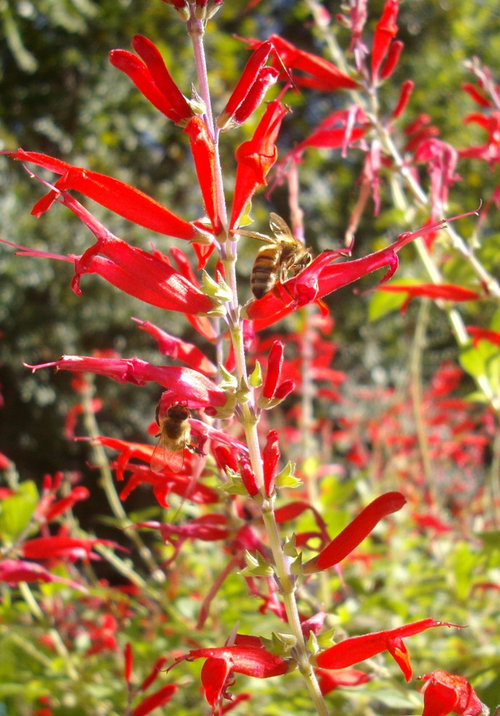
Just beautiful. Sure wish, it was this pretty all summer long... but it is awesome right now.


Comments (9)

  • 10 years ago

    I know! I thought it bloomed earlier the last time I grew it. I cut a sprig to try to root and keep going for next year. DH says he's going to redo that bed, so even if it would survive the winter it would be gone anyway.

  • 10 years ago

    Usually they do bloom earlier than this but everything about this year has been odd. It is beautiful, Moni, and I'm glad the bees are enjoying it.

  • 10 years ago

    I was just reading about chia seeds. Chia is a salvia. Wonder if you can eat the seeds of other salvia. Like quinoa is a realative of lambs quarters, so could you use lambs quarter seeds like quinoa? Someone will have a good reason to refute my logic. All of these things must reqire a lot of plants for a decent harvest. What I found said 1/2 cup Chia seeds per plant. Plants are 4 to 6 feet tall and spacing is at 18 inches. But you can eat the leaves and dry them for tea that is supposed to be good arthritis. I found something new to me at Sprouts, kaniwa. Used like quinoa but no saponins. High protien. Probably won't grow here because it is an high altitude Andes plant that grows well in cool weather. My amaranth seed molded before I got it threshed out. :(


  • 10 years ago

    My pineapple sage (thanks to spring fling folks) is covered with bees too

    Most bees I've seen all summer.

  • 10 years ago

    Just because chia seeds are edible, that doesn't mean all salvia seeds are. The salvia family is huge and at least one member of it (Salvia divinorum) has leaves that are hallucinogenic or consciousness-altering to the point that it is illegal to grow salvia divinorum in Oklahoma, as well as in many other states and countries. So, I'd be hesitant to try eating the seeds of any variety of salvia unless is is something like chia that has a long history of being edible and safe for human consumption. All salvias are not the same, and you'd have to grow a ridiculous amount of salvia plants to get enough seed to eat. I think chia has succeeded as a food crop largely because it produces more seed per plant than the average salvia and because history has shown the chia seed is safe for human consumption. Another example of a plant family that has both good (safe to eat) and bad (poisonous and potentially deadly) plants is the nightshade family. We eat plant parts (mostly fruits or tubers) of some members of the nightshade family (tomatoes, peppers, potatoes, eggplant and some ground cherries) but other members of the nightshade family, or even some plant parts of the ones I listed above, can be poisonous, which is why we eat cultivated varieties of tomatoes but don't go gather and eat all the fruit of all the wild nightshade plants that grow in the fields here.

    With lambs quarters, you can eat them as long as the plants are not grown in nitrate-rich soil. The reason is that lambsquarters (as with many other weeds) are a dynamic accumulator, mining certain nutrients from the soil. The problem is that lambsquarters accumulate nitrates. Now, if the lambsquarters are growing in poor soil that is not rich in nitrates, there is little chance the plants could accumulate enough nitrate within themselves to be harmful if eaten, but if the lambsquarters are grown in fields or gardens fertilized with nitrogen type fertilizers, than the nitrates in the soil could be accumulated within the lambsquarters to the point that nitrate poisoning could occur. The problem for any gardener, unless you are gardening on land that you personally have owned for decades, is that you don't know what sort of nitrate fertilizers have been used on your soil before you bought your place and you don't know if there's enough accumulated nitrates in the soil to be dangerous.

    I have grown enough plants of grain amaranth that I could thresh and use the seed, but it takes up an enormous amount of space. I grew seven varieties of grain amaranth one year and it totally overran that side of my garden. The plants get huge and, once they are 6-8' tall, you aren't going to pull them out of the ground either. I had to cut the plants down with big lopping shears when I was ready to harvest the flowers and grain, and that still left big root stumps in the ground. I hoped they would decompose over the winter, but they didn't. They just got hard like wood, so I had to hand-dig each amaranth root out of the ground with a digging fork. It was not fun. Threshing the seed isn't hard. You just gather the seed heads and put them somewhere to dry. When they are dry enough, the seeds literally fall right out of the flowers. However, as you observed, in rainy and humid weather, the flowers can mold before they are even dry enough to release the seeds. Much depends on whether the flowers are far enough along in seed production in late summer than you can harvest them before the autumn rains arrive. To me, stuff like amaranth, chia and quinoa are such space hogs in the garden that I'd rather just go to CostCo and buy bags of organic amaranth, chia and quinoa than to try to grow them myself. While I like the idea of growing one's own grains, the reality is that it takes a whole lot of space to get enough of a yield to make it worthwhile. Flax seed is the same way. It takes so many flax plants to produce even a small harvest of seed that I'd rather just go buy a bag of organic flax seed and use my garden space for a more productive plant.

    Oh, and lambsquarters seeds are edible and safe for human consumption if not grown in nitrate-rich soil, but I don't know anyone personally who eats them. Lambsquarters are perniciously weedy and I hate them. They will sprout (along with many other kinds of pigweed) and grow huge numbers of invasive plants and will take over your entire garden if you let them. Just since it rained heavily here within the last 2 or 3 weeks, I am seeing huge numbers of pigweed and lambsquarters sprouting everywhere---not just in the garden, but in the yard, the fields, bar ditches, along fence lines, etc. I look at all that pigweed and lamsquarters growing everywhere when I walk my dogs down our rural roads every morning and shake my head. We need for the weather to hurry and bring a freeze before these young plants can live long enough to flower and make seeds, or we'll be dealing with their offspring for the next 40 years. Their seeds can last for decades in the soil, which is one good reason to avoid letting pigweed or lambsquarters ever go to seed in your garden unless you wish to have them forever.

    Some advocates of eating native food plants do have recipes online for cooking lambsquarters seeds. I'll see if I can find one such webpage and link it.

    Seed Recipes on Susun Weed's webpage

  • 10 years ago

    Thanks, Dawn. I am looking for high protein vegetables. Kaniwa and quinoa are such good quality, high protein seeds, but both are not really suited for our climate. Often things like that have counterparts that do grow in our climate. I don't really expect to grow much of a crop of these things, but I would like "bank" some seeds in case someday I need them. That was my thought process above. I put all the moldy amaranth heads along the fence. Maybe they will grow there next year. I know about those stalks, my fall peas are growing up some amaranth I thinned. I will dig the roots out when the okra in there is done.

  • 10 years ago
    last modified: 10 years ago

    Yeah, many of those high protein grains are not really compatible with our climate, which is unfortunate. I imagine the amaranth will sprout along the fence. I usually get new sprouts for 7-10 years after I let any of it go to seed.

    It is such an odd year. I've got cool-season and warm-season wildflowers sprouting, apparently interpreting our cooler, rainier weather as the new growing season following the exteme drought which they interpreted as a dormant season. Some not only have sprouted, but are trying to bloom while 2-3" tall, as if they understand they need to hurry up and make seed before the first freeze. Silly plants. Those seeds could have slept all winter, but chose not to. A seed's gotta do what a seed's gotta do, and we have not had enough cold weather to tell them "No".

  • 10 years ago

    Everything I planted is flowering like crazy, annuals and perinnals alike. The tropicals are the biggest suprise because we have had lows in the forties. They love the rain and warm days, which will end shortly. The warm weather I mean. The bees, butterflies and a few wasps have been all over the flowers. I thought the frogs had went to ground for the winter but the last couple of evenings I have seen several out. I realize that one day winter will just arrive and plans for spring will begin and Dawn can start on her SHORT tomato list. HA HA