Software
Houzz Logo Print
kp2299

Ideas to hide retaining wall

10 years ago
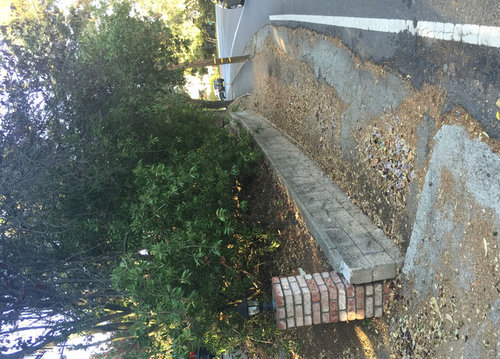
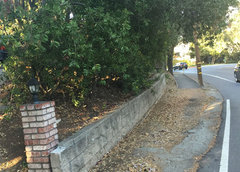
Looking for suggestions on how to hide the retaining wall in front of our house. We do have space to plant in front of it - but only something narrow - as the space is also used for street parking. The space only gets partial sun.


We are remodeling the house and would like to move towards a more formal appearance along the street. The wall is about 50ft. We are open to removing/replacing the smaller Bottlebrush - but we need something tall and dense, as the street is a very busy road. Any suggestions?


Comments (13)

  • PRO
    10 years ago
    Region/ climate zone?
  • 10 years ago
    San Carlos, CA
  • PRO
    10 years ago

    Manhattan euonymus...amazing plant...stays green all year...flowers...berries and you can trim to control it. My go to plant.


  • 10 years ago
    Bamboo is easy to grow, just remember to plant it so it can't take off on you- it's invasive.
  • 10 years ago
    Are you going to fix that sidewalk, or extend it like your neighbor's? If so, consider adding a short but deep bed of soil, then you can add something to espalier, like apples, or figs. (Always nice to have something to eat, too!) Or even just add a vining something or other to grow up the wall.
  • 10 years ago
    To start... a good move would be to stain all the concrete to a nicer color...walkways also...next consult a local nursery for a draping planting that will grow down over the wall...behind this consider a boxwood type hedge that can be pruned for a formal look...a reputable local nursery will be able to tell you if the existing planting can be pruned to thicken and get the look you want..first rule ...never remove mature plantings if they can possibly work..it takes years to get any new planting tall and thick..lastly if you have the budget ...cover and cap the cement with stone,brick,veneer? This will lend that custom home feel to the curb appeal ..
  • 10 years ago

    It looks to me like growing in front is not an option. It looks paved there.

  • 10 years ago
    last modified: 10 years ago

    Plant natives! Most formal gardens need a lot of water and maintenance.

    [https://www.houzz.com/photos/californias-top-10-essentials-landscape-phvw-vp~14096565[(https://www.houzz.com/photos/californias-top-10-essentials-landscape-phvw-vp~14096565)

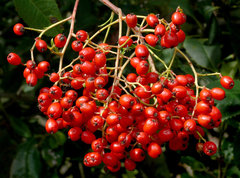
    Botanical name: Heteromeles arbutifolia (syn. Heteromeles arbutifolia var. arbutifolia, Photinia arbutifolia)
    Common names: Toyon, California Christmas berry, Christmas berry, California holly, Hollywood, Christmasberry, California Christmasberry
    USDA zones: 7-10
    Water requirement: Drought tolerant once established; appearance improved with moderate irrigation
    Sun requirement:Full sun to partial shade
    Mature size: Dense shrub 6-10’ tall; broad or multi trunked tree 15-25’ tall
    Tolerances: Drought, fire retardant
    Environmental benefits:Berries attract birds and wildlife; flowers attract bees; erosion control

    Schmitz

    [https://www.houzz.com/photos/ceanothus-california-lilac-phvw-vp~1673507[(https://www.houzz.com/photos/ceanothus-california-lilac-phvw-vp~1673507)

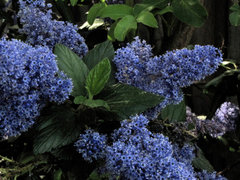
    Botanical name: Ceanothus, many species and varieties
    Common names: Wild lilac, California lilac
    Origin: The types typically grown in gardens originate in California, from ocean bluffs to the foothills.
    USDA zones: 8 to 10 (find your zone). Most types thrive only in climates with mild winters and sunny, dry summers.
    Water requirement: Light
    Light requirement: Full sun or partial shade
    Mature size: 1 to 25 feet tall and wide, depending on species
    Benefits and tolerances: These are evergreen, drought-resistant shrubs, from creeping ground covers to bushy near-trees. They need little or no irrigation after they've become established.
    Seasonal interest: Known for masses of blue in early spring to midspring.
    When to plant: Early fall is the best time; get young plants started before the rainy season. Planting in early spring to midspring is OK; try to let the plants settle in before the summer heat.

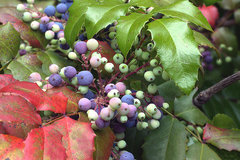
    Botanical name: Mahonia aquifolium (syn. Berberis aquifolium)
    Common names: Oregon grape, Oregon grape holly, hollyleaved barberry
    Origin: California; some regions in Oregon, Washington, Idaho, Montana, British Columbia and northern Mexico; prohibited in Michigan due to black stem rust
    Natural habitat: Slopes, canyons, coniferous forests, oak woodlands, chaparral; below 6,500 feet elevation
    Where it will grow: Easily hardy to 15 degrees Fahrenheit (USDA zones 5 to 9; find your zone)
    Water requirement: Drought tolerant to needing occasional water
    Light requirement: Full sun along the coast; partial shade inland
    Soil: Adaptable; prefers acidic, well-drained soil
    Mature size:
    3 to 6 feet tall and 4 feet wide; spreads slowly
    Benefits and tolerances: Benefits birds and butterflies; tolerates coastal conditions, clay, drought and desert; good with oaks; deer resistant; edible
    Seasonal interest: Year-round interest, with spring flowers, bronze new foliage and fall colors, without dropping leaves; summer berries follow the bloom, ripening to dark purple in summer to fall
    When to plant: Late fall is ideal; winter works well;

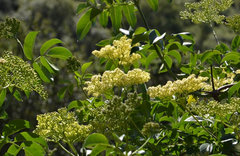
    Botanical name: Sambucus nigra ssp. caerulea
    Common names: Blue elderberry, Mexican elderberry
    Origin: California Sierras and coast ranges north into British Columbia and south into Baja California; from the California coast east to New Mexico
    Natural habitat: Canyons; valleys; cool, open places; many plant communities. Prefers moist riparian habitats; grow it below 10,000 feet.
    Where it will grow: Hardy to -5 degrees Fahrenheit (USDA zones 6 to 10; find your zone)

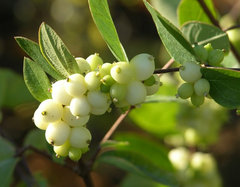
    Botanical name: Symphoricarpos albus
    Common names: Common snowberry, waxberry
    Origin: Western and eastern North America and Canada
    Where it will grow: Hardy to -30 degrees Fahrenheit (USDA zones 4 to 10; find your zone)
    Water requirement: Snowberry is unfussy; once it’s established, no supplemental summer water is required.
    Light requirement: Shade to sun
    Mature size: 3 to 6 feet tall plus suckers
    Benefits and tolerances: Small blossoms provide nectar for hummingbirds and pollen for insects; the fruit is enjoyed by many songbirds, including grosbeaks, robins, thrushes, towhees and waxwings, as well as by a variety of mammals
    Seasonal interest: Pretty light green spring foliage on arching stems; delicate pink flowers in early summer; striking white berries all winter
    When to plant: Fall to spring is ideal, but it’s unfussy

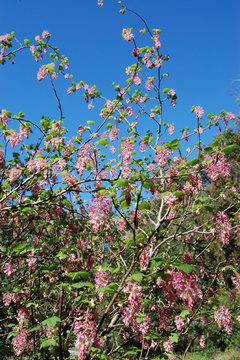
    Botanical name: Ribes sanguineum
    Common names: Flowering currant, winter currant, red- or pink-flowering currant
    Origin: Western coastal North America from central British Columbia south to central California; R.sanguineum var.sanguineum is native from the northern coast of California to central British Columbia and is the variety responsible for most cultivars found in the Pacific Northwest
    Where it will grow: Hardy to -10 degrees Fahrenheit (USDA zones 6 to 9; find your zone)
    Water requirement: Thrives in a mild, coastal Mediterranean (dry-summer and wet-winter) climate; once it’s established, little to no supplemental summer water is required except in extra hot, sunny areas; less supplemental water is required in shade, more in sun
    Light requirement: Shade to sun; flowering is more prolific in sun
    Mature size: 6 to 12 feet tall and wide, depending on the cultivar
    Benefits and tolerances: The blossoms provide insect nectar and pollen; produces fruit in late summer to fall
    Seasonal interest: Chubby racemes of white, pink, bicolor pink and white, or pinkish-red flowers in March and April; the late-summer berries are powdery blue-black; the fall color is buttery yellow
    When to plant: Fall to spring is ideal

    http://www.anniesannuals.com/signs/p%20-%20r/images/ribes_claremont_hummer.jpg

    Check the Sunset Western Garden book (and their website) or east bay mud's waterwise garden book(below). UC Berkeley botanical garden, Strybing in the city, Ruth Bancroft gardens in walnut creek all have native gardens; Annie's annuals in Richmond or digging dog in Albion have catalogs and websites for ideas for native shrubs and trees, sorry I don't know any in the South Bay.


    http://www.ebmud.com/files/9914/1997/9613/Plant-Book-Cover.jpg

    This award-winning book contains more than 525 beautiful color photographs and features 650 Californian and Mediterranean plants well suited to summer-dry climates of the Bay Area and beyond.


    If your heart is set on formal style you should hardscape with rock, pavers, cement and gravel and a few accent plants to achieve that look. You could still keep the bottlebrush.

  • 10 years ago
    Trim back the foliage on top of the wall to allow more light into the area. Then look at native plants you can plant just behind the top of the wall that will " Spill " over and hide the wall.
  • 10 years ago

    The problems include:

    1) Retaining wall is gray and blotchy (is it dirt, mold, effloresence, or ??)

    2) Retaining wall is not well integrated with brick column

    3) The contrast between the neat looking brick column and the messy blocthy concrete makes it all worse

    I'd say, look for masonry-type solutions that integrate the column and wall as to alignment and material. Maybe stucco it all....get a very experienced mason to advise you. Also, unless your house really is a Cape Cod or center hall Colonial, change out that Colonial light on the column to something cleaner lined.

    Good luck!

  • 10 years ago
    Thanks everyone for the great suggestions!
  • 10 years ago
    Plant some plants that can hang over the wall and provide color and perhaps year round interest if blooming.