Software
Houzz Logo Print
akrrm

RIP Golden Hahnii

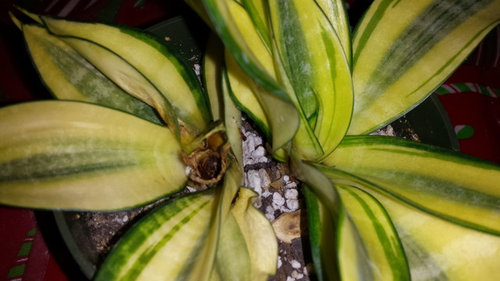
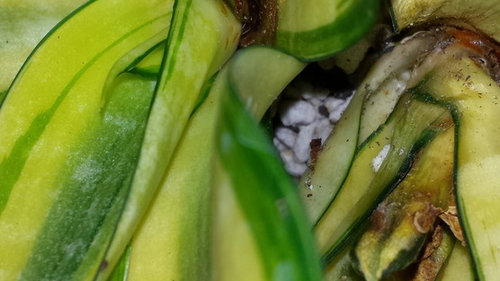
Last weekend I noticed one of my golden hahnii sans had crown rot. I pulled the bad leaves off and checked the connected plant and it was fine. Looked at them today and they are both bad. I really thought I was was.doing everything right.

Once all of the leaves come off is there any chance a new plant might be able to still form? Should I try propagating the firm leaves?

Comments (12)

  • 10 years ago

    Sorry about that. You can always try starting new plants from a leaf. Cut them off back to clean tissue and lay them out to callus. It is so easy for this to happen with these hahniis. It might be worth a try to have a source of bottom heat next time.

  • 10 years ago

    Thank you very much for your generous offer Russ. I was shocked when I noticed the crown rot. I had a golden hahnii years ago and also killed it, I thought I had everything under control this time but apparently I didn't. I still have the golden hahnii I bought on ebay that I posted about HERE..

    I will try propagating the leaves. I did some whitney cuttings last spring so I will try it. I'm going to save the rhizome and see if another plant will come up from it.

    Stush recommended bottom heat for my other ones, so I think I will have to try that now.

    Nancy

  • 10 years ago

    I didn't realize you still had a firm rhizome. I haven't had much luck in saving those either, the rot seems to continue.

    I have read about seed sterilization in either aglaonemas or sansevierias, in which they were immersed in 10 percent bleach solution with water for 10 minutes before planting. I've been experimenting with that for rot in cuttings of both species, sort of a last-ditch measure. So you might try that with a few of the leaves. perhaps immerse a couple of them entirely, and a couple more with just the cut ends set down in the solution. That's one part of bleach to 9 parts water.

    I also sprayed down plants with rotting leaves with hydrogen peroxide, I don't see any side effects and I think it might have worked in a couple of sans but these were ones with rotted spots on leaves, not wholesale collapse of the plant. The leaf spots might be better helped with a systemic, and keeping the leaves absolutely dry at all times. But I try anything if the problem gets bad enough.

    All this said, I think the rot in Golden Hahnii is internal rather than a fungus or bacteria initiating it from the leaves, and no amount of chemicals can arrest it once it starts.

    I agree with Stush, bottom heat works wonders for sans.

    Keep us posted on how it's going.

    Russ

    akrrm (Nancy in NJ 7a) thanked Russ1023 (central Fla)
  • 10 years ago

    I'm in the same club. Lost a few myself. Once I saw crown rot, never saved one trying any of treatments. I did have some luck with sulfur. Seems rot likes a neutral ph. Too acid, rot dies. Sans can take it down to 5.5 but loves 6.0. Neutral is 7.0. They sell it for acid loving plants. Got nothing to loose. I have used it for all my African plants.

    akrrm (Nancy in NJ 7a) thanked Stush2049 Pitts. PA, zone 6
  • 10 years ago

    Stush, do you use sulfur as a topical dust on rotted areas, or mix it with potting soil to change the pH and therefore kill the rot?

    I've never tested potting mix for pH, I wonder if simply potting sans in materials that aren't acid would be good enough. Obviously peat moss would have to go, and even pine bark probably has some acidity. That doesn't leave much in my arsenal of ingredients... perlite, fine and coarse vermiculite, chicken grit, river rock pebbles. I don't have a source for good sand, only the fine play-sand stuff. Perhaps a little composted pine bark mulch wouldn't hurt for the organic. I mean they've gotta grow in something besides rocks. I do have powdered limestone I could add to a mix with peat and or bark, but I never know how much to add to the mix to make correct pH. I like things simple, and that's getting a bit complicated.

    Russ


  • 10 years ago

    Russ, I use it as a topical dust on rotted areas, and mix it with potting soil to change the pH and therefore kill the rot. Mostly as a topical dust and next watering it washes into the soil. I don't check the ph and the ph of the dust is never lower than 5 so I am safe to use whatever I wish. Also potassium pills for humans used in watering to increase root production. Every once in a while.

  • 10 years ago

    I just removed the leaves and trimmed them so they could dry. I removed the rhizome (now also bad) from the pot and it looked the same as when I potted it several months ago, there are no new roots.

  • 10 years ago

    Well Guys,

    I feel validated, sad but validated. I can't grow these to save my life & thought it was just me. It was bad enough w/ the all green Hahnii, but the variegates, yikes forget it. It barely enters my home & shows crown rot, even if I never even got to water it. And (local) folks wonder why I don't grow short, squat Hahnii type Sans, humph, maybe they can sense I don't like them, 'cause they don't like me!

  • 10 years ago

    Imontestella,

    I am glad I didn't feel that way. Well I did but still got more and didn't give up. I am growing them now and very successful as well. They are in limited supply but we got some much hardier and just as nice.

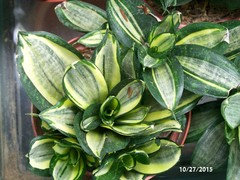
    I think they are hahnii 'Lucille Polen'. No way to tell.

    Stush

  • 10 years ago

    Hi Stush,. That is a beauty. I would love one of those someday. All the hahniis you sent me last summer are still alive. Maybe I am doing something right. Some of them have sent up some pups.

  • 10 years ago

    Well, Russ said he got some and I own Chris next. Should be enough to go around. Got to check in with Michaela. I'll mark you down.

Sponsored