Software
Houzz Logo Print
davelayoj

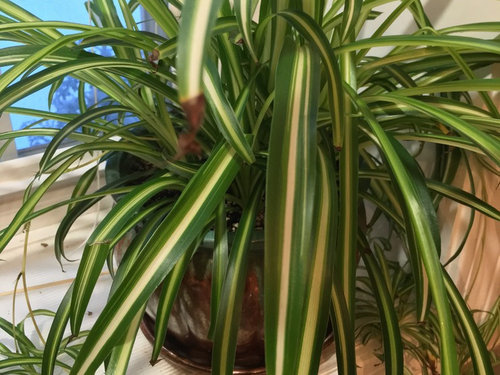
Brown tips on spider plant

10 years ago
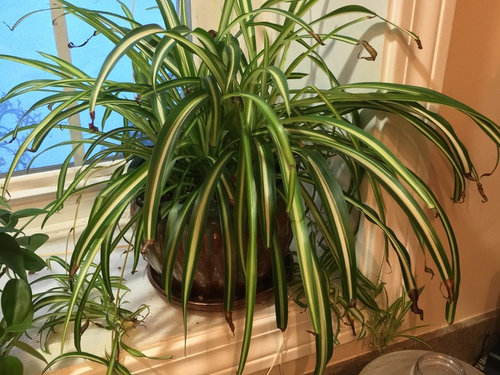
No matter what I try, spider plants always seem to have brown tips.

I grow quite a few other types of plants/trees indoors (ficus benjamina, ficus alii, peace lilies, ferns, Norfolk Island pines, Schefflera, dracaena marginata, pothos) and none of the others are affected with brown tips like the spiders.

I lightly fertilize when they're actively growing, let tap water sit for 24 hours before use and flush the soil with every watering.

Nothing helps.

The only time I've noticed them grow without brown tips was when I had them outside. Wider, healthier looking leaves. However, their primary water sorce was rain water. Guess that tells me something right there.

Anyone been able to avoid brown tips? Spider plants are more like a weed to me than a houseplant so it's not a huge deal, but I've always been curious.

Comments (15)

  • 10 years ago

    I think you gave a huge clue right there. When they are outside they do not brown. Is there fluoride in your water? This could be your problem. Fluoride does not leave the water if you let it sit. Try collecting rain water or watering with distilled water and see if that doesn't help. Cut off the tips at an angle so you can see if any new leaves brown so you know if it fixes itself.

  • 10 years ago

    I was going to say the same thing about tap water. Also, the roots on spider plants are HUGE. The bigger (deeper) the pot, the happier they can be. When the roots fill the pot and start smushing against each other, the brown tips start to show up.

  • 10 years ago

    That too! Now that I think about it, I've had spider plants break pots before.

  • 10 years ago
    last modified: 10 years ago

    I'll have to agree; Fluoride doesn't evaporate from tap water, no matter how long you leave it sitting out. Your best bet is distilled or rainwater. I've been collecting and storing up rainwater for all of my plants for several years now. It's fairly simple to do, once you get the hang of it. I have numerous one gallon bottles stacked up, six to a crate, in the corner of my garage. I prefer collecting it after it's been raining for quite a while. So it's had plenty of time to wash away all of the dust, pollen, and other contaminants in the air and on my roof. And thanks to the buckets of rain that have been dumped on us over the weekend, I've fully restocked all of my fresh rainwater and still have the large containers that I use to collect it with filled back up completely.

    It's been somewhat warm this winter, at least up until now. I placed my Hawaiian spiders back outside several weeks ago, to get drenched in the rain and soak up some winter sunlight. Tho now I'll have to finally bring them back inside, thanks to the cold front that has rolled thru, causing the temperatures to plummet.

    Once I switched to rainwater, I haven't had any problems with my Hawaiian spider plants. And they look better than ever.

  • 10 years ago

    Rainwater is a good idea. Well, I'd be collecting and melting snow at this point, but same thing.

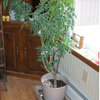
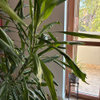
    I don't think the roots are compacted quite yet. The spiders pictured were planted as babies this past August. Putting them outside for the last month of summer gave them a chance to quickly grow.

    thanks for the info, much appreciated. Sounds like flouride is the issue. And yes, that's definitely in the water around here.

  • 10 years ago

    Spider plant roots don't mess around. I repotted both of my Hawaiian spiders earlier this year into larger hanging pots. Their roots completely filled up their old pots and were somewhat rootbound. Now they've gotten so much bigger that it almost requires me to use both my hands to carry the pots. Especially with all of the rain we've gotten, haha.

    I wonder if collecting snow would be any better than collecting ice cold rainwater? With snow, at least you can shovel it into containers. By the time I've dunked my gallon containers into my collected rainwater and filled them all back up, I pretty much can't feel my hands anymore, lmao. Last winter, my sister was over visiting. I was outside filling up some containers and she came out to keep me company. When she wasn't looking I stuck my ice cold hand on her back and she about flipped her lid. My hands are aching right now just thinking about having to fill up any more bottles. At least it doesn't take very long to fill them up and get back inside to warm back up again. Well, I guess it's a small price to pay for keeping plants in our homes to brighten up our lives during these gloomy months. :)

  • 10 years ago

    Letting any kind of water warm to room temp is good.

  • 10 years ago

    On a side note, I have been looking for a Brita type filter that would take fluoride out of my water, what I found was 'bone char' (bone charcoal). Apparently you can put a little in a mesh bag and dunk it in a bucket of water and it should remove the fluoride and other contaminants overnight. This sounds like a good option for those who live in states where it is illegal to collect rainwater. I'm wondering how it would be to add a handful to the potting mix like you would regular charcoal.

    (Maybe Al would have something to say about this idea.)

  • 10 years ago

    I did read that thread last week. That plant seemed to have browning on the edges and not the common brown tips.

    I'll give some flouride free water a shot. Everything I really care about will get 5:1:1. The spiders are going to stay in the MG soil my girlfriend planted them in a while back.

  • 10 years ago

    When I worked in a commercial greenhouse years ago the owner always added about a teaspoon of lime in with the potting mix of a basket of spider plants only to prevent the brown tips. I never did a comparison to see if this works but this greenhouse always grew top notch plants of all types.

  • 10 years ago
    last modified: 10 years ago

    That's interesting. I'd like to know the science behind that and if it would work for other plants that are susceptible to fluoride poisoning.


    Edit: I think I found the reason for lime in the soil. This says that raising the PH of the soil will help counteract the effects of fluoride. I will have to remeber that the next time I get a spider plant.

  • 10 years ago

    Seems to go against the CW that most plants like acidic soil. Lime is alkaline. I'd expect chlorosis if I added more lime to soil, especially if/when using tap water that already has lots of lime in it, which is a very common thing in tap water.

  • 10 years ago

    I have 5 different spiders ( two are in with a scheff and an ensete) and only 2 have brown tips.

    All are in the same soil and get watered by the same water. So far all the plain green ones have never had any brown tips. Yet my variegated ones do.

    It used to be that only the one variegated spider (white strip in middle) had the brown tips and the other variegated one (white edges) never had brown brown tips, yet now they both do.

    I know my water has a high pH but it seems odd to me how not all my spiders have brown tips when they're given the same water.....


  • 10 years ago

    Mr. Blubs, quoting Al from thread I linked above:

    "BTW - it's extremely common for variegated plants to first display symptoms of unfavorable cultural conditions in tissues largely absent of chlorophyll - the white/light part."

    Daniel