Software
Houzz Logo Print
johnnycoleman

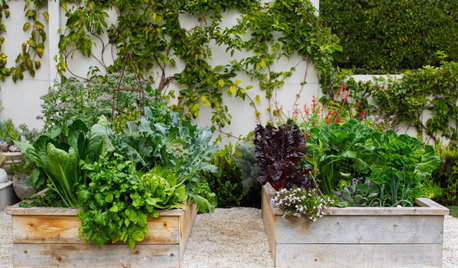
Perennial Vegetables

10 years ago

Very interesting. I'll be planting some perennial veggies this Spring when we get warmer.

Currently, I only have polk salat growing.
I like the idea of Scarlet Runner Beans growing on my fences as a perennial veggie. Great way to benefit from the fences I already have.

Comments (18)

  • 10 years ago
    last modified: 10 years ago

    Dawn,

    Thank you for adjusting my expectations. However, I still think it is a worthwhile endeavor. I was reading about perennial grains when I got sidetracked.

    Speaking of perennials, I just shallow plowed one of my Johnson grass fields to expose the rhizomes to the next freeze. Then, I deep plowed another one to see which works best. Supposedly, this helps weaken the plant. We shall see.

    Johnny

  • 10 years ago

    If it weakens your Johnson grass, let me know. As much as I hate bermuda grass, I have largely eradicated it from my veggie garden after many years of digging it out as soon as it appears. Johnson grass? Just when you think you've won the war and gotten rid of it, it returns with a vengeance weeks or months later. Sometimes it seems like it lets me think I've won the war, and then in the middle of summer it pops up in the garden many feet from wherever it popped up the previous year. Johnson grass is bermuda grass on strong steroids, and I don't think I'll ever get rid of it. You can almost shade it out with densely planted corn and pumpkins, but it still will pop up here and there as if to remind you that you're never really free of it. I hate Johnson grass with a passion.

  • 10 years ago

    kind of random thought here for this topic but i let some random corn go to seed and drop one year where I planted it. Mother Nature did the rest. What came up was closer related to johnson grass than corn. It tried to make little cobs but the plant resembled johnson grass and the roots kept sending up new shoots everwhere. It was a mess.

  • 10 years ago

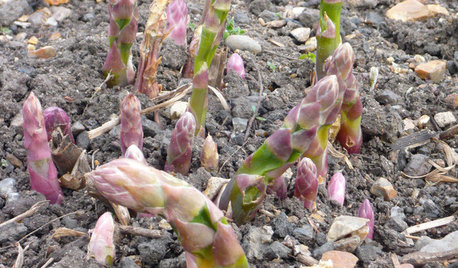
    Johnny, I'm deeply interested in this concept and have tried to add a "perennial" type thing each year. I have an asparagus patch and a selection of herbs that come back each year. Want to try rhubarb, jerusalem artichokes, horseradish, blackberries, etc. I'm also into it for landscaping (lavenders, autumn sage, rue, lamb's ears, etc.) All it takes is time and money, right?! Anyway, I think I'm going to get my hands on the book mentioned in that article you linked to: Perennial Vegetables by Eric Toensmeier. A review said about 30 of the veggies mentioned are appropriate for Zone 7.

  • 10 years ago

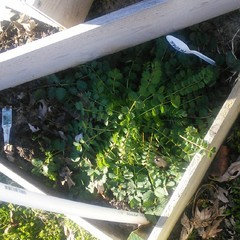
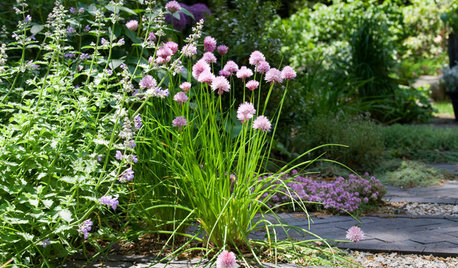
    Salad Burnet is a perennial. I got it to use as a salad green, but it is too tough for my taste. It would be ok in a bowl of sturdy greens. It tastes vaguely like cucumber and is not bitter like some cool season salad greens. We use it as a substitute for parsley since I manage to kill parsley. This pic was taken today, after several nights when the temps have dropped to the low 20s. This was a "leftover" starter plant that got stuck here when someting else died. This bed does NOT have good soil. I basically ignored this plant, watering when I watered everything else. This is a tough plant!

  • 10 years ago

    Rhubarb doesn't like our heat, so it is probably best grown as an annual.

    Jerusalem artichokes and horseradish are both thugs, so make sure you REALLY want them, because once in your garden they are hard to get rid of. One year I grew horseradish in containers and it went through the hole in the bottom of the pot and when I picked up the container, it popped, and a root snapped off in the ground. It has grown there every year since.

    Jerusalem artichokes will spread everywhere, and it seems the only way to get rid of them is let them come up in the Spring, then remove the entire plant, included the root, at that time. My chickens like them a lot better than I do. I planted them because I remembered that I liked them when I grew them in Colorado (in a cool climate), but now I just want them out of my garden. My DIL removed a lot of them this Fall, and said she had learned that she would NEVER plant those in her garden.

    My advice would be to make sure you like a perennial vegetable before you add it to your garden because some of them can be really hard to remove. There is probably a good reason why we aren't accustom to seeing them in people's gardens.

    I have spent years trying to remove all of the poke from my garden and flower beds. I think the flower beds are finally free of it, but my neighbor lets it grow behind his storage sheds and it invades my garden every year. It is extremely invasive in my climate in NE Oklahoma. If they are allowed to make berries, the birds plant them everywhere, and also leave little purple deposits on cars and sidewalks. Not something I want to deal with.


  • 10 years ago
    last modified: 10 years ago

    soonergrandmom,

    I too allow polk to grow in my fence lines. I cook it from time to time. It gives me some comfort to know it is there if I need it. Every year it is allowed to grow, the root gets larger and more able to withstand environmental extremes.

    Johnny

    PS - Some of the earliest writing in America was accomplished with ink made from polk berries.

  • 10 years ago

    Dawn,

    I wonder if runner beans might like to grow on the East side of one of my buildings.

    Johnny

  • 10 years ago

    Johnny Coleman,

    Deep plowing a field of Johnson Grass, if done early enough will a low the roots to freeze and die, it may not eradicate it 100% the first year but if done several years running it will certainly help to thin it out enough so you can work the plot.

    johnnycoleman thanked authereray
  • 10 years ago

    Kate,

    One of my long term goals is learning more about which herbs and spices are culturally significant in Oklahoma. Then, I want to teach others to grow them.

    My crystal ball says food prices will continue to go up and food quality will continue to go down. I am most concerned for our descendants.

    Johnny

  • 10 years ago

    AmyinOwasso/zone 6b(6b),

    Maybe you can take notes and write an article on your experiences. We need to learn about all of the foods that like to grow here and we need to learn how to preserve them.

    Johnny

  • 10 years ago

    authereray,

    Thank you! I will put more effort into Johnson grass eradication.

    Can you think of any other cultural techniques to control it? I won't use herbicides.

    Johnny

  • 10 years ago

    Scott, That is interesting, so do you think you were getting a cross-pollinated plant that was a cross of corn and Johnson grass?

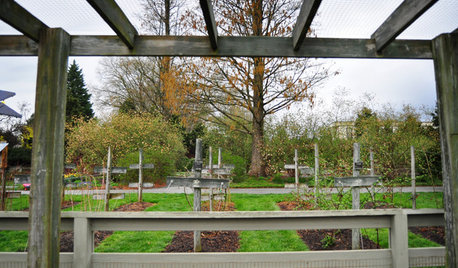
    For several years I grew corn in a 'corn cage', which is just a fenced plot with a woven wire fencing 'roof' on top so that I could totally exclude raccoons from the corn. It works great. Well, except that I had it along our south property line, across the driveway from the main garden, and Johnson grass from the property next door kept growing under the fence and popping up in my corn cage. When the plants are young and small, it can be challenging to tell the corn from the Johnson grass, though as they get larger, it is easier to tell. I spent a lot of time over several years digging out the Johnson grass, but finally gave up on growing corn that close to the uncontrolled Johnson grass next door. I didn't plant anything in the corn cage last year, and this winter I'm going to take down the corn cage fencing and move it elsewhere so that maybe I can grow corn without Johnson grass mixing in with it. Here were we live with heavy, dense woodland on three sides of us, coons in summer in the corn patch are about as common as the Johnson grass itself and I cannot harvest any corn at all unless I protect it from the coons with a corn cage. It is annoying, but we have to deal with the terrain and wildlife we have, so a corn cage likely will always be a part of my gardening effort here.

    Johnson grass is everywhere here in our area---growing in every bar ditch, along every fence row, in every field of nature pastureland and along the side of every rural road, so I don't see myself ever really getting rid of it because no matter what you do, it is growing right at the property lines all around you and, not respecting fences, creeping and crawling into areas where you thought you'd eradicated it. Mowing keeps it down, but the minute you stop mowing it, or it is too wet to mow for a while, you've got Johnson grass everywhere again. I'm just happy if I can more or less keep it out of the actual fenced garden. When I've dug it out by hand, I've found rhizomes bigger around than a human thumb and they often run for yards and yards through dense clay. I have found them even 12-15" below ground in my effort to dig deeply and find them all. And, I'm not finding and removing them all, but I do the best I can. Even when I dig as deeply as I can and remove every piece of rhizome I find, I still get new Johnson grass regrowth within a few weeks.

    Most people here around me just rototill their gardens once or twice before spring planting time arrives, thereby chopping up each big piece of Johnson grass rhizome into a million small pieces, and new grass grows from each small piece. Then, they plant, and (usually by May) new Johnson grass grows up along with whatever they planted and, in fact, the Johnson grass outgrows what they planted. Most folks (not gardening maniacs like me) just let the Johnson grass grow in their garden and eventually abandon the garden and let the Johnson grass take over. It happens every year. After a few years of that, they decide it is impossible to garden here with the Johnson grass and they stop. I refuse to let the Johnson grass win. It may grow right up to my garden fenceline every year, but I do my best to keep it out of the garden, even if it means looks of digging. The people here who do manage to keep it out of their gardens are diehard gardeners who dig it out, plow it up, cut it down, etc., whatever it takes on a weekly basis to at least keep the Johnson grass shorter than the corn and tomato plants.

    I put down heavy-duty commercial-grade landscape fabric in my garden pathways with mulch on top of it so at least I don't have to fight the Johnson grass and other grasses in the pathways, and it works pretty well, but those Johnson grass roots will run 20-30' underneath the landscape fabric and then pop up right where the landscape fabric ends. It is hard to defeat a type of grass that is that determined to grow, so the battle never ends.

    Johnny, All that works for me is digging it out, but that is not practical for you. (It really isn't practical for me since digging in the unimproved clay along the fenceline is really tough and time-consuming but I still try to do it when I can.) I think that plowing deeply will work well, but you'll never get rid of it all. Those rhizomes and roots are just too persistent. I don't know if there even is a herbicide that still kills Johnson grass (and I wouldn't use one anyway). Most Johnson grass has become herbicide-resistant. I see people here spray herbicides along their fence lines and it knocks back all the grasses and weeds temporarily, but the Johnson grass still comes back within just a few weeks, so all they are doing is killing back the growth above-ground, and then the rhizomes put out new shoots very soon thereafter. Even if they spray monthly, they aren't actually killing the plants because as soon as they stop spraying, they have just as much Johnson grass as they had in the first place.

    I've been told that if you mow the Johnson grass weekly without fail, you'll eventually weaken the plants enough below-ground that they die. The theory is that by never allowing the topgrowth to get big, there won't be enough energy going into the roots and rhizomes to survive indefinitely. Ha! We've been mowing our property regularly since 1999 and if we go about 3 weeks without mowing the bar ditches and fields, we have Johnson grass everywhere. If all those years of regular mowing haven't eradicated it by now, they aren't going to, are they? So, you know, regular mowing and plowing doesn't eradicate it, it just knocks it back for as long as you're mowing and plowing. Go a few months without mowing or plowing the Johnson grass, and you get a stand of it that is head-high in a remarkably short period of time.

    The drought of 2011, when most of our area went about 60-70 days with virtually no rain at all, did see a lot of the Johnson grass appear to die. It withered, wilted, turned brown and seemed dead......and everyone rejoiced, thinking that maybe one good thing would come from the drought. Nope. When the rain returned in late August, the Johnson grass was about the first thing (along with bermuda grass) to rebound.

    Dawn


  • 10 years ago

    Johnny Coleman,

    Other than winter plowing and digging it out the only other way to get rid of Johnson Grass is to let livestock keep it grazed down and not allowed to tiller out for several years. No herbicide will kill out the roots only the tops. Rototilling Johnson Grass & Bermuda Grass is the worst possible thing to do as it only cuts the roots up into lots of small peace's and spreads them around to make more grass and makes it impossible to control. Hand hoeing helps if the Johnson Grass is cut off below the soil surface. Sorry I know of no other way, winter plowing and allowing the roots to dry out and freeze are about the best way.

  • 10 years ago

    Johnny Coleman,

    Hurray for Poke Salat! It is virtually free.

  • 10 years ago

    I mowed the orchard for 30 years knowing that I was keeping Johnson Grass cut off short. Than in 2014 we had a plague of grasshoppers and I left a couple strips unmowed to keep the grasshoppers out of the garden. That Johnson Grass got shoulder high by the end of the summer. Mowing doesn't kill it. Which surprised me, because we once had a herd of goats kill it out of a 2 acre field. But I mowed 3 or 4 inches high once a week in the rainy time and less frequently during the dry spells. I guess the goats clipped it off at ground level every day or so.

  • 10 years ago

    mulberryknob,

    Thanks for the information. I have my fingers crossed. Maybe the coming hard freezes will knock it back some.

    Johnny