Software
Houzz Logo Print
lucky123_gw

Crown Variegation?

10 years ago
last modified: 10 years ago
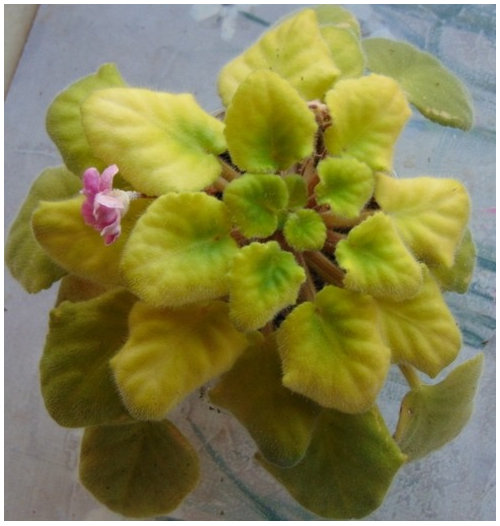
This plant was a leaf 2 years ago. Noid, poss Maggie Lee. It has been in the same spot and was routinely repotted Aug. 2015

This is a very fast grower. It is in a resting cycle finally after very heavy bloom.

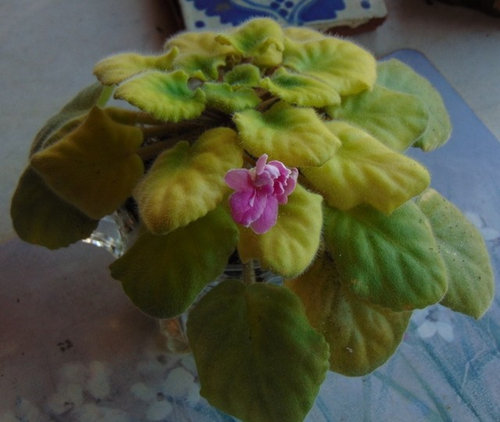
In September, the crown leaves turned gold or yellow. I fertilized very carefully including iron. The plant continued to grow and blossom well but the crown leaves grow yellow then turn green as the leaf ages. There is a pattern of green in the gold crown leaves.

I am posting two photos of the plant now and one from before. The light is very different so the new ones are darker.

Is this plant crown variegated or is it suffering from some malady. It has been this way for 6 months.

Photo · More Info
Photo · More Info

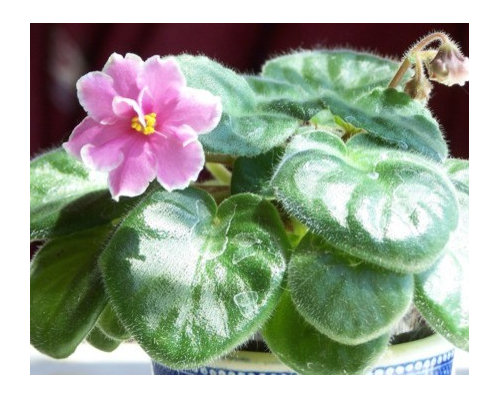
THIS IS THE PHOTO BEFORE SEPT 2015

Photo · More Info

Comments (28)

  • 10 years ago

    For whatever reason your AV doesn't absorb enough nitrogen.

    It can happen if pH is out of whack - but you repot it so shoud be OK. Or something with your careful iron rich fertilizing got out of proportion. Like not enough or too much.

    I would repot it - or at least leach it with a distilled water with several drops of fish emulsion. And keep it on a weak fish emulsion watering. You should see the difference soon.

    If you have other AVs and they do OK with the same routine - chuck it.

    If it is microelement toxicity - it just takes forever to grow out of it. There was a couple of articles in AV magazine several years ago - Georgene Albrecht wrote them on microelement toxicity. The plant is able to absorb the necessary nutrients - if the microelements are in a certain range. The same is with pH. If the soil is ot of range - plants cannot feed even if the nutrients are present.

    Good Luck

    irina


  • 10 years ago

    Pretty violet! Hope Irina's advice works for you. She is very knowledgeable! Rosie

  • 10 years ago

    Irina, What is your opinion about Optimara plant food? that is what I use. Joanne

  • 10 years ago

    Optimara's plant food is excellent. It is 14-12-14+ and it is urea free.

  • 10 years ago

    "Plant Marvel" in Chicago was making similar AV fertilizer - 14-12-14+, but they were working with large operations, not with individual growers - their packaging was 25lbs and up.

  • 10 years ago

    Thanks Irina

    I have left the plant alone believing it was under stress from whatever turns the crown gold. It grows very fast and has a neck so I will repot. That might either cure it or kill it. It may be some sort of micronutrient or genetic problem.

    The plant is in a group. All of the other plants are growing and blooming normally. Perhaps the insecticide I use routinely doesn't agree with it.

    The plant is unusually beautiful, growing fast and blooming well. It looks like it is starting another burst of blooms.

    I set a leaf well before the plant turned gold. I have small plants that are normal. I will keep this one until it is too ratty, then toss it.

  • 10 years ago

    Thanks,Irina. Interesting to think in terms of large quantities. I just got a new supply. Good luck with repotting,Lucky.

  • 10 years ago

    Lucky -

    if it is a mutation - you won the lottery. Doesn't seem that it will be very floriferous for obvious reasons. Try to reproduce it by starting from a leaf - the one from the bottom with more green. One thing you can do to negate a potential presence of plant toxit materials - is to start it in a distilled water. It will leach the chemicals out. Yes- yes - I normally recommned to start everything in soil. But in this case - I will keep a leaf in a distilled water until it starts sending roots.

    Since the variegation is so heavy - I would still be using fish emulsion to try to provide it with a healthy stinky organic nitrogen. A little more green will be good for survival. Keep us posted.

    Irina


  • 10 years ago

    Repot, fish emulsion and a new location. Less light and a warmer spot.

    I will set a leaf. I am convinced it is a cultural problem. I doubt it is genetic but I did use multiple insecticides almost simultaneously on that plant. I don't normally do that but for some reason, this one received all the doses.

    I lost a plant O. Ontario doing simultaneous applications of Triazicide and Spinosad. Plants that were treated 2 weeks apart did not react to either application or both.

    I have checked the records for any other anomalous treatment of this plant. It seems to receive routine care in a very favorable spot. It is a favorite plant.

  • 10 years ago

    What kind of pests you had the problem with? If you do not mind to reveal the secret...

  • 10 years ago

    I was kinda wondering that myself. Were you trying "preventative maintainance" or did you have a bug? Rosie

  • 10 years ago
    last modified: 10 years ago
    I had broad mites 2 years ago and I have spider mites outside. I used tobacco tea and Spectricide Triazicide for the broad mites. I lost most of my plants before treatment but I think the triazicide is effective.

    I routinely spray all new plants with triazicide when I bring them home, then isolate for a long time. I spray in the fall when I bring the geraniums into the house to get rid of any spider mites or outside bugs.

    I used Spinosad for thrips on a plant I bought at BBS. I had sprayed with triazicide and then saw the thrips. The two insecticides so close together may have killed the plant as it was in unusually good shape and well potted for a BBS. It was isolated but I sprayed other plants over the next few weeks, paranoia, with spinosad. No other plant had a problem.

    I am now treating with immunicloprid for mealies because I received many leaves and plants in the fall. Mealies were epidemic so I used immunicloprid instead of triazicide. I won't use them together.

    I will Stop using the immunicloprid this month because the bees are becoming active. I use Bayer so it is a drench that wears off after 3 months. No plant material is coming in and I don't community water so I don't have further worries about mealies.

    I use diatomaceous earth in all the potting soil. I will continue to spray with triazicide (large or new plants) but I am not going to spray anything else with anything else unless there is a problem.

  • 10 years ago

    Lucky -

    you are seriously overdoing it.

    Are you keeping your AVs outside? Why are you worried about bees if you only use imidacloprid inside?

    For mites - Forbid 4F - and only if you have them. You had them before - and now you know how catch them on time. Do not spray preventatively - you can always purchase a small amount on ebay. I think it is a systemic - may be not long lasting - but it works at one go.

    For mealy bugs- yes - imidacloprid. But - some of the strains of mealies are already resistant. You can add granules to the soil - and yes - it is active for 3 months. Do not overdo it - imidacloprid will damage AVs - a solo cup per 5 gallon bucket of soil is about right. Some AV are sensitive to it. They will lose center of the crown and young leaves can dry up.

    Thrips ... you spray when you see them. Triazicide is a synthetic pyrethroid, it doesn't have a systemic action as far as I know - so if there are no thrips - you are wasting your time.

    Spinosad and Triazicide are different classes of insecticides and they are not phytotoxic. But there is always other stuff in the bottle - may be conservants - and it can be bad. Drench from Home Depot with imidacloprid and cyflutrin is bad.

    Diatomacious earth serves one purpose - it is so white - you do not see soil mealies. It is absolutely useless - because to damage the insect bodies by the scratchy spikes - it should be dry. Not in our soil. I swear by DE against grasshoppers. They were destroying my gladiolas - and after I dusted plants several times - they developed a fatal indigestion and were gone. But you need to dust again after rain or watering. It will probably do the same to caterpillars.

    I think your idea of using Triazicide on geraniums and other plants getting back to the house after summer is excellent - but probably you need to repeat the spray 3 times week apart.

    If you are getting leaves and cuttings from somebody - dip them in rubbing alcohol split with water 1:4 - works the same - and not toxic to you. Or bees.

    Good Luck

    irina


  • 10 years ago

    Good thread, lots of tips!

  • 10 years ago

    Irina

    I have big fluffy cat, no screens and the doors/windows are open almost year around.

    Everything is sprayed when I buy it. Everything else is sprayed depending on how I feel about the level of outdoor pests. About once a year when it is very dry and dusty because of spider mites hitch hiking on the cat.

    The bees come in the house. I don't have a problem with that as I like bees. I had bee hives for several years. I did notice bees were piled up dead on the window sills around the plants drenched in immunicloprid. I planned two drenches 3 months apart for mealies, then no more.

    As for mealies, I decided to treat the collection to be safe as several of my plant sources reported infestations. I treated because better safe than sorry. It was epidemic last fall.

  • 10 years ago
  • 10 years ago

    It is 2.5% versus 0.5 in Marathon - and cheaper.


  • 10 years ago
    last modified: 10 years ago
    Irina

    I will make a note of that. That is much stronger than what I am using. I had a hard time finding anything with any strength and not too much other ingredients.

    I used Bayer Advanced Insect Killer, .72% 1/8 tsp Gallon of Water. I drenched everything once November 2015 and again February 2016.

    I am wary of granules. I like control over residuals. The bees are a major concern. Frankly, I do not want to use immunicloprid but I had no choice, having possibly infested plants entering the collection. I may have had mealies. I noticed some of the laggard plants improved after treatment.

  • 10 years ago

    I think anything we use - will be affecting bees. The are insects too. Anther drench - mealies are not used to - Taurus SC or Termidor (active ingredient - Fipronil). 3 drenches week apart teaspon per gallon if I am not mistaken - and soil mealy bugs are history. But again - if I do not have them - I won't bother.

    You would know if you have soil mealies - you repot - everything is in white wax. Plus - soil smells very moldy.

    I.


  • 10 years ago

    My front window is piled with dead bugs - bees, wasps, yellow jackets at certain times of year. It has nothing to do with imidacloprid. My house isn't a good place for a thriving bug colony or whatever - no clue. The house is plank and they have nests somewhere in the walls. We have seen the issues with the honeybees but, again, this is has nothing to do with my violets.

    I got the soil mealies and most of my collection was infested before I realized it. The bugs were very small compared to most of the photos. It seems to be over now but was a big job and some plants do look bad for whatever reason. I hope they will recover.
    My infestation had to come from a commercial vendor since I didn't trade. That is also where I got thrips, BTW. I must say that I never got any problems from Lowe's although I keep seeing how bad they are supposed to be.

    Diana


  • 10 years ago

    One thing I noticed in this soil was what appeared to be brown husks about the size of small grains of rice. I don't know what that is or was. If it was mealies or some type of pest, I didn't see any sign of life. I did remove all the old soil.

    I did a major repot on Maggie Lee. Trimmed roots and leaves, scraped the neck, repotted in fresh soil. I have it domed for now in an area with lower light. It is not wilting or looking particularly bad.

    We will see if it survives major surgery and recovers the green. I did put down leaves from the trimming on this gold plant.

  • 10 years ago

    It will be interesting to see what your pale version of Maggie Lee will do.

    Diana - thrips are like mosquitoes. In summer they come and bite. They are so abundant outside... you need to live in Antarctic not to bring them with you. Yes - you bring them from vendors. And on your clothes. And pets can bring them...Hate these little buggers.

  • 10 years ago

    Irina, people kept saying that and I even went on a "thrips hunt" in my yard, but I never saw one in the house (or on my hunt which included the petunias) until they came in from some vendor. Likely there is enough to amuse them outdoors here. My indoor cat is an indoor cat.

    Now I can certainly recognize them. It is easy enough. (I think that plant is bleached but I guess we will see.)

    It takes them a long time to grow out from such treatment. I have some that weren't too happy with whatever went on with the soil mealy tx and the lights but they are slowly coming I think.


    Diana

  • 10 years ago

    Do not bring cut flowers in. If you have a blooming plant outside near your window - do not open this window in summer.

    Good Luck

    I.

  • 10 years ago

    I have been raising african violets for 45 years, Irina.

  • 10 years ago

    I admire people that carry the love for so long. In 5 years - it will be a golden anniversary of your hobby. If we are around in 5 years - we need to celebrate it. It is wonderful - 45 years of the selfless love of beauty.

    i.


  • 10 years ago

    All and all - I do not have one single thrips in a house right now...comes June - they will be here and I will be spraying everything. And one more time - in a fall. I do not buy blooming plants in Lowe's - they are loaded with thrips to the point - them bugs could carry them away.,. Whatever AV or gessie comes to my house - is disbudded, sprayed, repotted, isolated. But I have roses in front and I have roses in the back of my house - and thrips love roses. And I have a dog that goes in and out. So - if there are thrips outside - and no thrips inside - they come in - and make themselves comfortable.

    I.


  • 10 years ago

    Helpful info, I won't bring inside any cut flowers or roses from the garden. Neighbor dogs and kitties will have to stay outside, too. Joanne