Software
Houzz Logo Print
chickencoupe1

My onions have thrips.

10 years ago

They're in a bucket indoors. In the bathroom. The adult thrips went for the water in the porcelain tub. Plain as day.

Still, I check inside the leaves of the onions starts. Sure enough!!

Will checking and clearing every leaf before planting help? Should I toss them?


bon

Comments (7)

  • 10 years ago

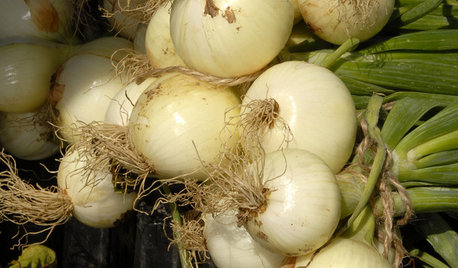
    I'd view this as a positive experience and just try to treat the plants for thrips. I wouldn't discard the plants. Any onion plants you buy may be harboring thrips because thrips are found worldwide and have developed a resistance to many of the pesticides used to combat them. Having found the thrips now, before your plants are even out in the garden, maybe you can get control of the thrips now and then have less trouble with them later on. I'd take them outdoors, undo the bundles, spread the onions out and spray them with the organic pesticide of my choice. Spray one side, let it work for a while, then flip over the onions and spray the side that had been lying on the ground. Spinosad and/or neem, whichever you have, likely would be the most effective of the organic options when it comes to thrips. Or, you can use an insecticidal soap spray on the plants, but if you do that, I'd spray them in the shade and then rinse the plants off after a few minutes.

    One reason you're unlikely to get rid of all of them no matter what you do is that they tunnel into the leaves for a part of their growth cycle and nothing you use that is safe and organic can reach them inside the leaves. Thrips are always with us. I rely on the lady bugs and green lacewings to help control them.

    While thrips absolutely can cause major problems, generally by spreading diseases, I've never had an onion disease issue in my garden that even required me to think about spraying for thrips. However, a couple of years ago, a major thrip outbreak spead a disease (I think it was asters yellow) that virtually wiped out garlic crops in some northern states. Often, thrips ride in on the wind here, do their damage and move on. I tend to see thrip damage at a certain point, and then rarely see any new damage after that first round. I don't know if that is typical of the way thrips behave because I know they can produce new generation many times over each year, or if it means that the beneficial insects in my garden are just managing to control them well enough after the initial outbreak.

    You know, Bon, if they are drowing when they hit the water, I'd keep a bowl of water sitting in the same room with the onions for as long as you're holding them indoors. If the thrips aren't drowing in the water, try putting a drop or two of vegetable oil, neem oil, olive oil or any other nontoxic oil you have in that bowl of water to see if they'll get coated in the oil and then drown. You also can use blue sticky traps, but how many of us have blue sticky traps sitting around waiting to be used? (grin) You might try one of those sticky traps meant to catch flies. It might happen to attract and catch thrips.

    Discarding the current onions and buying a new bunch likely would just bring home a bunch more thrips and, in one sense, it hardly matters. Thrips love onions and will find them pretty much every year even if you have managed to start out with thrip-free onion plants, and I doubt such a thing exists. I see thrip damage (it appears as sort of silvery lines on the onion leaves) on the onion plants at some point every year and just don't worry about it. It's never risen to the level here that I've given it a second thought.


  • 10 years ago

    Excellent experience and wise advice, as always. I bought my new bottle of Spinosad, yesterday. To the rescue! Dawn, it will be my pleasure to create a brand spankin' new ritual - place onion starts in bathroom near tub. I put them in there for the moisture as it's so cotton-pickin dry. Indeed, those buggers were stuck to the bottom of the moist tub where I just washed them away.

  • 10 years ago

    I am going to have to google thrips, I don't know what they look like. There are a lot of bugs I may have had but didn't see before the cataract surgeries. I wonder, if the bugs are drowning, why couldn't you put the onions under water for a while? I know you don't want them to be too wet or grow too much before you put them out, but say just half an hour under water and then dry them off?

  • 10 years ago

    I contacted dixondale regarding. I'll try to pick the larvae and any eggs off as I go through them to minimize bugs as we are seriously warm here. Tedious, but yeah. Here's what Dixondale wrote, btw:

    The plants will be fine to plant. You can just knock the plants around and
    the thrip will fall off. You can spray after planting with neem oil or
    selectracide. Thank you for your email to us today.


    I don't even know what 'selectracide' is and Google doesn't either.

    bon

  • 10 years ago

    Maybe a typo? Maybe they meant Spectracide, which is a brand of gardening products including chemical pesticides. Spectracide Triazicide is a broad-spectrum pesticide labeled for use against around 260 various pests. Maybe that is the one they are referring to.

    It is seriously warm here too, to the point of being ridiculous for this time of the year.

  • 10 years ago

    How long of a freeze do we need to kill off the bugs that are coming up now?

  • 10 years ago

    Freezes don't really kill that many bugs. The cold might knock back their population a little, but it doesn't affect it all that much. Some insects overwinter in various stages and many survive even very cold weather, so it is sort of a misconception that a freeze helps with pest control. In our climate, freezing weather doesn't help much. I suppose we don't get cold enough long enough. Sorry to burst your bubble. : )

    Most insects tunnel into the ground or overwinter beneath tree bark in garden debris.

    In my garden, in the last two or three weeks, I have dug up and destroyed many dozens of cutworms and I bet I'm only scratching the surface. We've had moths hanging around the porch lights all winter, so I was expecting a big cutworm year, but I still am horrified by how many I'm finding. They seem to prefer the mulch in the pathways, which by now has decomposed into compost, so as I scoop it up out of the pathways to toss it onto the adjacent beds, I search it carefully for cutworms. I am finding them everywhere else too, except not in the containers. I'm also finding tons and tons of young, small crickets.

    Usually the year after a wet year is a really high-population year for pests, so brace yourself and get ready.