Software
Houzz Logo Print
atbroome

Heating and Cooling for Basement

10 years ago

We are considering finishing our basement and I don't know which route to take to heat and cool it. We currently have 2100 total square feet across our 1st and 2nd floors, and the finished portions of the basement (TV room, bedroom, bathroom) will be about 800 square feet. The bedroom and TV room will likely be separated by storage space. The TV room would be used daily and the bedroom/bathroom occasionally for guests.

Although we are in Northern Virginia, I expect the TV room to need cooling due to the electronics and likely people load. The whole area will also need to be dehumidified and heated.

We currently have a 4T A/C / 100k BTU furnace Carrier Infinity system setup as a single zone. Both the compressor and furnace are dual stage. I currently have the following ideas based on research and a few local HVAC contractors:

1) Add an Infinity zone controller, dampers, and ducting for the basement. I could either have the basement be one zone and the rest of the house a 2nd zone, of split into 3 zones, one for each floor. In this case, the furnace may be oversized.

2) Add a ductless mini-system to the basement. I'm not sure if it needs 1 inside air handler for the TV room and the bedroom, or only 1 for the TV room. The ductless system would provide both heating and cooling

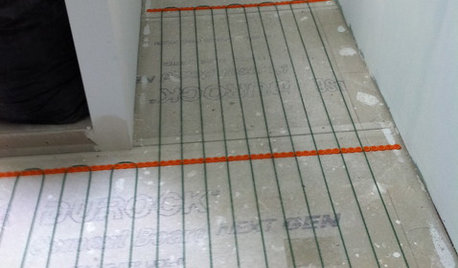
3) Add radiant flooring to the basement, no separate cooling, portable dehumidifiers

4) Use electric baseboard heating, no separate cooling or a portable AC for the TV room and portable dehumidifiers.

Any feedback on these options or ones I am missing? We plan to stay here at least 5 and likely 10+ years.

Comments (9)

  • 10 years ago

    Which Infinity furnace do you have? If it is the 95%+ efficiency model then I suspect the furnace is over sized for your house. You have plenty of capacity to heat the basement and the house at the same time. Even the 80% efficiency model should do fine.

    I highly doubt you will ever have to cool the basement. Even if you had a 60 inch plasma TV running 10 hours a day would you see a see an increase in temperature enough to feel uncomfortable. But then again somebody like it really cold in the summer.

    You have a good set up to make the basement a separate zone. There is no need to spend thousands of dollars on adding a mini-split, radiant heating, portable dehumidifiers, or electric baseboard heating.

    It would be a good idea to split the first and second floors into separate zones, and make the basement a third zone. It may not be feasible if the duct work for first and second floors are tied together. The Infinity zoning dampers are considered the best, but they are very expensive. They would still be cheaper than adding another independent heating/cooling system.

  • 10 years ago
    last modified: 10 years ago

    Mike, from the way the OP wrote, I assumed that the oversize issue is when a single zone calls for heat.

    OP, when you write radiant in floor, you mean pure resistance electrical heat? Will an insulation layer go under the flooring? How much head space do you have and how much will you loose?

    I have experience with finished basement in more Northern climes than Virginia. There was carpet on the slabs. Heated with hydronic convectors or forced air, the floors were always cold in winter. You wanted to have your feet up when sitting down.

    Radiant in the floor will be most comfortable, but won't be as responsive. It will be darned unresponsive depending on how it is installed. There may be lot of mass to heat up before air gets significantly warmer.

    I also have mini splits. In my home in the Gulf South. Run as programmed out of the box, the high wall units make very good ceiling heaters. As they throttle back approaching the set temperature, the blower slows down and hot air stratifies at the ceiling. You can combat this by manually keeping the blower fast or with ceiling paddle fans. Note that I have very cold floors in the raised house.

    A good mini split may greatly reduce dehumidifier use when cooling is desired, but there will likely be times when humidity will be high enough to support mold growth in shoulder seasons. If you have a mini-split, you might decide that a portable dehumidifier is tolerable.

    Portable dehumidifiers make a lot of noise, a lot of heat, and are energy hogs. You also have to empty them or rig up a condensate pump if no drain is where you need it. I have seen a portable dehumidifier make a basement uncomfortably warm in central New York Summers. They might work well enough for you in a basement laundry area. They can be placed remotely with added circulation with ducting. (See the link below.) I you feel that it will be cost effective, a ducted dehumidifier like a Santa Fe will work better. The Dept of Energy (Energy Star) rates dehumidifiers. IIRC, the portables are all about the same, but there is a big difference between them and the ducted models.

    Conditioning Air in the Humid South—Creating Comfort and Controlling Cost

    Research Report - 0214

    November-2002

    Building Science Corporation

  • 10 years ago

    The radiant heat (as recommend by the one HVAC contractor) would be under a new subfloor hot water power by a new hot water heater / boiler that would also serve the hot water needs of the house. He did say he would only recommend the cost of this option if we planned to stay for a LONG time due to the cost. His 2nd choice was mini-splits, his well distant 3rd was Carrier Infinity zoning. The other lower cost options were from me.

    No matter which option we choose, I plan to put down an insulated subfloor (DRIcor or similar) to avoid a 55 degree floor.

    Back to the zoning, I have another thread in this section about being in the middle of a furnace replacement fight with a home warranty company. When I am done, I will hopefully have 100k BTU Infinity furnace, but it is possible I could push for an 80k BTU Infinity if that would be sized better.

  • 10 years ago

    If you go with hydronic, radiant, underfloor (or hydronic baseboard for that matter) consider having your contractor install a westinghouse WGR060NG076 (or 50 or 80 gallon model) with a flat-plate heat exchanger for the hydronic heat side. If necessary, they can install control to prioritize DHW cutting out space heating temporarily when DHW demand is high. These are very nice boilers for the price, as efficient or more efficient than an "instant", and modulating (3:1 turndown ratio).

    I am not arguing with the need for insulation in the floor, but it will be a two-edged sword. It will hold in heat in both the winter when you like it and in the summer when you might wish it would not.

    If you want to heat the whole house with a boiler, you could use one or more hydronic coils on each floor to avoid air flow-based zoning and inter-floor ducts. Be aware, however, that adds water temperature complications mixing hydronic coils (relatively high temp) with radiant floor (relatively low temp). Higher water temp can decrease boiler efficiency, but you might be able to avoid that with larger hydronic coils.

  • 10 years ago

    Ionized, I picked up that there was some concern by the OP that even in the low stage the furnace would be over sized for the basement. The Infinity dampers may be a help by partially opening to the other zone so that some of the air flow can be diverted. It will require a zoning Infinity controller. There may be some opportunity to slow down the blower speed when the basement zone calls for heat. You want to Carrier dealer who is expert at zoning to come up with a good solution.

    If you are changing furnaces, then first step is to do a load calculation. I think you can go smaller, but a accurate load calculation will give the answer.

    I have one vent to keep the 550 sq. foot finished part of my basement warm. On some very cold days when it is sunny outside the thermostat on the first floor is satisfied, so the basement is a little cooler than I would like. On those days I turn up the 8 100W halogen lights in the ceiling. They quickly warm up the basement. If I then turn on the 50 inch plasma TV it sometimes gets too warm. My point is it doesn't take a lot of BTUs to warm up a finished insulated basement. You don't need an elaborate set up.

  • 10 years ago

    "My point is it doesn't take a lot of BTUs to warm up a finished insulated basement. You don't need an elaborate set up."

    Despite all my over-engineering suggestions, Mike is certainly correct. That also goes for cooling but sometimes keeping them dry is a chore.

  • 9 years ago

    How may BTU ductless mini-split is needed to heat a well insulated 1000 sq. foot basement? (say averages mid to high 50's now, and would like to get it to 70?)

  • 9 years ago

    Anyone hear of these ductless floor units instead of wall units?