Software
Houzz Logo Print
emamelia

Peace Lily Help!

10 years ago
last modified: 10 years ago
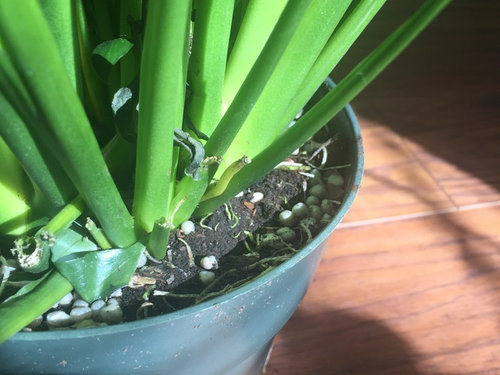
Hi! I have recently become slightly obsessed with house plants. Knowing this, my boyfriend got me a peace lily for Valentine's Day this year. I have not needed to water it since it was delivered. However, I have been taking it to the bathroom with me when I shower, as my apartment is relatively dry, and I know the peace lily needs humidity. The soil is very very wet and has been since I received the plant.


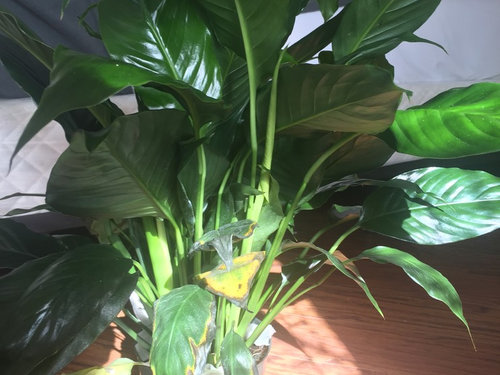
This past weekend I went away to visit family and left the peace lily in my apartment. I checked the leaves today when I returned, and there are multiple yellow and brown leaves (This is the side of the plant I had facing the wall and not toward the light).
I don't get much light in my apartment as it is, so I highly doubt it's been getting too much. I have since put the peace lily in more light in a warmer area in my apartment hoping to help the soil dry out a little, but I'm not sure if the soil will dry before doing too much damage to the rest of the plant
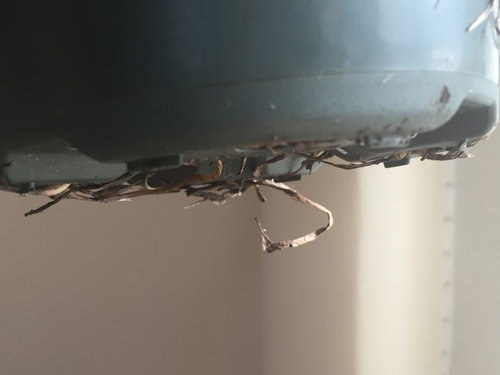
I have also checked the bottom of the pot and the roots are sticking out a bit.

Should I repot the plant with some fresh, dry soil, or just leave it and let it dry out? The damage seems relatively significant and I've only had it for a week! :( However, aside from this portion of the plant, the rest of the plant looks pretty healthy to me!

I am very new to this, so I am hesitant to make any drastic changes without advice from someone more experienced!

Comments (24)

  • 10 years ago

    Shock from moving from a greenhouse setting to a low light situation will cause leaf loss. The plant will continue to lose leaves until the light is enough to sustain the plant. The roots look dry and brittle, not those of a plant that has been sitting in water. I would take it out of the plastic pot and grow it in something that breathes. This will help draw the moisture out of the soil. You can also drill small holes in the pot to add a little air flow. I would also move it to a south facing window. It is a misconception that plants like low light, They will tolerate lower light but they will not thrive. They need much more light than we can provide. The leaves look like fertilizer damage to me which is quite possible having just been bought.

    My large peace lily lives in my bathroom. It loves it there, my other peace lily is in hydro and it doesn't look as nice as the one in the bathroom. You can try a wick to wick the perched water out of the soil. You can also water it via a wick Peace lilies make excellent hydro specimens since they love humidity but do not like wet feet.

    emamelia thanked Mentha (East TN, Zone 6B-7A)
  • 10 years ago

    Thank you both so much for your insights! Do either of you know whether I should trim these damaged leaves off now, or wait until the stems begin to dry out too?

  • 10 years ago

    The plant absorbs nutrients from the brown leaves, so leaving them until they are completely dry is best for the plant but it does become ugly if a lot of leaves dry all at once.

  • 10 years ago

    What makes you think that the soil is very, very wet? Does the pot feel very heavy?

    Peace lilies do not need as much light as many other house plants, but they do need good light levels. There is such a vast difference in amounts of light in anyone's home, and in different places in that home. Perhaps try a spot with a little more light.

    I feel that it might need watering. Best way to water is completely saturate the soil and allow to drain. Someone wrote a very detailed and correct way of watering here somewhere. I'll see if I can find it.

  • 10 years ago

    Darn, I've gone back to page 5 and still can't find it.

    IF anyone remembers writing it, can you copy and paste it here maybe?

  • 10 years ago
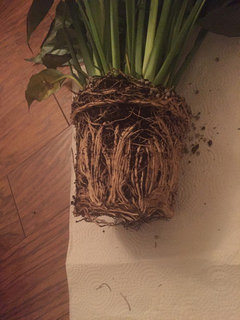
    I just got the plant out of the pot to try and dry it out a bit, and this is what the root system looks like. Is this crowded, or normal?
  • 10 years ago

    Although comments often turn up about Spathiphyllum "not liking wet feet" they are a bog or shallow water plant. Click the link below to see a photo of people standing on a boardwalk over a swamp surrounded by Spathiphyllum growing in water in its natural habitat. The main killer of Spathiphyllums isn't over watering but the heavy, soggy, unaerated soil people try to keep them in. I have a couple of them in pots sitting in ponds with water half way up the pots. They're growing really well, one for about 4 years in the same spot. The secret to growing them well is to have them in coarse very fast draining soil, water frequently with good quality water (some tap water can be very poor quality for plants), and in good bright light.


    Spathiphyllum

  • 10 years ago

    Theoretically, plants that require high humidity in nature, can be grown under lower humidity, provided they are grown under artificial light that lacks blue light. This is because only blue light causes leaf stomata to open. When leaf stomata are closed, transpiration is less, and the plants need less water.

  • 10 years ago
    last modified: 10 years ago
    I recently did a major bare rooting, root trimming, and uppoting of my Peace Lily. Here's a link to what I wrote: http://forums2.gardenweb.com/discussions/3606558/peace-lily-in-gritty-mix-root-pruning?n=9

    Those roots are way too congested. I washed all the old soil from the roots (yours doesn't seem to have much soil left anyway). Place the roots in a big bowl of water, wash all that old soil off. Next I think you should trim at least half of those roots off. I know that sounds radical, but TAPLA from these forums has explained many times that root trimming can have a rejuvenating effect on the plant. I really wanted to start over, so I got rid of lots of the older leaves. I replanted my Peace Lily in a bigger pot (I always like to go bigger), and instead of regular water retentive soil, I used a gritty mix. My plant did not suffer at all. You can see pictures of everything I did in my link. I hope that helps. These plants are VERY resilient, and will happily bounce back from root trimming and replanting. Don't be afraid of handling it.

  • 10 years ago

    Tropic

    I have seen those areas in Costa Rica and noted none of them were growing out of the water. and even in full sun . There are many varieties and at least for me difficult to tell them apart. At home I use them as garden plants and the best are grown in standing water but in full shade.

    Recently got one of the large varieties which I'm growing ,hesitate to say dry because we've had record rainfall this winter and I've even added water.

    There is a dwarf variety called S. williamsii often sold as an aquarium plant. While I find it will grow submerged for long periods of time much better if allowed to emerge to the surface.

    I also grow them in what is essentially pure sand in very dense shade where they grow even flower but about a third the rate of the water cultured .

    Can you tell the varieties apart?? There seem to be dozens of hybrids also?? gary

  • 10 years ago

    I want to point out that the soil used for houseplants is very ill equipped for hydro-culture. In the wrong soil their roots will rot regardless of where they grow in nature. Hydro is a good way to grow them but you can't throw them in Miracle Grow soil and expect them to survive in soppy soil. You MUST use a proper medium in order for it to work.

  • 10 years ago

    Your plant is very pot bound. It looks like you have girdling root at the top of the soil. You will have to unwind the roots so it doesn't strangle the plant. When you repot it you should loosen the roots at the bottom and on the sides. I gently pull mine apart.

  • 10 years ago
    last modified: 10 years ago
    I don't understand why you are intent on drying it out. It will start to look very unhappy if you do that.

    In my opinion, your plant could do with being potted into a bigger pot. And I agree with the others - don't be afraid to manhandle the roots.

  • 10 years ago

    Gary, they've hybridised and cloned so many variations that now it's just about impossible to really identify them. If they look like something that someone saw a name on then they usually use that same name as well. But most of the time it's just PL or Spathiphyllum. I bought a small variegated one. It's a sort of misty variegation and the leaves are a bit wrinkly. No name to it though. It's sitting in one of my elevated ponds. But I haven't tried to grow any completely submerged. There are a number of plants that grow completely submerged and then when the wet season ends and water levels drop they emerge and flower. I guess your S. williamsii would be like that and wouldn't like it if it never had the opportunity to emerge at any time.

    My one that been in the pond 4 years flowers prolifically and looks really well. It gets filtered sun in the morning but has bright shade the rest of the day. Another one in a wet spot in the ground that gets a lot of direct sun during the middle of the day isn't doing as well. And during the hottest time of year its leaves tend to yellow a bit. My long term plan is to grow a patch of them directly in a pond.

  • 10 years ago

    Variegated with wrinkly leaves is probably "Domino"

  • 10 years ago

    Emamelia, I agree with others--those are some crowded roots. Do you guys think she should emergency repot now and use the plastic bag humidity method to help reduce the shock? Or just wait it out until springtime? I've never had to save a plant during winter, so I'm curious.

    Sorry to hijack your post, Emamelia, but I suspect I have one of the dwarf varieties (no tag on this plant). Though it was pretty mad at me when I first brought it home, the thing is darn tough--doesn't freak out over my house temp dropping to 62 degrees, and I let this one go a lot drier than my other tropical plants. I love the big ones, but are the smaller peace lilies a little tougher, ya' think?

  • 10 years ago
    last modified: 10 years ago
    Usually this plant is divided and not repotted.

    Many think that because in situ plants are often found waterside in riparian settings that it will tolerate or even needs soggy soils. This isn't true. Plants that grow in riparian settings utilize an altered root structure that enables them to get the O2 they need to drive root function/metabolism from above the soil or water line, instead of from a well-aerated rhizosphere. Plants need this altered root structure with a high % of a tissue called aerenchyma rather than parenchyma, which occurs in plants grown in a well-aerated medium. The problem arises from the fact that roots cannot readily transition back and forth between a well-aerated medium and one that's partially saturated, which is closer to the norm for purchased plantings than the exception. FWIW - before his passing, Steve Lucas (Exotic Rain Forest) and I often participated in discussions about this plant and always came down on the same side of this point.

    Al

  • 10 years ago
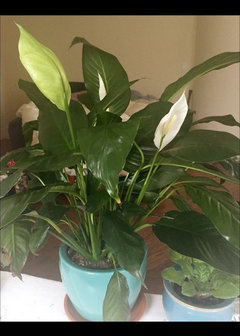
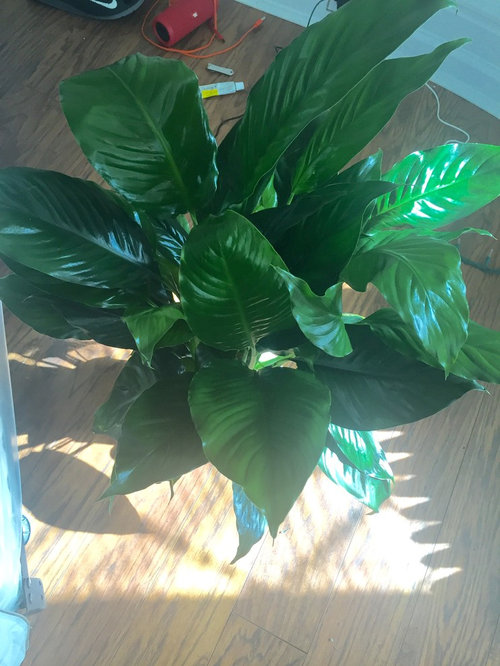
    Just an update for you guys! She's so much happier now (I think)! She's on to her 3rd flower and has grown A LOT. I'm so proud! Some yellow leaf tips though? I've heard it's a common occurrence? I've been waiting to water until I see the leaves slightly droop!
  • 10 years ago

    Strong work!


    Al

  • 10 years ago

    Beautiful plant.

    Have you ever thought about pollinating them? Correct me if I'm wrong, but since it has a new flower opening with the female flowers receptive to pollen, you could try it pollinating it with pollen from the older flowers.

  • 10 years ago
    I am actually very new to all of this plant stuff. I have no clue how to do that but, I will definitely do some research! Thanks for the idea!
  • 10 years ago

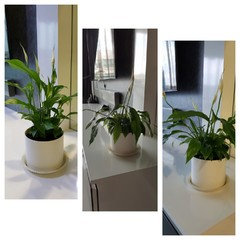
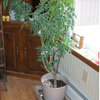
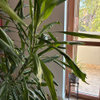
    Can someone tells me how to get my peace lily all perky again, like in first picture on the left? This is how it was when I first bought it.

    Middle picture showed its condition after I tried putting it out in my balcony.

    Last picture is how it looks like nowadays..


  • 10 years ago
    last modified: 10 years ago

    Keys:

    * A free draining, well aerated medium you can water to beyond saturation w/o your plant having to pay a toll in terms of root health and inhibited root function.

    * Appropriate watering habits.

    * An appropriate nutritional supplementation program you can maintain control of (closely related to soil choice).

    * Favorable light/humidity levels and temperature range.

    * Regular maintenance of the root/soil mass or regular division of the plant to ensure vitality isn't limited by root congestion.

    Limited exposure to chlorine and fluoride, especially the later.

    Al