Software
Houzz Logo Print
perc_n_co

Compost: Passion fruit vine- green enough?

10 years ago

I've been googling c:n ratios.
I'm about to put on a thermal compost- scratching around for different green materials in the local area to put in. We have a fast growing passionfruit weed in our local bushland, it's growing vigorously and quite green right now. Does anyone know if this would make a good, high nitrogen material?
Thankyou

Comments (13)

  • 10 years ago

    It could make a great 'green'. However Passion vines can regenerate easily from small pieces so unless you have a very hot compost heap it might be best to make sure the vines are dead before putting them in the bin. You don't say where you are (guessing Oz?) but if you can dry the vines out by hanging them up somewhere (e.g. over a fence) they would be good addition. And avoid adding any roots.

  • 10 years ago

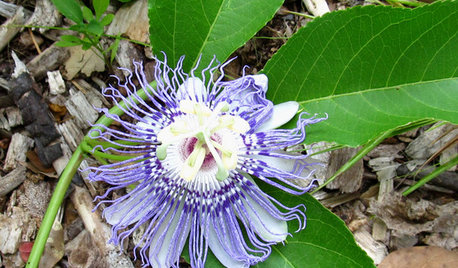
    There is a tropical variety, passiflora edulis aka passion fruit, and a variety that grows in the SE quarter of the US, passiflora incarnate, aka passionflower or maypop. Apparently they are very similar and the fruits of the US variety are also edible. So the OP could be in the US...although we don't use the term 'bushland' very much!

  • 10 years ago
    last modified: 10 years ago

    Yep as much as I want to compost any plant material, I don't do succulents and passion vine. They may actually continue growing in your compost pile!! ( I have wild purslane in my yard and I don't compost that)

    Just to clarify, wanting something green isn't really about trying to find a particular plant that will give you the ratios you need. Any nitrogen-based product can add to the pile to try to achieve the appropriate ratio of greens and browns. For example: weeds you picked from your yard that haven't flowered yet, coffee grinds, any spring pruning of plants that you do, such as prepping peppers and tomato plants to have stronger branches instead of having suckers everywhere, etc

    However, back to the passion vine -- you could also kill them first by pouring hot water over them. Let the water cool then use the materials as compost. Depending on how large your compost pile is, the water could be dumped there, too.

    Also, the ratio is just a suggestion. I've seen as low as 1:3 up to 1:15 or more. The main thing is to consider your compost pile size, and use the appropriate ratio of items and conditions to make your compost cook as fast as you want it to cook, whether that is 1 month or 12 months.

  • 10 years ago

    Thanks. I'm in north-west Australia. Tropical, very hot and dry, so I struggle to find enough greens. The pile is about 4m3. So I have a large job ahead of me today

  • 10 years ago

    What about animal manures as greens?

    Even though they are brown, I understand that they are considered 'greens' when it comes to compost. Any horses about the place? Cows? I won't ask about kangaroos because I could think of nothing more tedious than trying to collect kangaroo manure. And I like collecting manure.

  • 10 years ago

    I guessed Australia from the 'bushland' and the fact that this thing is growing vigorously right now.

    Passiflora caerulea grows widely here and is extremely tough. Comes up through hard surfaces. But the fruit are insipid.

  • 10 years ago

    Cows, but spread out across a lot of country. I do use aged manure from the yards, but as it's quite old I think not much nitrogen.

  • 10 years ago

    Invasive plants can be left on a hot dry surface in the sun for awhile to get good and dead. Then they're OK to compost. Greens will retain most of their N during this process. It works for saving grass clippings when you don't have enough browns, and I've done this to kill off Bermuda grass and other invasive weeds like mint before tossing them in the compost. Just make sure you wait long enough so you don't get zombie weeds!

  • 10 years ago


    Green items also include veggie and fruit scraps that you may have discarded during your regular cooking or eating times. For a family, they might generate quite a lot of food scraps in this way.

    If you can collect the passion fruit vines and make sure they don't grow, that is a good source. You could even encourage it to grow more by cutting at the leaf node, so that it will branch out to make more branches and leaves, instead of pulling it or cutting it from the ground level.


  • 10 years ago

    So even in a thermal compost invasive weeds will continue to grow?

    temperuratues up to 65-70C . I had thought these temperuratues would kill off most seeds, pathogens or the plant material itself

  • 10 years ago

    It's a risk. a. you can't guarantee high temperatures and b. stolons, tubers and roots can survive quite high temperatures before they are really dead. They are designed to survive adverse conditions which will kill the above ground parts.

    I cold compost and my horror weed is Calystegia sepia (bindweed). In my damp climate it needs at least 3 months draped over something well up off the ground to die completely.

  • 10 years ago

    Hot compost will do MOST of the killing but...The problem with a hot compost pile is that it's hottest in the center, grading toward ambient temperature at the outside. It's hard to guarantee that every piece you put in will be hot enough for long enough. Not that it won't kill any of it.

Sponsored
Peabody Landscape Group
Average rating: 3.5 out of 5 stars8 Reviews
Columbus' Reliable Landscape Design & Contracting