Software
Houzz Logo Print
oklahomegrown

When to mulch veggie garden?

10 years ago

Ok, I am sure this is a silly newbie gardener question, but when do I mulch a veggie garden? Will the little seedlings sprout if they are covered in mulch.

Comments (3)

  • 10 years ago

    Well... If they are anything like flowers they need 3-4in of mulch. So I'd wait until they are 6 or so inches tall.

  • 10 years ago

    I usually mulch when the temperature outside threatens to warm the soil up too much. So I kinda think of mulch as a way to keep soil cool.

  • 10 years ago

    It depends on what you're mulching.

    With cool-season crops that do better with cool soil, I will mulch them earlier---not too long after I plant them. I start off with a thin layer of mulch and add more as time goes on. Mulch is a two-edged sword. It will keep the soil cooler, and in late winter/early spring, you might want to wait for the soil to warm up a bit.

    With warm-season crops the thrive on warmer soil, I mulch very lightly (to keep weeds down) the day I transplant warm season crops into the beds, but otherwise wait for hotter weather to arrive. While you can plant tomato plants into soil that is 55 degrees, the plants are happier with warmer soil, so I have only a small amount of mulch around tomato plants so that the soil can warm up more. Once it is warming up, I quickly add more mulch to keep it from getting too hot.

    With ornamental plants, I mulch as soon as I transplant, in order to deter weeds. It might be a fairly thin later at first if the plants are short, but as they get taller, I add more.

    With anything grown from seed, I don't add mulch too early because I want to be able to keep an eye on pesky insects that might chew on the young plants stems. Or, I mulch in between seedlings, but don't have the mulch right up against the stems. With less mulching, I might have to weed more, but I live in a very rural area surrounded by pasture land so weed seeds blow in or wash in constantly and I have to weed a lot anyway. If you stay on the weeding and weed regularly and add mulch as the plants grow, weeds still are not hard to manage.

    By the time the June heat arrives, my plants usually have at least 4" of mulch around them, and that will help conserve moisture in the soil and will help prevent weeds from sprouting. Having mulch doesn't mean you'll never have to weed, but it does make keeping up with weeds a lot easier.

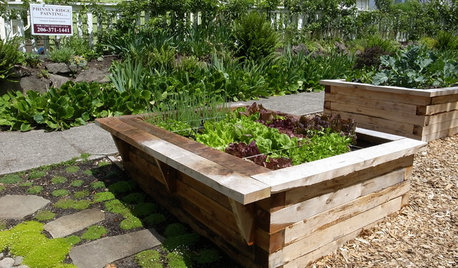
    I grow ornamental plants, herbs, fruits and veggies together within my fenced (to keep the deer and rabbits out) garden, sort of in a cottage style garden. Most of what I grow is in raised beds, and I have to mulch all the pathways in between the beds or they become weed beds. I keep mulch on the pathways year-round, using chopped/shredded leaves in autumn and grass clippings in spring and summer. Because I am using a non-woody mulch, it decomposes pretty quickly so what I'm really doing is sheet composting in the pathways. In winter or early spring, I use my compost scoop to scoop up all the decomposed mulch out of the pathways and toss it onto adjacent beds. Then I put down new mulch in the pathways. It is a perfect way to always have more-or-less weed-free pathways and to be able to add compost to the raised beds every year. It is more convenient than having a compost pile a few feet or few yards outside the fenced garden (although I do have several outside the garden since a big garden requires huge amounts of compost) and saves me from having to carry wheelbarrow loads into the garden. I couldn't garden without mulch. I'd just spend all day every day weeding and it never would end.

    I am not very successful keeping mulch around the shrubs and trees up close to the house. We live on a slope so often the heavy rain carries away the mulch, or our free-range poultry dig, scratch and kick it up and scatter it, but I do try to keep that area mulched as well. I use bark mulch most often up around the house because the poultry cannot scatter it as easily as they can scatter the leaves and grass clipping mulch.

    Because I use grass clippings from our acreage, I have more mulch to add weekly when we mow. That is a good thing because grass clippings can break down pretty quickly. It is just part of our weekly routine. Tim goes out to mow on a Saturday, and I go out and start weeding the raised beds in the fenced garden. When he stops by the garden with a load of grass clippings in the grass catcher, I stop what I am doing and spread the clippings. The he goes off to mow some more, and we repeat that all day until we're done. That means that at least once a week, the whole garden gets weeded and mulched and looks good. Staying up on weeding/mulching weekly keeps the garden looking great until I start seeing snakes in it. Once I have a venomous snake encounter within the garden, I often lose my enthusiam for weeding, but I do try to keep spreading the mulch. By then, it may only be going in the pathways if the beds are well-mulched by that point. While snakes are out by April of most years, they do not necessarily start coming into the garden until the weather gets hot in June or July.

    Some years I use old straw or spoiled hay for mulch, but I've gotten pickier about using hay because of the issues with herbicide carryover. At least when I am using our own leaves and grass clippings, I know that none of our plants were sprayed with herbicide and that's one less thing to worry about.