

cinder blocks, peat pellets, and bean seeds
Annoyed and agitated. That's how I feel. I still do not have my onions planted. It's not anyone's fault---family emergencies and jobs. These things happen. But I feel really annoyed--almost tearful. I. Just. Want. To. Spend. Time. In. My. Garden. That's all...
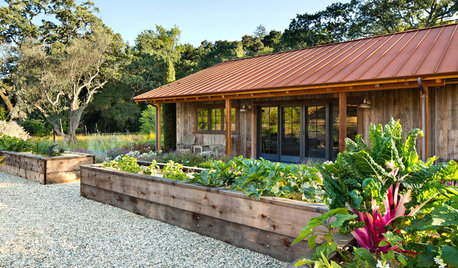
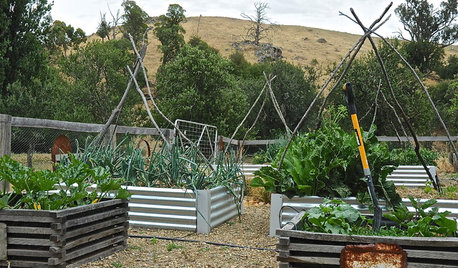
Rant over. Now...my onion area is ready. I just need to dig the trench, put the Dixondale fertilizer in, and plant the onions. It's not in a raised bed. That didn't happen. (It was supposed to happen in October, but we discovered high school marching band and how time consuming that is and the bed didn't get built.) I did add soil and compost, and it sits a few inches higher than ground level. But...I'm wondering...after my onions are planted, could I add concrete blocks when I have time? Of course I could! SO...the question is this...fly ash? Is that in those cinder blocks that people use for raised beds? Is it really dangerous? Does anyone use cinder blocks in their garden? This is really disappointing.
Bean seeds. Does anyone start these indoors? Does anyone use peat pellets? If so, what seeds do you put in them? The bean seeds seem a little large.
We stopped by Walmart in Norman a couple of days ago and Bonnie Plants was there delivering beautiful, beautiful plants of all kinds. The Bonnie guy said, "you better buy them today, because they [Walmart} don't water and the plants will be dead in a couple of days." He seemed really sad and bothered by that. (I'm not sure how Walmart cares for their plants, so I can't say for sure that's what they do...)
I'm following and reading all the new topics but haven't had a chance to reply to anything. I'm happy (and really jealous) that you all are getting to enjoy your gardens. Wish I could enjoy mine.
Comments (14)
 10 years ago
Fly ash is quite toxic, but the question is, will it leach out. I have been researching this myself. I went looking for something more than internet hype. I found one site that said the fly ash used in concrete is molecularly changed and not likely to leach toxins unless it was ground down. This was an engineering site, advocating using fly ash in road concrete, not garden walls, so I am not convinced. There are, apparently, concrete blocks, as opposed to cinder blocks, which don't use fly ash as aggregate. If I were younger, I would look into earth bags or rammed earth, but it looks like a lot of work.
hazelinok thanked AmyinOwasso/zone 6bRelated Professionals
Belleville Landscape Architects & Landscape Designers · Evansville Landscape Architects & Landscape Designers · Decatur Landscape Contractors · Miami Landscape Contractors · Tampa Landscape Contractors · Rome Landscape Contractors · Miami Landscape Contractors · Auburn Landscape Contractors · Brainerd Landscape Contractors · Logan Landscape Contractors · Ogden Landscape Contractors · Oneonta Accessory Dwelling Units · Milwaukee Accessory Dwelling Units · Modesto Accessory Dwelling Units · Billings Accessory Dwelling Units 10 years ago
Hazel, I understand that you are frustrated, but encourage you not to make any gardening decisions in haste just because you're eager to get plants in the ground.
I wouldn't use cinder blocks, but that's just me. I contempated using them but chose to use wood instead. My main objection to cinder blocks and concrete blocks is that they are highly alkaline. I already have alkaline soil and alkaline water, and I have to do monumental amounts of soil amending to get my soil down into the pH range needed for good plant growth, so the last thing I would want to do would be to bring an alkaline material into my garden. For a person whose soil is safely within the acidic or neutral range, the alkalinity of cinder blocks or concrete blocks might not be an issue at all.
As for safety, you can Google and read all kinds of stuff both pro and con using cinder blocks for raised beds for growing edible food. Lots of people use them. Some people won't touch them. Some concrete blocks do not contain fly ash, but may (or may not) contain certain chemicals used as stabilizers and such. I think if you can find concrete blocks you feel are safe for use, there's no reason not to use them as long as you're not fighting high pH soil already. I don't think leaching would be a huge issue and maybe it isn't an issue at all.
I use peat pellets for some things and not for others. It is a matter of personal choice. I believe peat pellets work just fine as long as you're not one of those people who overwater and keep things too wet. Plants often die of damping off when kept too wet in peat pellets. Also, remember that peat is sterile and has no nutrition in it, so if you are going to have seedlings in peat pellets for very long, you'll need to feed the plants at some point. Peat pellets hold tons of water when heavily watered, but also dry out incredibly fast when you have flats of seedlings sitting outside on a table in the sun. I often have to water my peat pellets in the middle of the day in that sort of situation, especially on a warm, windy day. I generally use peat pellets for small seeds like tomato, pepper and most herb seeds, and I always remove the netting that encloses the pellet when I am transplanting the pelleted plants into the ground. Most often, in fact, I sow multiple seeds into one pellet and then as soon as those seedlings have two true leaves I remove them from the pellet and pot up the plants into individual small containers using a sterile, soil-less mix. So, for example, if I sowed 9 seeds of one tomato variety into one peat pellet, I will pot up those young seedlings into 9 small containers (I often use plastic, paper or styroam cups with drainage holes punched into the bottoms of the cups) as soon as the plants all have two true leaves.
For larger seeds like peas and beans, I use small paper cups (3 oz, 5 oz or 9 oz depending on how quickly I expect to get the plants into the ground) of soil-less mix to sprout them. While there is no requirement to start peas or beans indoors, it is my personal preference to do so much of the time. I garden biointensively in wide raised beds planted in block patterns in general, only using rows when it makes more sense to do so---like with peas, beans or other plants growing alongside a trellis. With block patterns, I do not necessarily have everything lined up in straight rows, so it is easy to get the spacing I want by sowing the seeds in paper cups and planting them directly into the garden in whatever sort of spacing or layout I'm using for that specific crop. I also can do a quick changeover from the current crop to a succession crop by having my succession crop growing in paper cups that can go into the ground the same day the current crop's plants are removed at the end of their productive period.
When you start plants like peas and beans indoors, they can be ready to go into the garden when only a few days old....almost as soon as they have sprouted. If you hold them in their started containers for more than a very few days, their root growth can suffer, so be sure you don't keep them in their starter pellets or containers for too long.
As for the comments of the Bonnie Plants' delivery guy, I kinda think maybe he was just trying to stir up more business, but that's just a guess on my part. Are there days I walk into the store through the garden center at Wal-Mart and see dried-up plants that are just about past the point where watering will save their lives? Of course there are days like that, but I don't think it is worse at Wal-Mart than at any other store that sells plants. Some days are just hot and dry and some days there's a shortage of people working in the garden center and plants get too dry. That's just life. However, I'll add that when I am looking to purchase a certain plant that is grown in peat pots, I do like to buy them when they are fresh off the truck precisely because you do not know how they'll be treated over a period of days in the garden center and I'd rather buy a plant that hasn't been stressed by often staying too dry or by alternating wildly between being bone dry and then soaked with the hose.
hazelinok thanked Okiedawn OK Zone 7 10 years ago
I pretty much start all my beans and peas indoors and, sometimes, in large pots to give the a head start. I think my environment is too starved for nitrogen. Usually, the pill bugs eat them if the rabbits and mice don't.
Even my Austrian peas, a cover crop, must be overseeded to produce anything significant.
I use the spare cinder blocks that we have as compost barriers, a portable compost bin I suppose. For some reason they make the compost work faster than wood or stand alone. Not sure why.hazelinok thanked chickencoupe- 10 years ago
Bon, The legumes fix their own nitrogen, so they should be fine in soil that is low in nitrogen. Maybe the soil is too cool for them at the time you're planting them or maybe it is a pH issue.
A fence keeps out rabbits. Mice are tricker, but traps usually get them. For pillbugs? Slug-Go (iron phosphate) or Slug-Go Plus (iron phosphate + spinosad) kill them for me. Slug-Go Plus is slightly more effective, but Slug-Go is usually the one I see in stores. As a bonus, I rarely have cutworms in beds treated with Slug-Go or Slug-Go Plus, so clearly it kills them as well.
Based on how many cutworms I'm finding in the garden, it is going to be a bad cutworm year here. I use cutworm protection with my plants, so I rarely lose anything to cutworms, but I'm still not happy with the apparently huge cutworm population I'm seeing this year. They will devour bean and pea plants that don't have some form of cutworm protection.
The cinder blocks as compost barriers probably make the compost decompose faster by acting as heat sinks (absorbing heat from the sun all day, and releasing it at night as they cool off), keeping the compost pile a bit warmer which keeps it actively decomposing.
Dawn
hazelinok
Original Author10 years agoI was able to plant 77 onions today--not quite half way there. It feels good.
Okay. I won't use the cinder blocks. Sigh. I was hoping to get a quick asparagus bed fixed up this weekend... because my 4'x 6' bed isn't big enough. haha! What was I thinking?
My poor chickens are confined to their pen now...until I get some sort of fence around the garden. They are going to be very unhappy. They're just so naughty though. They want to be wherever I am, digging wherever I am. Not helpful at all when planting stuff.
Okay...so onions. The skinny one are best for full-sized onions and the fatter ones should be used for green onions?
And a question about garlic. I planted it back in....November maybe. Generally when is it ready?
And, Dawn, what do you use for cutworm protection? Maybe I need some cutworm protection too.
- 10 years ago
Hazel,
Mostly I use bamboo/wood skewers and toothpicks.
In order to cut through the stem of the plant, the worm has to be able to completely wrap itself around the plant. So, if you insert 1, 2, 3 or 4 toothpicks or skewers or toothpicks in the soil when you transplant (or after seeded crops like beans sprout) and have them close to the stem, the cutworm cannot wrap itself completely around the stem because the skewer or toothpick gets in the way. It works amazingly well and is much less tedious than making cutworm collars from tinfoil or cardboard.
The smaller seedlings get two toothpicks, one on either side of the stem. Larger plants, like tomatoes and peppers, get the skewers. I break a skewer in half and insert one half on either side of a stem. It likely would work with only one toothpick or skewer but I use two for added insurance. If it is a really bad cutworm year (based on how many I've dug up out of the mulch, I think the potential exists for it to indeed be a bad cutworm year), I might use 4 toothpicks on bean and pea plants because the cutworms go after them relentlessly.
Every now and then we have an epic cutworm year where the cutworms and their evil cousins the army worms are mowing down entire gardens one plant at a time. The last time we had a year like that, which might have been in 2010, I sprayed my entire garden with a caterpillar killer containing Bt 'kurstaki' about once every 10 days and still barely saved it. That's the only year I've ever used Bt heavily like that because, in general, I prefer to have a garden full of butterflies and moths. That year, though, there were too many of the moths that give us cutworms and army worms, so there wasn't even a choice---the only choice was to fight them aggressively and have a garden or to not fight them and to have no garden.
I have been horrified by how many cutworms I am finding in my mulch, and in the decomposed mulch in the pathways (as I shovel it up into adjacent beds before planting them). I don't know if it is because we had so much rain last year or what, but I'm probably finding 10 to 20 times more cutworms than I've ever found in springtime before. The good thing about finding them is that I can drop them into a bowl of soapy water and drown them, and each one I drown is one less cutworm that will be trying to eat plants in my garden. I had been feeding them to the chickens, but now they already are tired of them and won't even eat them. That's when you know you have spoiled, lazy poultry---when they turn up their noses at nice, juicy cutworms and walk away. It is the same way with grasshoppers. In the spring, the poultry chases, catches and eats every grasshopper they can find. In the summer when the fields dry out and the hoppers migrate en masse to irrigated lawns and gardens, the chickens get tired of them and eventually stop eating them too.
I just bought another two boxes of toothpicks at Wal-Mart last night because I have several flats of flowers, herbs and veggies to transplant today. I couldn't buy skewers because they were sold out, but I think the open package of them that I do have in my tool bucket will be enough to protect the tomato plants I'm transplanting today.
Dawn
hazelinok thanked Okiedawn OK Zone 7 - 10 years ago
OK I gotta say my engineering terminology sensor went off reading this. I'm not sure "cinder blocks" are even made anymore. The actual term is "concrete masonry unit" or CMU for short. I'll settle for "concrete block" though. They are made in light weight, normal weight and heavy weight. OK rant off. No hard feelings.
My dad has two raised bed built out of concrete blocks. He hasn't had any problems. I have a small concrete block wall along a portion of my garden. It's been there for 4 or 5 years. I've grown all kinds of things with no adverse affects (effects?). Of course I still drink out of the water hose, so I'm probably due to keel over any day now. :)
 10 years ago
No wonder people act.like they have no clue when I say cinder blocks. My dad's terminology forever imprinted on my brain.
- 10 years ago
OSU engineer, I don't know if they still make cinder blocks either, but people here still call them cinder blocks. I didn't know they came in three weights either. My dad had his garden (one giant raised bed, not individual raised beds) outlined in cinder blocks to separate the lawn grass from the garden back in the 1980s and 1990s and we ate food raised from it without ever showing any ill effects.
I still drink water out of the water hose too and it hasn't killed me yet either. I'm fairly careful about things in general, but drinking water from the hose is not one of those things I worry about.
Kim, I have all my dad's old words and phrases in my head too, and now that I've lived here so long, some of the local phrasing is rubbing off on me too, and I'm sounding more countrified/less citified every year. I even catch myself saying "creek holler" sometimes instead of "creek hollow". What would my 9th grade English teacher think about that? I suppose she'd be horrified.
Dawn
- 10 years ago
I am horrified when I hear myself say some southern country slang phrases lol. But my Yankee still slips in there once in awhile too.
hazelinok
Original Author10 years agolast modified: 10 years agoGoodness, osuengineer! I didn't mean to upset you by using the term "cinder blocks"...I probably won't remember to say concrete masonry unit...but I might be able to remember to say concrete blocks. Might. haha.
Yeah...the Okie phrases AND...our short "e's" and "i's" sound alike often. Working with kids we say, "ya get what ya get and you don't throw a fit". My friend from Connecticut would say, "In Connecticut "get" and "fit" do not rhyme.".
Sigh. I know. And I teach phonics to kids. I know.
Anyway...
I"m happy because my asparagus beds are made now. I might have messed up by using treated wood...but I read up on it and supposedly treated wood is okay now. If it's not, please don't tell me because I spent $150 on these beds and I want to plant them up on spring break (next week).
Still considering "cinder" blocks for the onions. Which are NOW planted. Yay. I ended up with 178 onions and a few to share and a few to plant for green onions. These are the fatter ones. Someone remind me why the fatter ones should be used for green onions. I'll put them next to the herb area.
- 10 years ago
Hazel, I believe the treated wood now sold is safe for use and wouldn't hesitate to use it. I said that to my son the other day and he about had a fit. How dare I change my mind about treated wood after decades of avoiding it! I was laughing as I told him that the treated wood of 2016 is much safer than the treated wood of 1976 or 1986 and that he just has to get used to the idea. I don't know if I can change his mind when he grew up with a mom who wouldn't use the stuff, but if an old dog like me can learn a new trick, maybe he can too.
We use the fatter onions, those larger than the circumference of a No. 2 pencil, for green onions because they are most likely to bolt when we are having wild temperature swings from hot to cold and back again. The scientific reason this occurs is because onions are a biennial plant. Once an onion plant is roughly the size of a No. 2 diameter pencil (or has more than 5 leaves), it doesn't take very much exposure to very cold temperatures to make the onion go dormant. Then, when it breaks dormancy, it perceives that it now is growing in its second season so it begins the process to flower and set seeds, which is what a biennial does in its second "year" of growth. You won't necessarily be able to tell it is going to bolt when it breaks dormancy and it will seem fine, but then a month or two later, all of a sudden it sends up a flower stalk, which splits the onion into half as it emerges. Once they stalk comes up, you might as well harvest the onion and use it then because the split area will tend to get water in it from rainfall or irrigation and the onion can begin to rot. Some years there is a lot of bolting, some years a little, and some years none. It all depends on how much cold weather is experienced after the plant is in the ground. Also, if the plants were subjected to cold weather while at the wholesale grower (more rare, since south Texas usually is warm in winter), our onions may be doomed to bolt even before we receive them, but that's pretty rare and generally unavoidable. Wholesale growers can no more control the weather than we gardeners can.
Dawn
hazelinok thanked Okiedawn OK Zone 7 - 10 years ago
If I counted everything I do that's supposed to take minutes off my life, I should have died a hundred years before I was born!





Shawn Pata