Software
Houzz Logo Print
justinva

Mulch vs. Ground Cover

10 years ago

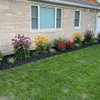
I would say 99% of the homes in my neighborhood use mulch in their beds and have no ground cover. To be honest, before I came to this forum, I had never even thought of using a ground cover in a planter bed. I walk and bike the neighborhood to look at others landscaping and only one house that I can find uses extensive groundcover.....and it looks VERY classy. So, why is this? Here's a pic of what I typically see....


Comments (5)

  • PRO
    10 years ago

    It is a fact of life that many things are controlled by budget. The vast majority of people are far more interested in the home itself, than they are in its setting. When a new home is built, except in the case of wealthy people, the budget is ALWAYS making sure that certain things are excluded or down-scaled. This being the rule, John Q. Public gets used to it over time. One place I can think of that this is universally applied is to the front walk. The front walk is not made extra small because it is an artistic or utilitarian improvement! It is made extra small because of budget and this scenario has been in place so long, that people worry that "maybe it's too big" if one now proposes a normal size for a walk.

    Another place where it is becoming universally true is in beds of mulch vs. beds of groundcover. Obviously, it is cheaper to use mulch alone. (BTW, with landscaping being the last thing built in a new home, it is likely to be where not enough $ are allocated to begin with, and where budget cuts are likely to happen out of necessity.) It is rare to create a mulch bed in preference to a groundcover bed on account of artistic reasons. One does it because it is cheaper and because maintaining it requires a lower skill level than does maintaining a bed of groundcover. (Over the long haul, groundcover is not more difficult, but it requires some knowledge, but it also eliminates the need for annually top dressing with mulch.) A groundcover bed spends the entire year looking great, year after year. One usually needs only to keep weeds out and make sure the bed edges are clipped. A mulch bed looks great for the first two months and then declines from the sun bleaching out the material. It spends half the year looking sterile and a bit anemic until it is top-dressed.

    Once a groundcover bed is installed, of course, it's going to be some time before plants "knit" together and give solid cover. Therefore, mulch is also installed as cover for the soil until the plants do their job. It helps to hold down weeds in the early days, but it is not intended that seeing the mulch is a permanent feature of the bed.

  • PRO
    10 years ago

    I took care of a lot of english ivy over a long period of time and did not find it to be difficult to manage. I think many people have a phobia about it because they lack direct experience and knowledge about it. In the right place, it's easier to tend than grass.

  • PRO
    10 years ago

    They're interested in just the right amount of aggression for the given situation.

  • 10 years ago

    It makes a big difference where you live as to the suitability of any given type of groundcover........as it does with most other plants :-) In my area, it is unlikely you will even find English ivy for sale as it is considered a seriously invasive species. It is not all that difficult to manage and that would go a long way in keeping the problem in check, however management after planting is never assured. Most folks seem to have the attitude that any groundcover is a plant-and-forget plant and subsequent management is unnecessary - not true!! And without management (and depending on the location), ivy can become an obnoxious invader. And a very appealing habitat for rodents.

    Just did a consultation yesterday on a property that had to redo a foundation issue and discovered ivy was widespread throughout the property. Much of it had been cursorily removed - new sprouts were appearing all over - but what really struck me was ivy covering an old rotten stump that appeared to have a small tree growing out of it. The "tree" was actually ivy that had been in place long enough to form a distinct woody "trunk" and branching stems just like any other shrub or tree. And this was covered with the distinctive, heart-shaped foliage of the adult form of English ivy and the remains of flowers and ivy berries.

    The bottom line is that both mulch and groundcovers DO require routine maintenance, whether it be just raking or refreshing the mulch annually or more often or weeding. grooming, shearing or otherwise containing the rapaciousness of most groundcovers. Most tend to be aggressive spreaders as that is the intent of a groundcover. And some to the point that they become invasive or ecologically damaging if not provided with the maintenance they require.

  • PRO
    10 years ago

    No dispute that groundcovers can have an aggressive, durable tendency which, as pointed out, is to some degree their intent. While "dangers" of ivy can exist where it is in a happy environment and it is left uncontrolled, the complete truth about it is that it is also an extremely useful, durable, versatile, trouble-free, problem-solving kind of plant ... in many instances doing better what it can do more than any other plant I know. It has its place and when used in the wrong place (or by the wrong person) could be a PITA! Most assuredly, it is not the groundcover of choice for small areas. But it is a great groundcover for large, shady areas where people will give it a modicum of attention.

Sponsored
Custom Home Works
Average rating: 4.6 out of 5 stars10 Reviews
Franklin County's Award-Winning Design, Build and Remodeling Expert