

RRD prevention ?
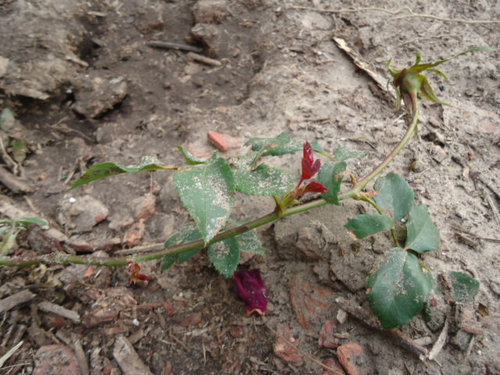
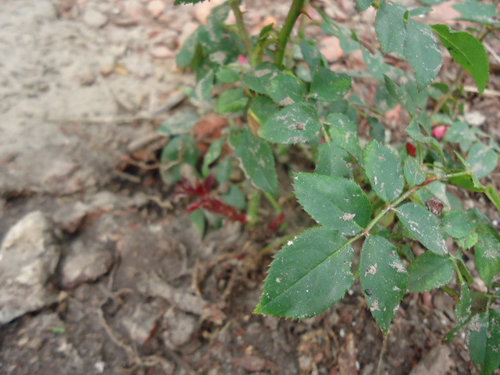
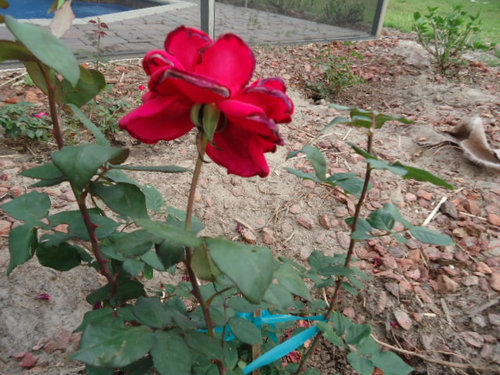
Zone 9b . I bought 2 bare root roses from Home Depot a couple of months ago (love and double delight ) ,unfortunately one bush started having very red leaves ,hardly any green .and the leaves were twisted not normal ,I googled and found out about RRD .I removed the plant with the roots and soil . after a few days I noticed the other one too was getting the twisted red leaves and the stem was thick and thorny . I removed it yesterday . I have a couple of knockout rose bushes that I planted recently but are not thriving . today I noticed a red thorny branch . I planted a Mr lincon a few days ago and the stems are turning red from green . could the virus have affected it so fast ?
this area had a dwarf palm tree that we had removed with its roots . then I planted the roses one by one . it is an exposed windy area as there is a golf course behind it . I dont know where did the virus come from . I am really sad ,I feel like crying ! only today I ordered sulfate of potash & gypsom from Amazon .I had been using organic soil and compost and cow manure in the holes and fertilized first month with Epsoma rose tone and second month with tomato tone . I have other roses in front of the house which I planted last year but they are in the shade ,hardly get any sun ,not doing well .
I really want to buy more roses but am scared of the RRD .any advice ?
Comments (63)

Pink Rose(9b, FL )
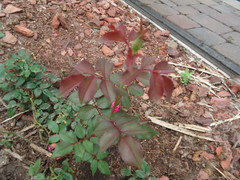
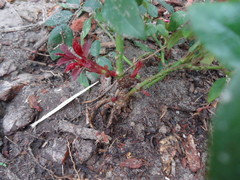
Original Author10 years agoSamuel and Khalid , it maybe new growth but I am paranoid since I just lost 2 rose plants .Unfortunately I did not take pics but they were defiantly RRD . they had thick stems full of thorns and almost all leaves were red and twisted . do you think these red stems and leave new growth or RRD ?
Pink Rose(9b, FL )
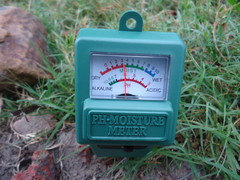
Original Author10 years agostraw ,this morning I checked soil PH again ,appears 6 .so should I dust lime on top ?
Related Professionals
Elizabethtown Landscape Architects & Landscape Designers · Lafayette Landscape Architects & Landscape Designers · Fort Worth Landscape Architects & Landscape Designers · Enfield Landscape Architects & Landscape Designers · Taunton Landscape Architects & Landscape Designers · Nashua Landscape Architects & Landscape Designers · Fort Worth Landscape Contractors · Bloomington Landscape Contractors · South Sioux City Landscape Contractors · Sioux Falls Landscape Contractors · Milwaukee Landscape Contractors · Tampa Architects & Building Designers · Belleville Architects & Building Designers · Brainerd Architects & Building Designers · Willmar Architects & Building Designers 10 years agolast modified: 10 years ago
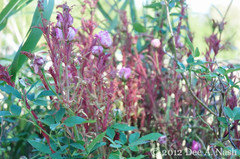
Above is a pic. of Rose Rosette Disease (RRD), caused by a virus (carried by microscopic mites) That's how a branch of my RRD rose looked like, before I trashed the entire bush.
Pink rose: The pictures of your rose look 100% normal to me, young leaves are usually reddish, and the normal stem is STILL GREEN. But RRD is reddish & thick stem, VERY thorny, twisted red & bunched up leaves as below:
"You’ll know your plants have RRD by these telltale signs: “red (or yellow on hybrid teas) new growth, rapidly elongating stems, and witches’ brooms; sections of multiple stems that are thick, red, have distorted leaves, and are covered with many thorns.” - See more at: http://www.hgtvgardens.com/garden-basics/blooms-off-tackling-a-rose-killer#sthash.qz2nhhIF.dpuf
Lime is known to kill mites and fleas, but it causes serious damage to eyes if the dust get into one's eyes. Best pH for roses is around 6.5, so you need just a touch of lime IF YOU GET RAIN, if you don't get rain, then your tap water is alkaline enough to bring the pH UP.
See conversation from below link on how lime kills mites. I would use Espoma garden-lime sold at Walmart $10 for a huge bag, it has BOTH magnesium and calcium .. magnesium is often deficient in sandy & high rain soil like Florida.
http://www.backyardchickens.com/t/227662/lime-to-rid-mites
"I was talking to an old farmer who swore that the powdered lime you get from Tractor Supply will kill mites. He has used it since he was a kid (he is now 90 or so) sprinkling it in coops, nest and runs. He said he has even used it in the yard to get rid of fleas and ticks on his dog."
" He warned me to be very careful with lime...He said his buddy used it in his dog runs and blinded two of his dogs with it... burnt ones foot really badly! "
" Agricultural lime is the lime to use around animals. Hydrated lime is extremely corrosive and should never be used around animals unless it is in whitewash form or allowed to soak into the ground for a few weeks or 3 heavy rains. Hydrated lime is very effective at altering soil pH, controlling insects, decreasing noxious odors and increasing decomposition, but it is tricky to work with because of its dangerous nature."
**** From Straw: I would stay away from hydrated or powder lime ... and stick with Espoma Garden lime (has both calcium and magnesium) ... it's gritty, and slow-released, only a tiny amount is enough to raise pH.
- 10 years agolast modified: 10 years ago
Khalid and Pink Rose: For the temp. to stop GRANULAR fertilizer, I originally wrote 60 but I changed it to 70 F, or 21 C ... that's for SOLID fertilizer with NPK higher than alfalfa at 2-1-2.
Chicken manure with NPK 5-3-2, burnt my roses when I used it above 70 F, or 21 C. .. even with plenty of water. Disadvantages of granular fertilizer: it lingers on the ground, and attract pests. If tap-water is used on granular fertilizer, none is dissolved, since tap-water is too alkaline. Granular fertilizer breaks down too fast in hot weather, fast release means more burning. The salt is too concentrated in granular fertilizer.
But for SOLUBLE-fertilizer that's diluted in water, I used at temp. above 80 F, or 26 C, and that worked VERY WELL. When the weather is hot & dry .. that's when folks use alkaline tap-water, which is treated with hydrated lime (calcium hydroxide), that nasty chemical is used to deodorize tap-water, but it also raise the pH of tap-water, and binds with potassium phosphorus & trace elements .. so roses don't bloom, no matter how much tap-water is given.
ACIDIC rain water at pH 5.6 is needed to release the nutrients from soil to feed roses. But if there's no rain, nutrients are locked up in soil as solid minerals, can't be used. Thus it's necessary to use SOLUBLE fertilizer in hot & dry weather, both to lower the pH of tap-water, and to provide nutrients which are locked up in soil, such as potassium and phosphorus, which are bound up with the unstable calcium of hydrated lime (added by municipals to treat tap water).
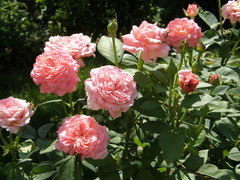
Below is Liv Tyler, fertilized with horse manure (NPK 0.7-0.3-0.6), plus alfalfa meal NPK 2-1-2, plus SOLUBLE fertilizer of 1 teaspoon sulfate of potash, and 2 teaspoon gypsum per 2 gallon of water. Decayed alfalfa provides the acid & phosphorus. Horse manure provide trace elements. Picture taken when it's over 90 F, or 32 C.
The logic of alfalfa tea is to ferment, or "sour" alfalfa to bring down the pH of tap water, plus to release SOLUBLE phosphorus & nutrients from the fermentation.
 10 years agolast modified: 10 years ago
what a beautiful rose Straw, so many blooms... another I can't get over here sigh...
I can't wait for your roses to start blooming again...I sowed a few alfalfa seeds and they all started growing - soon I'll have some alfalfa...
- 10 years agolast modified: 10 years ago
Pink rose I am glad to see it's not RRD...as Straw said, it doesn't look like that photo that Straw posted to my old eyes...
One gallon is not enough to reach the root system. You will need at least 25 liters (6,6043 gallons) for that, 2-3 times per week, running slowly down...especially in dry hot weather...
and mulch....if you don't have termite problems, using logs helps a lot...on top of the alfalfa and horse manure, exactly like Straw suggests...
Have I said this already...your Liv Tyler is out of this world Straw..
I always learn something new from you - and Khalid... when it's hot and dry, and not possible to use chicken manure, would you suggest something like Nitrosol, to add Nitrogen into the soil?
I found this on Nitrosol:
Ingredients: 80 g/kg N; 20 g/kg P; 58 g/kg K; 7 g/kg Mg; 6 g/kg Ca; 4 g/kg S; 60 mg/kg Fe; 1 mg/kg Cu; 1 mg/kg Zn; 40 mg/kg Mn; 023 mg/kg B; 15 mg/kg Mo Gibberelic Acid 0.003g/kg (NPK Analysis 4:1:3 (16))
- 10 years agolast modified: 10 years ago
Jess is right, Frank Gatto, owner of a large rose nursery, advised 5 gallons of water per rose-bush per week. For clay soil, deep & plenty of water once a week. For sandy/loamy soil like Florida, more frequent water, since water leaches out readily in sand.
Pink Rose: Look at Khalid's roses in his zone 9a - 2016 thread. All his roses are healthy & lots of blooms. LIME IS INFERIOR TO WOODASH AND VINEGAR TOGETHER. Khalid gave the recipe of 1 spoon of wood-ash mixed with 2 spoon of vinegar, let it soak overnight (so the acid in vinegar can neutralize the high pH of wood-ash), then dilute that with water, to water roses. I once posted on trace elements, and wood-ash beat lime by far, plus lime doesn't have potassium, and woodash has plenty of potassium. I notice some grayish spots on your leaves, that look like trace-elements deficiency, and wood-ash will solve that problem.
I don't think you have RRD, it looks more like a nutritional-deficiency in the soil, so woodash neutralized with vinegar is the best choice. Alfalfa tea has trace elements too. Young shoots in spring usually have red thorns, and it's not RRD unless the mature-leaves & stems are also reddish, with 10 times more thorn, and leaves are twisted & distorted & bunch-up.
- 10 years agolast modified: 10 years ago
Jess: I don't know much about Nitrosol ... us clay soil don't need added nitrogen, unless there's week-long-rain. Clay retains nutrients well. But sandy/loamy soil like Florida needs nitrogen, which gets leached out. Alkaline clay like mine has plenty of bacteria to fix nitrogen from the atmosphere ... I never fertilizer my trees after the 1st year .. they shed leaves in the fall, leaves breed bacteria, which fixes nitrogen from the atmosphere in a usable form to plants. Air is composed of 78% nitrogen and 21% oxygen.
From the soil-research (joint venture of Sweden and U.K), it's known that at alkaline pH above 7, there's more soil-bacteria than fungus. At acidic pH, there's more soil fungus & less bacteria. At pH 4, both bacteria and fungus are zapped.
- 10 years agolast modified: 10 years ago
Thank you Straw, this means I don't ever have to add Nitrogen? that is good news...will save me lots of money...to rather use for Gypsum and Potassium... :-)
...we don't ever get week-long rains here...not any more that is...long ago yes...before climate changes... Pink Rose(9b, FL )
Original Author10 years agostraw ,thanks .will Epsoma garden lime harm eyes and skin ? also I dont know where to get wood ash ?
Pink Rose(9b, FL )
Original Author10 years agoGreat advice about the granular vs powder fertilizers .
- 10 years agolast modified: 10 years ago
Pink Rose: I checked the gray spots on your roses and IT DID NOT MATCH ANY NUTRIENT DEFICIENCY, it LOOKS LIKE A FERTILIZER-BURN. How much cow manure did you put in a planting hole, and how much Rose tone, then Tomato tone did you use on top? The fault is with cow-manure, Gracin in Florida once mixed 1/2 soil with 1/2 cow-manure and she got weird-spots on leaves .. I got nasty result with cow-manure as top-dressing in my Chicagoland, and really wimpy & withered tomato with cow-manure in the planting hole.
Cow manure pH is VERY HIGH, Gracin did a red-cabbage test. Plus it has antibiotics which kills all beneficial microbes in soil, plus cow-manure is high in salt. The grayish spots on the rose look like phosphorus burn (high in cow-manure). I got those grayish spots when I put high-phosphorus-bone-meal in the planting hole of a $30 rose gifted from a friend. And the roses' leaves became withered.
Rose-Tone and Tomato-Tone as granular is BEST in the planting hole, rather than on top. Both have alfalfa meal and bone-meal, both need tons of acidic rain & acidic wetness to break down. I got a bumper crop of tomato when I put Tomato-Tone in the planting hole, but LOUSY result when I put cow manure in the planting hole.
Pink Rose(9b, FL )
Original Author10 years agoI filled the hole with half cow manure and half organic soil . then after a few days used 1 cup rose tone , one month later used 1 cup of tomato tone , all sprinkled around the plant's water line.
Pink Rose(9b, FL )
Original Author10 years agolast modified: 10 years agoall this fertilization did not make the rose plants thrive . in fact they shrunk since I planted them .
- 10 years agolast modified: 10 years ago
The fault is with cow-manure, I should had known better NOT to put cow manure in my tomato's planting hole after seeing Gracin's spots on her roses. My tomato was withered last summer, it's 1/5 the size, and produced 1/10 of the crop compared to plant with Tomato-tone in the planting hole. I posted their wimpy pics. in this forum. I should had taken them out of the planting hole rather than let them suffered through the entire summer, and ended up with very little fruits for my freezer.
Cow manure was a disaster when I topped dressed 6 of my roses: they went from 100% healthy to breaking out in blackspots, plus became very pale. The antibiotics in cow manure killed all beneficial bacteria, so the blackspot-fungus took over. Also high-phosphorus in cow manure bring down zinc, and zinc is an anti-fungal agent. They put phosphorus in cattle feed.
- 10 years agolast modified: 10 years ago
Pink rose: You don't need alkaline wood-ash, nor lime .. cow-manure is VERY ALKALINE already. I would take those roses OUT of the planting hole to get away from that nasty manure, it's like concentrated salt & phosphorus & antibiotics .. bad for any plant, be it roses or tomatoes. The roses are OK, it's the soil & cow manure at fault.
- 10 years agolast modified: 10 years ago
More bad things about bagged cow manure: They use quick-lime (the precursor of nasty hydrated lime) to deodorize the manure, thus the pH shoot up to above 9 .. that will burn any root. 50 year ago my Mom used manure from the organic farmers' across the street, less antibiotics, slightly acidic pH & really stinky, plus brownish, plus worked fantastic for veggies.
The problem with bagged cow manure is the additives: quick-lime which burns, plus they put boiler's ash to impart that black color. Boiler's ash has many toxic elements from industrial burning.
That's different from the wood-ash that Khalid uses in Pakistan, from pure wood, nothing else.
Pink Rose(9b, FL )
Original Author10 years agoOh my ! I didn't know cow manure was so bad .l will dig out the roses and use soil only ? I have scott's top soil .should l use it ?
- 10 years agolast modified: 10 years ago
Scott's top soil is excellent. I used it 100% for my 1st year Autins .. that's when I mixed 1/2 native clay and 1/2 horse manure and produced brown-salt-burn on the leaves .. I had to the replace 3 holes with 100% Scott's top-soil and all 3 roses bloomed great, lots of high quality-blooms & healthy leaves too.
- 10 years ago
The wonderful thing with roses are that they are such strong plants, I have made so many mistakes Pink Rose.
Pink Rose(9b, FL )
Original Author10 years agoThanks every one . I am digging out the cow manure and putting the top soil only . I thought I would sprinkle some lime and corn meal around the bushes . is that ok ?
- 10 years agolast modified: 10 years ago
Pink Rose, Lime might cause Black Spot...
we need Straw's advice on this...
- 10 years agolast modified: 10 years ago
Agree with Sam .. anything icky, be it rock-hard sub-clay I just throw on top elsewhere .. then the acidic rain break it down, and it's fluffy after a year. Then I throw leaves & kitchen scraps .. those decay to give beneficial bacteria & microbes back to the lifeless sub-clay.
Pink rose: slow-released garden lime is OK for acidic soil, IF THERE IS RAIN. Roses Unlimited nursery recipe for the planting hole is 1 cup dolomitic lime (Espoma garden lime), 2 cups of alfalfa meal, 1 cup gypsum, 1/4 part compost (about 2 gallon), 1/4 part peat moss, 1/4 part top soil, 1/4 part red clay.
Potassium, calcium, and phosphorus are needed for root-growth, in the ratio of TWICE more potassium than calcium, and much less phosphorus compared to potassium. The 2 cups of alfalfa meal have NPK of 2-1-2, that's twice more potassium than phosphorus.
The lime (calcium carbonate) and gypsum (calcium sulfate) provide calcium for many years for root-growth, but the potassium and nitrogen need to be supplied yearly, since those will leach out with rain. Gypsum in the planting hole is to provide instant calcium, and ALKALINE lime is to neutralize the acidic pH of peat moss at 4, plus red clay is also acidic.
WHOLE-GRAIN gritty corn meal is good, since it's acidic (pH 4) and that will neutralize high pH of lime (pH 9-10). Plus that will decay to provide beneficial microbes to soil, to undo the damage done by antibiotics in cow manure (which kill beneficial bacteria).
Below is the picture Seaweed posted of her roses. She's in Southern CA, with alkaline clay, so the acidic corn-meal worked well to neutralize her alkaline tap water. Here's what Seaweed wrote in previous thread:
Evelyn, 2 Color Magic, one small Love Potion in bud, on top, big Royal Amethyst, pink Pretty Lady at bottom,
Orange small red is Brown Velvet, 1st one, not well formed, ate by the bug, below, cut too soon Maggie Barry near Evelyn, Mutabilis of 5 single petals is left to Love Potion.
Thanks, Straw, taught us using corn meal as another fertilizer, I used it last year, now the leaves turns so green and healthy. You deserve all the credit!
- 10 years agolast modified: 10 years ago
Such beautiful roses... thanks for the great advice Straw, and posting the photo and thread with all the info... I still have to learn so much...
(I just checked on whole grain corn meal...I've never seen this in any shop over here...very distressing...)
 10 years ago
Straw: Agree with you on the use of cow manure. Here we have another problem with using cow manure, specially if it is not fully composted. It brings termite in the soil somehow and that is very bad. I have stopped using cow manure completely.
- 10 years agolast modified: 10 years ago
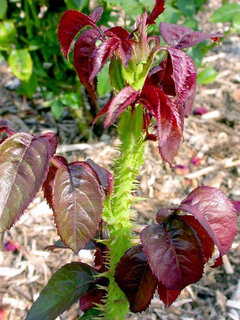
Above is a picture from missouribotanicalgarden.org. That's how my RRD rose looked like ... only one branch out of 4 became EXTREMELY thorny, plus twisted red-leaves. I trashed the entire rose.  10 years ago
I'm glad I found this thread. We've had a hot, dry spring so far. I'll continue using soluble fertilizer only.
- 10 years ago
Straw: does the can in RRD turn this kind of parrot green always and the quantity of thorns increases ?
best regards
- 10 years ago
The color of cane doesn't change, but there's ten-fold increase in thorns, and the leaves become reddish and twisted. I saw that on Hansa bare-root rose at Walmart this past weekend: the canes are just like the above pic. RRD tend to inflict multiflora heritage, and Hansa is a Rugosa rose.
- 10 years agolast modified: 10 years ago
HI springrose: RRD is not contagious as people think. It has more to do with soil-chemistry than the wind blowing that mite. I had only one RRD rose among my 50+ roses for the past 4 years. Few factors that contribute to my RRD rose: 1) my dumping sulfur, which made rose's tissue thinner. 2) my using salty-high-nitrogen chemical fertilizer, resulting quick growth-spurt with soft tissue 3) It's dry month, zero rain to wash the mite 4) That Grandma's blessing rose has multiflora parentage .. multiflora is more susceptible to RRD.
Few factors that contribute to Cantigny rose park nearby with one RRD rose: 1) their dumping sulfur in spring to lower soil pH 2) their using chemical fertilizer with fast growth spurt (softer tissue) 3) it's a hot & full-sun location.
- 10 years agolast modified: 10 years ago
That's good to know. I've never used sulfur or chemical fertilizer on any of my plants. It has been a little dry this spring but we're finally starting to get more rain. Had an order for 6 roses from Burlington which I decided to cancel, maybe not necessary, but I already got 6 new roses this spring, plus 8 babies in the ground and 2 babies of my own to deal with; suddenly it felt like too much. Sometimes the downside of being on this forum is that I see so many new roses and get a little too greedy. I'm trying to be content with what I have and even if RRD does wipe it all out, I'll still be thankful to God for how he has blessed me!
- 10 years ago
Springrose: Your 5-month and 2-year old babies are more important than roses. My biggest regret was when my daughter was 3 year old. I was outside in the garden dividing perennials, my hands were caked with dirt. She came out, asking me to wipe her after she used the potty. I said, "wipe yourself !!" and the strong wind blew the door on her .. she cried. Luckily it didn't injure her, otherwise I would feel so guilty.
My perennials died through that winter, so all my work went to waste. My philosophy in this forum is people come 1st before roses, and babies are way-more important than roses. It's a good place to have friends & I actually devote the entire post on the right thermos to pack food for my daughter to bring to school. I made far more mistakes as a parent than with roses .. and would love to pass that experience along.
Khalid is a great Dad with his sons, taking them to hunting trips .. I really want to change the name of this forum to "Organic Living" rather than "organic rose". "organic living" means living in harmony of what God meant us to do.
- 10 years ago
" I really want to change the name of this forum to "Organic Living" rather than "organic rose". "organic living" means living in harmony of what God meant us to do."
Very well said, Straw
- 10 years agolast modified: 10 years ago
Thanks, you are absolutely right. I don't want my boys to grow up hating roses because I spent more time in the garden than I did with them. My 2 year old already likes helping me garden, so perhaps one day it'll be something we can all enjoy together. They won't be little forever and they need their mommy now.
- 10 years ago
Back to fertilizer: I understand it's best not to fertilize during hot, dry summer - does that include soluble like Alaska fish fertilizer? What about sulfate of potash - contains salt and sulfur, so not good? And is pea gravel beneficial for all roses in acid soil? My mind is exploding with all the information. Thanks again.
- 10 years ago
I volunteer in an organic rose garden which is plagued with RRD. The problem in our windy coastal area is that mites can blow in from infected roses that are outside the park. This city has extensive plantings of Knock Outs which require little care, and when those become infected nobody notices and removes the infected plant. Private homes may also have infected plants that homeowners have not noticed.
KnockOut seems particularly susceptible, but that is largely because it's used for hedges and RRD spreads faster when roots are intermingled. In fact the origin of our initial problem was in a 100 foot long KnockOut hedge within the park; we were sent some infected roses and the infection quickly spread throughout the hedge. RRD clearly can be transmitted by root to root contact.
When we find RRD in the top of a plant, we figure it's because mites have blown in. They can come from up to a mile away! When we find RRD near the base, it's usually come from a neighboring rose or from the roots of an infected rose which was previously removed.
Our rule is, one strike and you're OUT! We don't prune off the offending cane and wait. We remove the whole plant and put it in a "body bag" which is tied shut and put directly in a dumpster with a lid that closes. We go back and remove every bit of root we can find.
Nurseries have found that even repeated spraying for mites doesn't help because if there are mites in the vicinity they can blow in. One large suburban home center near here had so many losses they have stopped selling roses entirely.
The entry to our garden was previously all Flower Carpet roses; now it is yellow lantana. The back and side "walls" of the garden were KnockOuts; now we have hollies. Both those areas had roses which were planted without any space in between; we won't do that again! In the rest of the garden we are resigned to continuing losses and having to replace plants.
There is university research which indicates that at least RRD is not spread by pruning! Small consolation isn't it.
- 10 years ago
Thanks for the information, Barbara. Wow! What a pain this disease is. I see mass plantings of Knock Out all over Houston and it's true; nobody seems to check on them. I have a small hedge of 5 that I barely looked at all last year; now I inspect them daily.
- 10 years ago
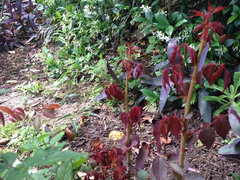
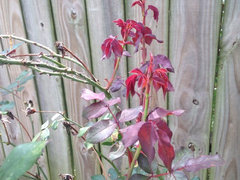
Here are some pics of healthy new growth on Duchesse de Brabant and Double Knock Out from this morning. If I didn't know the difference, I'd be a nervous wreck right now!
DdB
DKO
- 10 years agolast modified: 10 years ago
Hi Springrose: Your roses are healthy. Thanks for those pics of normal growth. I wasted time in the past defending myself when someone in CA accused the mail-man of giving my rose RRD. She INSISTED that the mite got blown by wind, hitch-hiked on the mail-man's truck, and then the wind blew that mite on my RRD rose !! Some folks promote scary myths without caring to check for facts.
Never mind that rose is 50 feet away from the mailbox, with bunch of trees & bushes protecting it from the mailbox, plus it's right in front of a bunch of other roses (none get RRD). I know what I did wrong 4 years ago: I dumped sulfur on that RRD rose, since it's a multiflora, and multiflora is very pale in my alkaline clay.
Monitor soil pH is a good idea. RRD is rare in alkaline regions like California and Chicagoland. My soil pH is near 8, only one RRD rose among the hundreds that I planted for the past 30 years.
My sister is in Southern CA, none of her roses for the past 30 years have RRD. Same with Seaweed who post here, with 250+ roses, none of her roses have RRD. Both have alkaline clay like mine.
None of my other roses get RRD, and Chicagoland is very windy. I get my roof fixed yearly, with shingles constantly blown off from the roof. Today I canceled one claim with State Farm, since it looks bad on my record to have so many roof-claims.
Among Cantigny's park of 1,200 roses, only one RRD last year on Pink Traviata. That's ONE case out of my 30 years of frequent visit to the park. Why? Some hired worker dumped a bunch of sulfur on Traviata, without knowing that's a Romantica rose, and Romantica French Meilland roses DON'T like it acidic .. leaves & stems become thinner.
Soil on the east coast is more acidic, thus more prone to RRD. More rain on the east coast, and pH of rain is 5.6, slightly acidic. Since my tap water is near 9, one summer I put some vinegar to lower my tap water, down to rain water (pH 5.6). After I water a few roses with that slightly acidic water, roses' leaves became THINNER. So I quit doing that.
RRD mite doesn't have teeth, but it has fang to suck to gain entry, and when the soil is acidic, less potassium and calcium are available, thus the tissue is thinner, more susceptible for RRD-mite's invasion.
People don't realize that the more rain one has (like the East coast), the more acidic the soil become, plus less potassium since potassium mobility is a 3, it leaches out with rain. Potassium's role is to strengthen plants' tissue against fungal and pests.
- 10 years ago
All roses with the exception of a few once-blooming natives can get RRD. Roses whose foliage has little substance do seem to be more susceptible-- hybrid musks, polyanthas, and antique teas.
Since mites can overwinter in the tops of roses, it helps to do a fall pruning and remove the top 6 inches on shrubs, ground cover roses and teas which wouldn't ordinarily require much if any fall pruning.
In the organic rose garden where I volunteer, I am planning to search the neighboring old cemetery for infected roses. Can't do much about neighboring homes but at least I can deal with infected roses over there.
In the spring when you find RRD in the top of a plant, it is entirely possible that the mites may still be present. We carry a can of super hold hairspray and spray the infected area to immobilize the mites while we remove the infected plant.
I read about an ARS display garden where RRD was so persistent that ALL the roses were removed and ALL the soil. At the time I assumed this was to remove all vestiges of the roots, but it may have been to address soil issues as well.
In recent years there was a symposium about RRD attended by growers, wholesale nurseries, and others. Sure wish I had a link now, there was a lot of good info there supported by university and industry research.
Ann from Tennessee has put together an e-book on RRD which is posted in the Roses forum. Ann, if you are reading this-- thanks again, and again!
- 10 years ago
One more thing! Damage from glysophate (RoundUp) closely resembles RRD. So when you have abnormal growth show up on a new rose be sure what you're dealing with. Plenty of photos out there.
- 10 years agolast modified: 10 years ago
For Springrose: when I had that only-one RRD rose four years ago, I removed the bush and trashed it .. Then I planted Radio Times rose in the SAME SPOT, but I noticed that it's prone to blackspots, so I gave it lime (pH 9) to balance out the 21% sulfur in sulfate of potash. It became 100% healthy, and I posted pic. of it in this forum. None of my 50+ roses get RRD after I trashed that RRD-rose four years ago.
That spot is near a tree, and tree's root secret acid, plus deplete soil of calcium. For your questions: What about sulfate of potash - contains salt and sulfur, so not good? And is pea gravel beneficial for all roses in acid soil? I wrote the answers to those questions in Khalid's thread "Spring flush zone 9b", and in Runerat's thread of "gypsum, cracked corn, and Azomite".
- 10 years ago
Great info Straw. Thanks for detailed writeups.
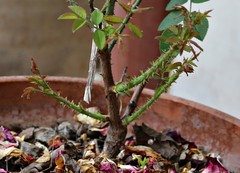
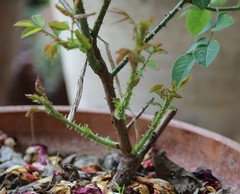
Straw: Just notice today that new shoots jetting out near the graft on my young LD Braithwaite bush are very thorny however, the foliage on top of these thorny shoots is absolutely normal. Though LD is quite a thorny rose but these stems are too thorny. However, there are no red deshaped leaves. What is your assessment?
regards
- 10 years ago
Thank you, Straw. Will go and read those threads. Good tip about the fall pruning, Barbara.
- 10 years ago
Khalid: If the entire bush is thorny, then it's normal. RRD starts out as ONLY ONE branch gets dense thorns .. like 10 times more thorns than the rest of the bush, with really red & twisted foliage.
Many Austin roses have dense prickles like that for the ENTIRE BUSH, like my Mary Magdalene, Wise Portia .. as I give them more potassium, they get denser prickles & bigger thorns. My Nahema was deficient in potassium, and it's almost thornless, plus stingy !!
Liv Tyler was deficient in potassium & phosphorus in its 1st year ... gave nothing but leaves & wasn't that thorny. The second year I gave it sulfate of potash /gypsum, it pumped out 40+ blooms per flush, denser and bigger thorns.





jessjennings0 zone 10b