Software
Houzz Logo Print
kylanjovan

growing peppers in containers

10 years ago

I haven't done very much container growing but I really need more ground space for my tomato plants. I'm also growing lots of new varieties, so I'm having a hard time determining what size containers to buy for my pepper plants. In my online searches I usually find that anywhere from 1 to 5 gallons is recommended. I know that it will depend on the variety. Although I just can't see doing it in less than 5 gallons without it drying out too fast in the heat of summer. So I wanted to see how other people in Oklahoma grow container pepper plants.

Also, How do eggplants do in containers? I haven't decided where they will go yet.

Here's the varieties I'm growing:

Sweets:

Lipstick

Sweet Banana

Chinese Giant

Jimmy Nardello's Italian

Marconi

Hots:

Numex Big Jim

Ancho Poblano

Trinidad Perfume

Numex Suave Orange

Pasilla Bajio

Bhut Jolokia

Craig's Grande Jalapeno

Comments (11)

  • 10 years ago

    I would at least try to put Marconi and Ancho Poblano in the ground. My Poblano plants get five feet tall, and my Yellow Marconi gets very large. I haven't had really good luck with Red Marconi and it doesn't get very big for me, nor produce well. One year I held most of my peppers in gallon pots until June then put them out after the cool season crops came out, but I think that would be too small to continue growing in. I also had to water every day that it didn't rain. I haven't grown your entire list but I'm sure others will respond.

    I have grown eggplant in containers and in the ground, but it is almost not worth the effort for me because it always has to be covered or the flea beetles feast on it. It was easier to keep it covered in a container. I made a sheer bag that would slip down over a cheap big box tomato cage with a draw string at the bottom that I could secure tightly around the container so the beetles couldn't crawl in. They are harder to cover in the ground and some animal decided to see how many holes they could make in the row cover one night. Some plants are just hardly worth the trouble.

  • 10 years ago

    I didn't realize that the Poblano got that large. I'm pretty sure the Marconi is red but my seed package doesn't specify. I'll keep in mind that the yellows do better next time I order pepper seeds.

    I was thinking that it might be easier to cover eggplants in containers. I almost decided to quit growing eggplant but wanted to give it one more year. My husband loves them so much. I've had them do well before, but the last two years it hasn't been good at all.

  • 10 years ago

    I grew California Wonder bell peppers in a large (20 gal?) pot in 2013 with great results. Haven't been able to get CA Wonder to do anything since. Bananas and jalapenos have grown for me in 5 gal buckets. I have grown hot peppers in smaller containers, but they were left over plants I couldn't throw away. You won't get much production from them. I grow peppers in between tomatoes in my raised beds. I'm sure they compete (and lose to the toms) for nutrition, but I get what I need out of them. Jimmy Nardello simply will not grow for me and seemed to be a pest magnet.

  • 10 years ago

    When I grow peppers in containers, I like to put them in at least 5-gallon sized containers, and I'd rather plant 2 or 3 of them together in a larger container if I have a choice because a big container with several pepper plants in it looks a lot prettier than a row of pots all the same size with 1 plant per pot. Generally, though, I prefer to grow them in the ground as they seem much more productive in the ground. I also get better production from sweet peppers if I move them up a step from 5 gallon containers to 7 or 10 gallon containers. In the worst of our heat they will need daiy watering, so you can simplify things by setting up the containers with a drip irrigation system on a timer.

  • 10 years ago

    I would definitely prefer to grow them all in ground, but I'll run out of garden space if I plant all my tomato plants. My dilemma is to choose either grow some peppers in containers, grow some tomatoes in containers, or decide which ones will go to the compost pile/give away. I figured that peppers in containers are the best choice since I'd rather sacrifice pepper production over tomato production. I also figured that they'd tolerate the hotter soil in containers better than tomatoes. I already plant my tomato plants pretty tightly so squeezing peppers in between tomatoes wouldn't be an option either.

    I think I can make some space in ground for most of the sweet peppers. I have more than one plant of a few of the hot varieties so I may try some of them both in ground and in containers to see the difference in production.

    I started way too many plants, but I also want to plant them all. What I really want is to move to a house with plenty of land so I don't have to worry about having enough garden space in a small yard.

    You've all pretty much confirmed my thought that a larger container is better. I've read quite a few post in other forums where people planted in 5-7 gallon containers and felt it was a waste of resources. I suspect those are growers up north with a shorter growing season and a more mild summer.

    Dawn, I like the idea of planting 2-3 plants per container. Can you tell me more about it? Container size? Combination of varieties?

  • 10 years ago

    The container size varies depending on the plants. Obviously if I am putting three varieties in a pot, I want a pot that can handle the maximum size that each plant gets. My favorite pots (because they were free!) are molasses feed tubs which are roughly the size of whiskey half-barrels. Ranchers buy these tubs of molasses-sweetened cattle feed, place them out in the pastures and remove the tops. The cattle can eat right from the container, and when the container is empty, it must be disposed of. A rancher friend gave me a few dozen of them several years ago. We drilled holes in them for drainage, filled them with a sterile, soil-less mix and have grown everything under the sun in them, including indeterminate tomatoes.

    I like to mix tall edible pepper plants with shorter edible pepper plants and sometimes I add a gorgeous ornamental pepper plant for even more color, but you don't have to do that. I've grown virtually every pepper imaginable in molasses feed tubs. Most of mine are black, so even if the shape or size is a little different, the color of the container ties them together. I have a couple that are orange, blue or off-white. With the orange ones, I like to grow plants with dark foliage or with purple or red peppers that stand out boldly against the orange pots. I have grown single pepper plants in 3-gallon pots, but I haven't been happy with that. The peppers had to be watered daily in the worst of the heat and didn't produce nearly as well as the same variety produces in the ground. It does, of course, depend on the weather. In a very hot and dry summer with weeks or months of actual drought, the peppers have thrived in pots because I could move them to an area where they got shade during the worst of the heat, but I also am at home and can water them in the middle of the day if they need it. I grow peppers in a wide rainbow of colors, so I try to put plants together in pots that will mature to different colors. Purple peppers and red peppers together are one of my favorite combinations, and habanero peppers (in any color) add a brighter color to the planting. My favorite habanero is Chichen Itza because it produces huge habs and they mature earlier than any other habs I've ever grown. I also like Fatali, both for its flavor and its bright yellow color.

    You can have fun with your containers. I sometimes mix smaller tomato plants (Tumbling Tom in red or yellow, Cherry Falls, Terenzo or LIzzano, Red Robin, Pear Drops, etc.) in with a couple of pepper plants, or I grow three different kinds of small tomato plants in one molasses feed tub. I try to choose plants that get various heights---usually one that gets up to three feet tall and two others that stay smaller. I've even grown both Tumbler and Tumbling Tom and some small pepper varieties in hanging baskets (they are hard to keep well-watered in the worst of the summer heat).

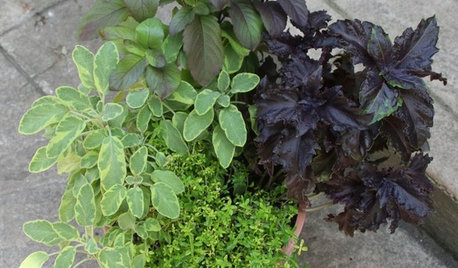
    Be mindful of the sun exposure your containers get. In a very hot summer (to me, a very hot summer is any summer where our high temperatures are routinely over 100 degrees, and at our house it is common most summers to have highs in the 105-108 range at times, and sometimes in the 110-115 range in the worst parts of the worst summers), the containers can get very hot. I place my containers where they will be in shade to semi-shade during the worst part of the day in a summer like that. It doesn't hurt production and it keeps the plants happier and healthier. Think outside the box and plant your peppers in combination with other veggies, herbs or flowers. Swiss Chard is a lovely background plant for shorter pepper plants, and I like to mix in a sweet potato (ornamental or edible variety, both work well) plants. I plant the potato near the edge of the container so its foliage can spill over the container and help shade the sides of the container from the sun. I use Laura Bush (bred from a wild petunia) petunia in the same way. Laura Bush Petunia does falter in the summer sun and heat and it grows very long (up to 4' long) branches that will weep over the edges of the containers and shade them. I like airy plants, like dill for example, in pots with peppers and tomatoes. It provides a vertical element early in the season when the plants are still small and growing. Because dill is cool-season, it finishes up fairly early and I remove it. By the time that happens, though, the peppers, tomatoes and other plants are much larger and they will fill in the space left by the removal of the dill. Carrots in containers provide a shorter, ferny type foliage that compliments the pepper foliage.

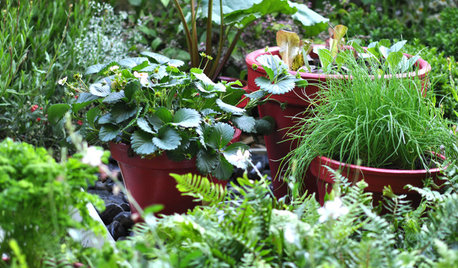
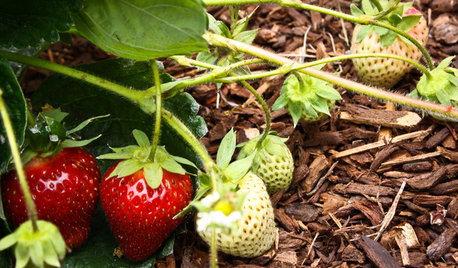
    You also can shade your main growing containers by placing smaller containers of flowers around them. Right now I have mixed containers of Swiss Chard, curly kale, several different varieties of lettuce, strawberries and green onions growing in the front garden. Shorter pots of herbs sit on the south side to help shade the pots from sunlight even this early in the season. They are in full sun now, but I will move them to the west end of the garden where a pecan tree provides afternoon shade once our weather warms up a bit more. I always shoot for a mix of different colors and textures in each pot, just because they look prettier. I try to have fun with the containers, but in one sense they are becoming more important than ever in our garden. We started out with dense, red clay and didn't have trouble with voles, moles or gophers. As the soil got better and better from all the amending over the years, the voles that live in our woodland acres began visiting the garden a lot. They came en masse in the drought of 2011 and have been a major issue ever since. They travel underground so they can be there without you being aware of it until plants start disappearing or until fruit trees start falling over because they've been devouring the roots. They've made it impossible to grow some things, like root crops, unless I grow them in containers or in raised beds lined with 1/4" hardware cloth. This year I expect to have about 30-40 containers, although right now I only have 16-18 planted.

    Be careful what you wish for. We moved to the country to live on acreage (14.4 acres) so we could enjoy country living, keep chickens and have a garden that was as large as possible. I love our place and it is our forever home, but it is a good thing that about 10 or 11 acres is heavily wooded. That keeps me from trying to landscape it all as well as limited the size of my edible gardens. The problem with having a large garden or a large piece of property is that you will just about kill yourself trying to maintain it. As I get older, I find it more of an issue to maintain the garden to my standards as the weather gets hotter and hotter. I can be out in the gardens all day in March, April and May and that's fine, but by the time June rolls around, the heat makes it a lot less enjoyable so I usually harvest and then flee back into the air-conditioned house after that. Routine maintenance slides a little while it is hot, but that's also because most of our land is wooded and venomous snakes are abundant. Once I've encountered a rattlesnake or copperhead in the garden, it makes me skittish about weeding, for example. I just do the best I can, but if I go into snake season with a garden that is very well-weeded and very heavily mulched, I can slake off on weeding in the snakey months of June, July and August and not totally lose control of the garden. Containers help with that too, but snakes will get into containers, so I still have to be very careful when harvesting or weeding. Snakes also will climb up onto shade cloth suspended over peppers and tomatoes, and it isn't fun to find yourself staring into the eyes of a snake. Going into the garden is a real adventure every single day.

  • 10 years ago

    Dawn, I don't know how you stand the snake invasion. I have never seen a snake at my house, but last year my garden was so dense that I put on rubber boots each time I went out to harvest after about August. I had sweet potato vines and winter squash everywhere. I don't suppose it will be any neater this year, and all of that ground cover sure cuts down on the weeding. LOL

  • 10 years ago

    I would be terrified if I came face to face with snakes in my garden. We have some fields behind us so I sometimes see a little of everything but not very often. I know there are moles around because I see the mounds, and I once saw a dead baby mole. I assume the neighborhood cats who like to hang out in my garden got that one. This city girl is not very familiar with voles. Are they similar to field mice?

    The grass is always greener on the other side. I see that a larger land has it's own set of challenges. I would be perfectly happy to have 2-3 acres on the outskirts of the city. The plot my house is on is probably only 1/8 of an acre.

    You gave me a lot of food for thought with container growing. I am growing more herbs and flowers this year so I'll start figuring out which combinations I would like to grow with the peppers.

    Fatali is a pepper variety I wanted to try but none of the places I ordered from had it. I was intrigued by the descriptions of its citrus flavor. How hot is it in comparison to a habanero?

  • 10 years ago

    Carol, Well, it isn't like I have a choice. The last few years it has mostly been timber rattlers, which scare the fool out of me. They love the garden. Maybe they are after the pine voles, but why leave the woodland, which is full of voles, to come to the garden? Maybe they're after the toads, frogs, and lizards that live in my garden and eat bugs. The snakes make me crazy, and the timber rattlers make me crazier than the others because their venom is so bad. After I have had a too-close encounter with a venomous snake, I am shaking. If it happened in the garden, sometimes I stay out of the garden for a couple of days until my nerves calm down. I have come close to being bitten so many times that it is horrifying. The alternative? Giving up gardening? Staying inside all the time? Those things aren't going to happen. I just try to be as careful as possible. That's all you can do.

    Last year it was more copperheads than usual. I feel like they probably were driven up out of the adjacent river bottom lands by the recurring flooding that went on all summer and happened again in the fall. I saw copperheads (which really aren't big snakes most of the time) in sizes I couldn't believe last year. I hope that this year is not a repeat.

    So far, my only really close encounter this year was the day before yesterday. I almost stepped on a snake on the back step. I was a foot away when I saw it and my foot was already in the air and about to land on it. Fortunately (for me) it was not venomous. It was just a little garter snake trying to sun itself on the concrete and also stay out of the wind. Fortunately for it, since I saw it in time, I stepped over it to the next step.

    I love it when sweet potato vines serve as a ground cover. They're edible, so what could be better? You can have your ground cover and eat it too.

    kylanjovan, I am terrified, but I have to go on with daily life. Snakes are just an occasional unpleasant part of the day. We are very close to the Red River and we have every wild thing here you can imagine and probably some you've never dreamed would live here. Living here is a real adventure.

    Voles look sort of like a rodent with a tail. They can travel above ground or in tunnels underneath the ground. They eat virtually everything. We didn't have any in or near the garden in the beginning because it was such dense (rock-hard!) red clay. As the soil got better and as drought pushed them out of the woodland, they came to the yard and garden to stay. Since you can't see them, you often don't know they are there until plants just disappear. Our cats have killed or driven away woods rats, (though it is a never-ending job), field mice, gophers and moles, but haven't had the same success with the voles, likely because there are so many. Had I known they would show up, I would have lined the bottom of each raised bed with 1/4" hardware cloth to keep them from tunneling under and eating plants. Nowadays, when we build new beds, we do line them with hardware cloth, but we don't build many new beds. I want to go back and retrofit all the old raised beds and add the hardware cloth, but we are not as young as we used to be and the thought of moving all the soil just to line one raised bed is daunting. I cannot imagine moving all the soil required to line 12 raised beds. Most of my beds are 4' or 5' wide and about 40 to 45' long, so that's a lot of soil to dig up and move in order to put down the hardware cloth.

    Fatali is very hot. I certainly think it is as hot as some habaneros, but not as hot as others. I don't eat peppers that are that hot. I raise them to use in Habanero Gold jelly or some other pepper jelly, or to give to friends and family members who like the really hot peppers. With peppers, my limit is 10,000-15,000 Scoville heat units or less. Anything hotter than that is too hot for me unless used in very small quantities in pepper jelly.

    Dawn

  • 10 years ago

    Moving soil is a chore, and moving that much is more work than I want to do. I planted a new asparagus bed yesterday, but I have had the bed ready and waiting for a couple of weeks. Today I planted a new strawberry bed and had to move soil. I didn't have a raised bed ready so right now I just mounded it up in the right shape and hope I get the frame built around it before I get heavy rain. Today I put in ever-bearing plants and covered them with bird netting so I don't have to do it later. Hopefully I can get another bed built tomorrow and get the Spring bearing ones planted. It is still too cold here to work this morning and we had to make a trip, but by afternoon it was a nice temperature to work in. My dwarf fruit trees planted last year are finally leafing out. I was beginning to worry about them. I lost one in the Fall, but it didn't look good when it went into the ground. Both Al and my 16 year old granddaughter worked with me this afternoon, so it went pretty fast.

    Although I like to plant in the ground, I just keep adding more raised beds every year. When I have a wet year some of my ground gets really soggy, so it is that side of the garden that is getting the new beds. This year it certainly hasn't been a problem, but last year it was very wet. I mentioned earlier that my in-ground onions were doing so much better than my raised beds. That is still the case, but the raised bed ones are finally starting to do a little better. I have big gardening plans for tomorrow, so I hope it is possible.

  • 10 years ago

    That's wonderful news about the asparagus bed and the strawberry bedd too. Sometimes I look at our asparagus bed and wonder what kind of green monster I've created there because it just grows like mad, but at the same time I love having it. You can't buy asparagus in stores that is as good as home-grown.

    I hate to complain about rain but let's just say one dry week would be nice right now so I could work in the back garden, but I doubt I'll get a dry week. There's a good chance of rain here Saturday night and Sunday morning. I'll just do what I can today and wait for a drier day to do anything more. At least the rain is making all the cool-season plants really happy. Everything planted in February and earliest March is getting really big. I have kale, collards, spinach and lettuce all large enough to harvest, and the kale and lettuce are almost full-sized, while the collards and spinach are not quite full-sized yet. It has been warm enough for the cool-season plants to make great growth, but with enough cool nights thrown into the mix that nothing is trying to bolt yet. The snap peas have looked a little less happy since our 87 degree day that we had a few days ago, but some rain and some more moderate temperatures should soothe them and make them happy again.

    We need to start building raised beds out back. We did add one to the front garden this year. Hauling the soil and compost to fill it is a backbreaking job, but Tim helped me with that so it didn't take nearly as long as it would have if I was hauling it all by myself. Raised beds saved my garden last year in all that rain and, while a year like that is not likely to happen ever again, I still prefer raised beds, especially for keeping the voles out of root crops. It would be easier if I knew what else the voles will or won't eat, but that hinges on how dry we are and on how hungry they all. So far, about the only plants the voles haven't attacked yet are pepper plants and tomato plants. I'm thinking that maybe they don't like nightshades. I know for sure that every single raised bed we build out back will be lined with hardware cloth or there's no point in building them.

    We have a lot of errands to run this morning, but I hope to spend the rest of the day in the garden while Tim mows. With all the rain lately (about 4" so far this month), our yard looks more like a pasture than a yard.

Sponsored
Landscape Management Group
Average rating: 4.9 out of 5 stars33 Reviews
High Quality Landscaping Services in Columbus