Software
Houzz Logo Print
kaboehm

Giant Milkweed question

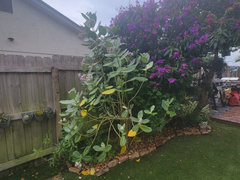
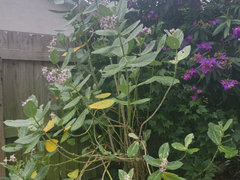
I was lucky enough to be able to get 3 giant milkweed plants (~trees) from a nursery in Rosenberg, TX. Each is about 6' tall and there are several blooms. I have 2 simple questions for those who have experience with these plants:

1) Since they are so leggy and tall, without side branching, can I cut them to half height to encourage branching?____

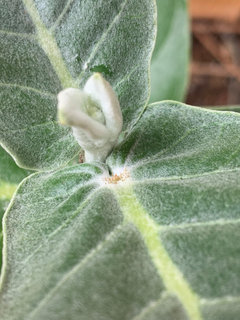
2) I was hoping to pollinate a bloom to get some seeds, but these are the most odd flowers as there is no clear anther. The first 2 blooms have been open for nearly 2 weeks and are beginning to fade; however, a more recent bloom was open for just a few days and now the petals are folding up. Does this mean that it has possibly been naturally pollinated?____

Thanks in advance!!

Comments (34)

  • 10 years ago

    Congrats on locating these plants. So little is reported online about growing these plants in the USA.

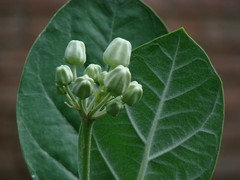
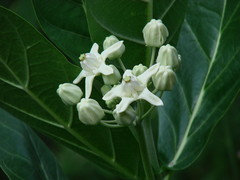
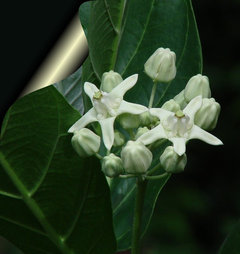
    Which of the blooms below represent your milkweed trees? The name 'Giant Milkweed' is sometimes used for both Calotropis
    Procera and Calotropis gigantea. I ask only because the mature plants take on a bit different look, according to what I've read on line.

    Since you have so many plants, you might trim one stem of one of the plants to see if this will produce branching. If you do trim, root the cutting to give you another young plant! :-)

    Here is a posted personal comment I found while researching these plants:

    "The C. procera tends
    to acquire a small tree look the older it gets; specially if you prune it;
    whereas the gigantea looks like a large shrub." Good article found at this link:


    Can't wait to hear more about your experiences growing these plants.


    Mary

  • 10 years ago

    Mary, how funny that you mention this as the person at the nursery said that the plant had been recently(?) reclassified to be back in the milkweed family (Asclepias). My blooms are definitely like those on the left. I'll keep you posted!

    Kristi

  • 10 years ago

    I live close to that nursery--good one

    mary in AR thanks for info re flowers I am saving as ref. when it blooms.

    i want mine fuller but I dare not cut it and I'm a prune happy gardener

  • 10 years ago

    bossy, when did you get yours?


  • 10 years ago

    At least 4 years ago 1&2 died to the ground 3&4 evergreen

  • 10 years ago

    Bossy, have you never cut/pinched yours back? Is it one stem or several and about how tall is it?

    Mary

  • 10 years ago

    YouTube

  • 10 years ago

    @mary no I haven't, 3 stems 6 ft tall

  • 10 years ago

    @bossyvossy, if kaboehm tries trimming one stem of one of her plants and reports back her results, we'll know how or if it helps. I've seen on line photos of these plants and many of them are multi stemmed so I'd think it wouldn't hurt the plant but I can understand, if you've already lost plants, that you'd be reluctant to try.

    Mary

  • 10 years ago

    I have 4 Giant Milkweeds, my Monarch caterpillars prefer the regular milkweed and won't eat this if they never had it. I pick off the yellowing leaves and haven't trimmed them much but will try your rooting method : ) Also, the "sap" is highly toxic (like most host plants) and can cause vision issues if it gets in your eyes. Thanks for the info!

  • 10 years ago

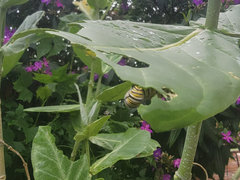
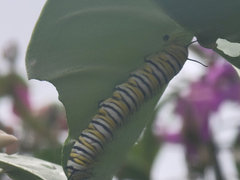
    My giant milkweed is feeding my fall monarch cats. I even found a tiny cat on one of the leaves, indicating the egg was actually laid on the plant. Most of the eggs/just hatched cats I've found have been on other varieties of milkweed but since I was away most of the summer, I have little of the other varieties left healthy so have been feeding them the leaves of the giant milkweed. All the little cats have taken right to it. I've been feeding tropical mw leaves through the first instar, then changing over. I've released 11 healthy monarchs so far and all have been raised on the giant milkweed. Thank goodness for it as I didn't have enough other healthy milkweed to use for food.

    Mary

  • 10 years ago

    Do you have it as an annual?

  • 10 years ago
    last modified: 10 years ago

    Yes, my growing zone is too cold, 8a/7b to grow year round. I will have to take cuttings to over winter for next spring. I have a small heated greenhouse where I overwinter plants I like to grow that won't live year round here. I'm thinking of cutting back the largest plant and then piling leaves over the area and then cover to keep the leaves in place. If we have a mild winter, maybe the roots will remain viable. Not expecting it to happen but it will be interesting to see if it's possible. Since it grows year round in it's native environment, it may need to maintain leaves to stay alive. Has anyone tried this in colder areas?

    Mary

  • 10 years ago
    last modified: 10 years ago

    My recent experience growing this milkweed:

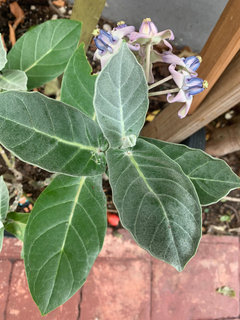
    A generous and kind gardening friend sent me two cuttings of the Giant Milkweed - Calotropis Gigantea this past winter, so it is possible to root cuttings of this variety of milkweed. This milkweed produces leaves that have a bit of sheen on the top of the leaf, while the underside has a bit of fuzz.

    The other large milkweed, Calotropis procera - aka Crown Flower, has leaves that to my eye and touch are slightly fuzzy on the top side of the leaf, as well as the underside. Their blooms are shaped a bit different, too and their stalk exhibits a different surface. I had a few blooms on this milkweed early summer. These plants were started from seed late spring. I prefer the Giant Milkweed because of the leaf surface but I've fed leaves of both to the monarch cats with no problem.

    .... click on photos to enlarge

    my Calotropis procera blooms:

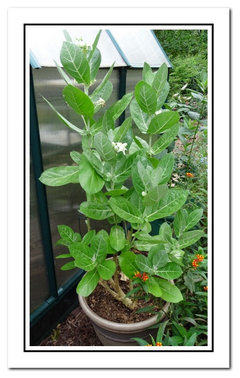
    My two Giant Milkweed - Calotropis Gigantea cuttings have grown into plants over 6 feet tall and have sprouted additional stalks from the soil near the original stalk plus additional branches on the main stalk. There were some lovely white blooms on the largest plant before I left home for the summer but no seed pods to my knowledge and I've seen no buds or blooms since I returned home. Each opened flower is quite large so I don't know what type/size of pollinator would be required to pollinate a flower. .... Mary

    my Calotropis Gigantea flower buds:

    opened flowers ... so perfect looking

  • 5 years ago

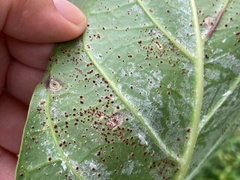
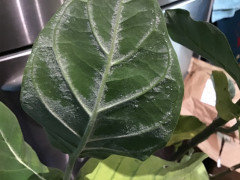
    Does anyone know what this is?? The leaves are starting to look like this


  • 5 years ago


  • 5 years ago

    It looks like some type of rust. I don’t know what it is but if you can protect your plants from the monarchs during treatment, try neem oil. You don’t want to use it if there are monarch eggs or little cats on the plant. Neem oil covers a multitude of things. You can wash your plant to remove the neem oil following treatment.

    Neem oil fungicide is useful against fungi, mildews and rusts when applied in a 1 percent solution. It is also deemed helpful for other kinds of issues such as: Root rot Black spot Sooty. Neem oil is a natural derivative of the neem tree (Azadirachta indica), an evergreen variety native to India. This makes it organic and biodegradable. In fact, the Environmental Protection Agency has found neem oil to have “…no unreasonable adverse effects,” making it safe for the U.S. population and the environment. Google neem oil to read more about it. Good luck.

  • 5 years ago

    Would love to know the reasonable adverse effects. Google didn't tell me.

  • 5 years ago

    I’m not an expert on neem oil so really not able to answer your question. In India, I’ve read it is used as a human medication so, for me, it seems safe to use in the garden. I used it on the base of a zucchini plant to try and protect the plant from squash borers and on a. Procera and Giant milkweed this past summer to kill spider mites. I then washed down the plants after the mites were dead. The reason I washed the treated MW plants was to make sure they were safe for the Monarchs. I currently have both potted plants in my unheated greenhouse, hoping to over winter them. The Neem oil didn’t harm my plants. Consider asking in the vegetable or flower gardening forum if anyone has had any experience with Neem oil.

  • 5 years ago
    last modified: 5 years ago

    mary_littlerockrar, I'm just curious about, how many of the 11 or so milkweed species, native to Arkansas, you are growing? I think you've been interested in Asclepias a lot longer than I have.

  • 5 years ago

    I have a Giant Milkweed also, like the one on the left above. I am in south Florida and really am surprised by how tall it's getting. I have this and regular milkweed as well.. My monarchs lay their eggs on both and it's plenty of food for everyone. I do release lady bugs twice a year to keep the mites off the milkweed. Am I harming the Monarch life cycle by doing this?

  • 5 years ago

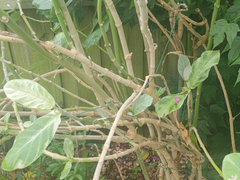
    Here are a few photos... As you can see it is pretty leggy. I was wondering if I should cut some of the branches to allow the plant to focus on a few main branches? Or just let it go?


  • 5 years ago

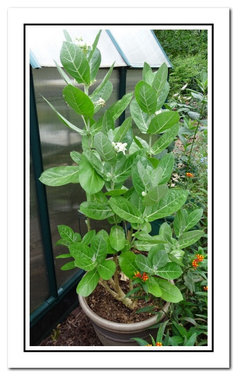
    Yes, these plants accept pruning quite well. As you have suspected, your many branches are too weak. You want to eventually have a nice strong trunk and branches. I will attach a photo of a Gigantea I dug up in my garden, potted and cut back to abt 15-20 inches from a plant that was abt 6x8 foot. It was overwintered in my heated greenhouse. I drug the huge pot out the following spring and you can see how nicely it recovered and grew. These plants are quite sturdy. Following pruning, give it a nice weak fertilizer feed and watch it grow.

  • 5 years ago

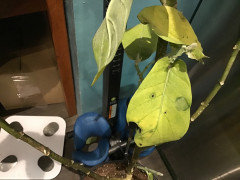
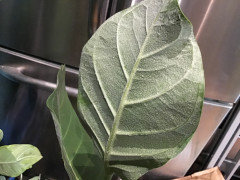
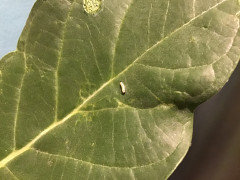
    Greetings from NW FL (or Lower Alabama depending on your perspective!). I stopped at a small local nursery over the weekend on the off chance that they had some mature milkweed plants. A neighbor on my ‘next door’ app had been begging for milkweed for her very hungry cats and she was running out. Out of the corner of my eye I saw a sign for ‘giant milkweed’ and having never heard of it, I went to check it out. Imagine my surprise when I found 3 LARGE cats that I later deducted to be in their 5th instar. Of course I bought one even though most all of them were thoroughly munched on as they made their trip here from South Florida. After giving myself a crash course in monarch rearing, I now have 2 chrysalides hanging (they went in ‘J’ before I even got the plant out of my car that evening) in an enclosure and the 3rd is either doing the same somewhere in my car or he crawled out and wandered. I’ve now harvested eggs off the tropical milkweed (my original purpose for visiting the nursery) and today have 5 new 1st and 2nd instar cats. Baptism by fire! Lol. I have questions about the giant milkweed though because I suspect it has powdery mildew or something of the like. Even having read that the gigantea has a leaf that is fuzzy on the backside, these are VERY fuzzy and have a white substance that I can roll off between my fingertips, covering the leaf. I’m going to attach a pic of the (few) remaining yellow leaves that are dropping as they look kind of funny to me as well, a pic of a leaf that is green but covered with this white substance, and a pic of one where I have rubbed some of it off, exposing the green leaf beneath it. I intended to hose it off and try to propagate a cutting over the winter, but just found a 2nd instar on top of one of the last few leaves (he’s in the last pic) so I’ll need to move him unless y’all have any idea whether of not he cares about the white substance on the underside?
    BTW, y’all have some beautiful specimens so fingers crossed I can get this one to make a comeback! Any and all suggestions or resources are welcome. THANKS!

  • 5 years ago

    This yellowing, to me, looks like a result of too much water, not a disease. These plants do not like much water, which can result in leaf drop. The white substance also looks like the normal coating of the leaf. These plants are also frost sensitive. You could grow this variety in ground if your location permits. If so, I would, as they generally tend to do better in ground. Otherwise, this is what I would do if this was my plant: give a root trim, cut back stems to about 12 to 15 inches and move into a larger pot with fresh potting mix. Give a light feeding of water soluble bloom booster when repotting and bump up to recommended ratio with future watering. The cuttings can be rooted for more plants. Cuttings are how these plants are propagated for the US nursery trade. I will include a photo of a Calotropis gigantea I grew first season in ground, dug up, cut back to about 15 inches and overwintered in a big pot in greenhouse. This photo was taken second season, mid summer, with it growing in a pot. Best of luck with your new milkweed.

  • 5 years ago

    Oops, didn’t realize I had already posted this photo. :-).

  • 5 years ago

    Thank you Mary!

  • 4 years ago

    I cut back my tropical milkweed to about 6 inches in the fall. Now in January, all the stems look dead. Any hope that it will regrow? I’m in Southern CA. Thanks!

  • 4 years ago

    I find that no regrowth occurs from that plant's stem if it does not appear in a relatively short time. However, a fresh growth from roots still can start long thereafter, then it takes a long time to surface. You can partially unearth roots to look for a delicate sprout.

  • 4 years ago


    Can someone tell me why this is happening??

  • 4 years ago


  • 4 years ago


  • 4 years ago

    Does anyone know ifni can keep this in a pot and keep triming to keep them from getting too big?