Software
Houzz Logo Print
upperbaygardener

Norcal field trip report - pt 1 (maybe)

10 years ago
last modified: 10 years ago

I just got back from a week in Northern California. I'm not going to post pics along the lines of "oh here are the redwoods" or "look at these cool Callistemons along the highway" because any typical visitor to the area would have seen those...but of course I took such pictures LOL. And I do think the Callistemons are cool. My observations are going to blunt and to the point!

Anyhow, I flew into Sacramento and spent my first night there. The next day, I went to the coast via Clear Lake. I actually quite liked Clear Lake: since we don't have many "USDA zone 9 lakes with mountains about" it seemed like a poor man's Lago Maggiore. Anyhow, first garden: Ft. Bragg's Mendocino Coast Botanic Garden. Definitely worth visiting, and I'm glad I did, but it's clearly no longer focused on being a premier collection of Rhododendrons, which was the founders' main interests. They don't seem to be collecting new hybrids, and the horticultural "standards of care" of existing ones was variable. A couple were dead and unremoved. Some were clearly mislabeled, like a plant with small, bell-shaped red flowers, almost surely some hybrid, labeled "Rhododendron griffithianum" (!) (of which there was a real one not far away - I wouldn't rule out some vandal merely moving the label) That was fine: even on the rhodie front it was invaluable for me to see the classic UK/Rothschild/etc. hybrids in bloom. Some of the classics like 'Bibiani' didn't seem as impressive to me as they do in photos I might go into this in more detail in the rhodie forum. But again, definitely worth going...don't get the wrong point here. They had some excellent conifers. Interestingly, they had a plant labeled 'Pinus lumholtzii' that wasn't very nice looking, and certainly didn't have the showy long needles. Maybe they get longer as it ages? I didn't even bother taking a picture of it. Either the species is variable or it was mislabeled.

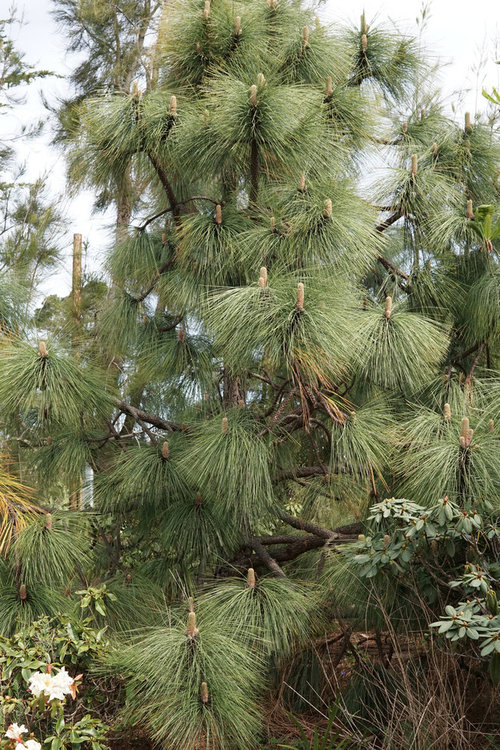
Here was a nice Pinus engelmannii:

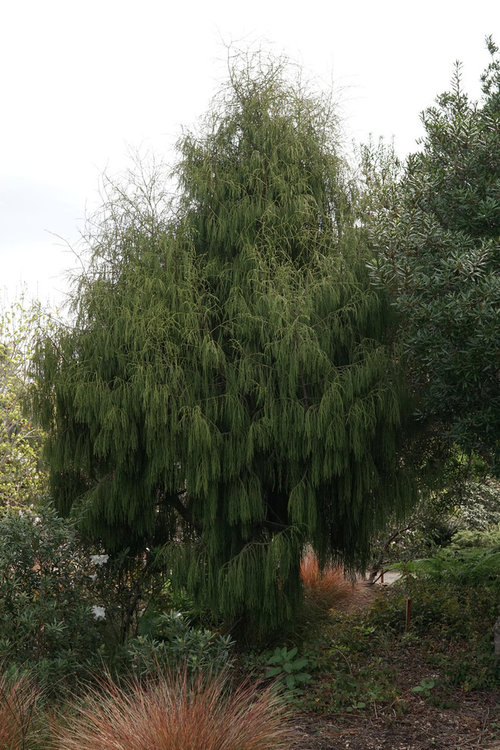
And the fantastic rimu, Dacrydium cupressinum. Many Norcal public gardens have these but this one, though small, was one of the healthiest looking. Not a brown needle anywhere. Perhaps one can't really appreciate the scale in this picture: those droopy branchlets are about 12" long. The flowers on the left look like azalea flowers but are the larger flowers of a tender maddenii Rhodie.

Next a quick stop at Digging Dog nursery. They must have the only retail plant sales yard in the US enclosed in a freakin' beech hedge! How English! And how much work! (probably 1/3 acre enclosed) I can just imagine one of the British gardening doyennes approvingly cooing. They also have this huge Luma apiculata, which was the best I saw on the trip...even better than Berkeley's. (it's of course possible I missed one...) Thanks to the proprietress for taking some time from her busy spring shipping season to speak with me. I've bought from this nursery for years so it was awesome to see it.
Next, Sonoma County and, naturally for a rhodie lover, Sonoma Horticultural Nursery. Not going to say much except that the display gardens are incredible. If you just want to see elepidote rhodies, you are actually better off coming here, as he has all of the old classic hybrids in sizes approaching those up the coast, and many newer hybrids that are hard to see elsewhere. His big leaf rhodies are healthier looking. The only area where Mendocino is better are the rare tender lepidotes like Rhododendron burmanicum et al.

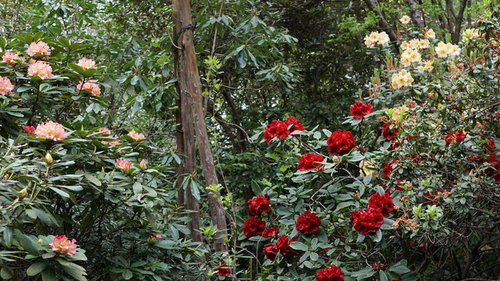
Here are some gorgeous Norcal-bred elepidotes:

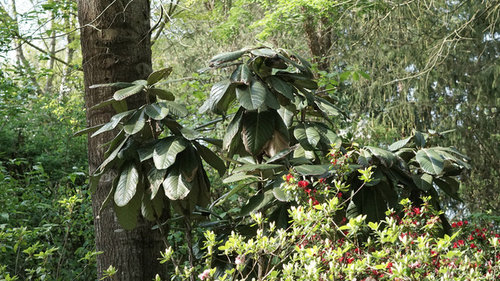
And a big leaf species:

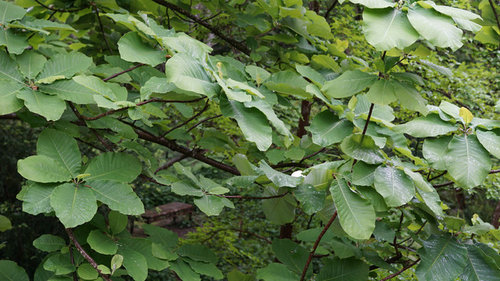
Next, Quarryhill Botanical Garden. This garden is relatively new but is already very much worth visiting. There's a super bright lady named Millicent who runs the gift shop and we spoke for 30 minutes or so. She really "gets it" when it comes to the garden's mission. I got to see the impressive size Idesia polycarpa can quickly reach in this mild climate. (and watered soil of course) The weather wasn't conducive to photography but I did take this picture of a Magnolia obovata, the most perfect looking one I'd ever seen and already blooming.

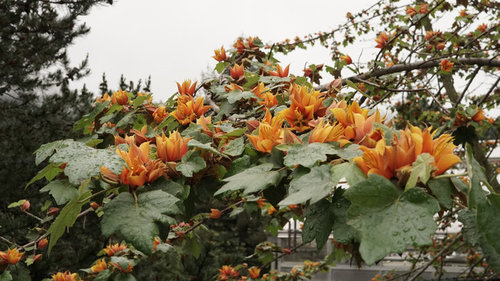
UC Berkeley. What to say. Surely one of the the most amazing academic affiliated plant collections in the US, perhaps the world. If you just see one garden in Norcal, it has to be this one. I could post 20 pics but if I had to post just one, it would be of the amazing x Chiranthofremontia lenzii.

I was a little concerned that compared to 5 years ago, more plants seemed to be in severe distress of some kind. Not sure if that relates to their care or some factor like weather.

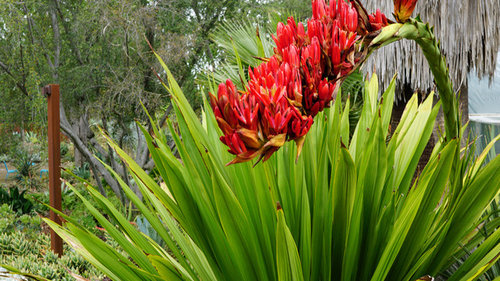
Now, a picture from the excellent Ruth Bancroft garden. Cacti & succulents aren't really my thing but I still really enjoyed visiting. The standard of plant care might have been the highest of any garden I saw: of course they have fewer acres to deal with. (and fewer hills LOL) Also, they have the best plant variety in their "garden shop" by far. Apparently this Doryanthes was blooming for the first time ever there: I felt lucky because it was my first time seeing this species blooming...I've seen the other one somewhere in a greenhouse.

Finally the UC Davis arboretum.

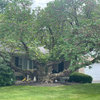
Just a comment I gotta make that is sure to raise some hackles: most of the redwoods planted in the central Valley or interior Contra Costa County currently look like crap. Now, I do say currently, because how would I know for sure: maybe this is partly a byproduct of CA's recent drought. These at UC Davis are representative of the bad end of the spectrum:
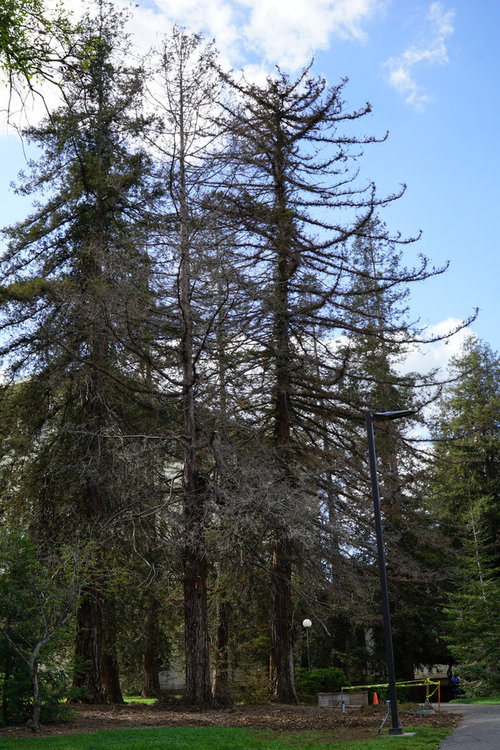
Here and there you see a good looking one, but they are usually either under watered or simply too burnt out by the hot, dry summer weather there. I simply don't know why landscapers insist on planting them in places like the edges of supermarket parking lots. Sorry, guys, I gotta say the picture sammd posted of the one at the Barnes in Philly would put most central valley ones to shame, in spite of perhaps being a bit smaller. (but not much: they just don't seem to get as big as they do, even in interior Sonoma County away from the ocean but still ocean-influenced. At Sonoma Horticultural Nursery you can see how big they grow under typical garden conditions there in 50 years...and it is huge. And a pure, dark green w/o a spot of burning.) So, Norcal-interior posters - flame away if you think I'm full of it!

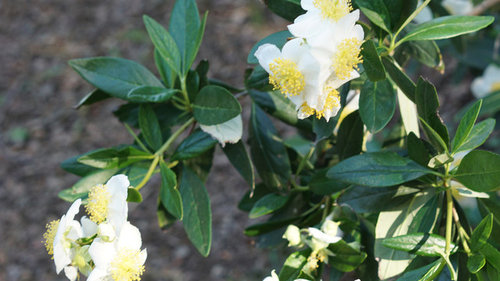
Here was a mystery plant, unlabeled. Polyspora perhaps?

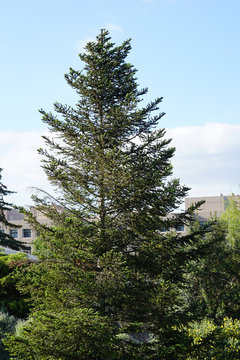
Finally, to conclude, this almost-healthy Abies alba. The fact it looks basically good in the Central Valley - certainly better than the average redwood there - belies the notion that cropped up in another thread that it is some kind of finicky alpine species. There's a very nice one at the USNA, a much bigger one at Longwood, and people here can't go on claiming they must all be mislabeled. I saw this species in the Poschiavo valley and noted that it was the alpine species that descended the lowest.

Oops, I ran out of my picture allowance...I guess there will have to be a part 2 later!

Comments (13)

  • 10 years ago
    last modified: 10 years ago

    The Abies alba at UC Davis - one of the only firs there btw, and certainly the biggest unless I missed one. (I hurried through the Cal natives section, so it's possible...I did see one native fir, but it was about 4' tall and obviously recently planted.)

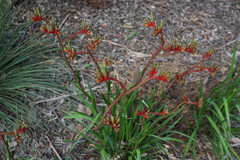
    Also, I was happy to see their climate was mild enough for a small x Chiranthofremontia. As well as in-ground Anigozanthos:

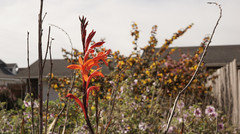
    I don't see these used for landscaping though - except once, IIRC, in Sonoma County. In every town I visited, I did try to take some time to see how residential gardens are planted. Here's a somewhat representative scene in Ft. Bragg: huge 5' South African Iridaceae and California Flannel Bush in the background.

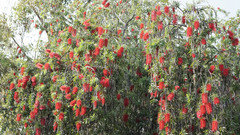
    Oh heck...here are the tops of some UC Davis 25' Callistemon trees!

    BTW - I did see the San Francisco Botanic Garden on my last visit 5 years ago. It's really a toss up, but when it comes to the must see garden, I lean toward Berkeley. I didn't have time on this trip to see SFBG a second time. Something about the sense of place of the UC Berkeley Botanical Garden is simply amazing. Only Villa Taranto is in the same league.

    Google images seems to have suddenly been possessed by some kind of SEO demons, so if you look for pictures of UC Botanical Gardens you get a lot of crap commercial images. If you aren't familiar with it and need an overview, here's a good blog post: http://thethriftytravelerca.blogspot.com/2015/02/uc-botanical-garden-at-berkeley.html

  • 10 years ago

    Thanks Dave-for reminding me of how ignorant I am! Place this upper midwest horticulturist in that environment and it would essentially consist of me starting over.

    From my participation in ENTS-Eastern Native Tree Society-and their excellent bulletin board, I have become aware that if you want to see truly impressive redwood groves, you must go north. Evidently, even where the southern groves are healthy, they lack the exuberance, heavy, intact ground layer (sword ferns, etc.), let alone record-breaking heights of the northern groves. So I read, at any rate, and that board is the standard-bearer for tree measurement expertise.

    UpperBayGardener (zone 7) thanked wisconsitom
  • 10 years ago

    Thanks, Dave. I was impressed by the Monterrey cypresses and the palms in Golden Gate Park in San Fran.

    UpperBayGardener (zone 7) thanked bengz6westmd
  • 10 years ago
    last modified: 10 years ago

    Well the extra trappings are nice (ferns, etc.) but I just care about the trees looking healthy in a garden setting. In Sonoma County and of course Berkeley and Oakland, they do. Even though I don't think the interior valleys of Sonoma County are their native range, they are just cool and humid enough even in summer. For the the most part in the warmer central Valley and central Contra Costa County, they do not look very good. You would see whole rows along a boulevard, 500-1000' long, all with brown specks throughout the foliage. Why not just plant Sequoiadendron? The few I saw in those areas looked better. Not to mention the beautiful western oaks they could plant, too. UC Davis has a special redwood grove they allocate extra water too, obviously, and those look OK for the most part.

    I hoped someone from the area would give their two cents...

  • 10 years ago

    Well, I did mention those ground layer plants but that was not the main point. The main point was that, among people in the know, it is northern Cali that far and away supports the best groves of redwoods. And this is-I am told-not a subtle difference, but one which is readily apparent. It does have to do with the trees themselves.

  • 10 years ago
    last modified: 10 years ago

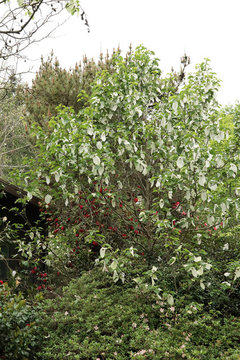
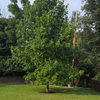
    How could I forget - one last picture. The original Davidia involucrata 'Sonoma'. Now a widely grown cultivar.

  • 9 years ago

    Somehow I missed this! I LOVE that Dacrydium at MCBG - as you note there are others around and about but nothing like that one. Also a very nice Acer griseum nearby. They know that the Rhododendron collection has issues and they are working with a rep from the Rhododendron Society (or similar outfit) to properly label and professionalize the collection. The microclimate there allows them to grow the tropical rhodies so they are also adding to the collection selectively. I have a soft spot in my heart for SFBG, partly because they are so great to work with (they are an ACS Reference Garden and I am the liaison) and I love Don Mahoney, who is now Curator Emeritus but can't seem to stay away from the place. Paul Licht, who is just stepping down from head of Berkeley's Bot Garden is a lily guy and told me flat out that the doesn't like conifers (which to me is an odd thing for a botanical garden curator to say) but otherwise he's an amazing guy from what I can tell. You didn't visit Western Hills I guess? The new owners have done wonders. I also like the Native Plant Garden at Tilden Park. I feel blessed to have so many wonderful gardens nearby, and they are all so different. Nice to read your write up and it sounds like you had a great trip!

    UpperBayGardener (zone 7) thanked Sara Malone Zone 9b
  • 9 years ago

    Here is my take on a visit to the rhododendron at MCBG a few Novembers past: Eats, Buds and Leaves: Rhododendron Deflowered

    UpperBayGardener (zone 7) thanked Sara Malone Zone 9b
  • 9 years ago
    last modified: 9 years ago

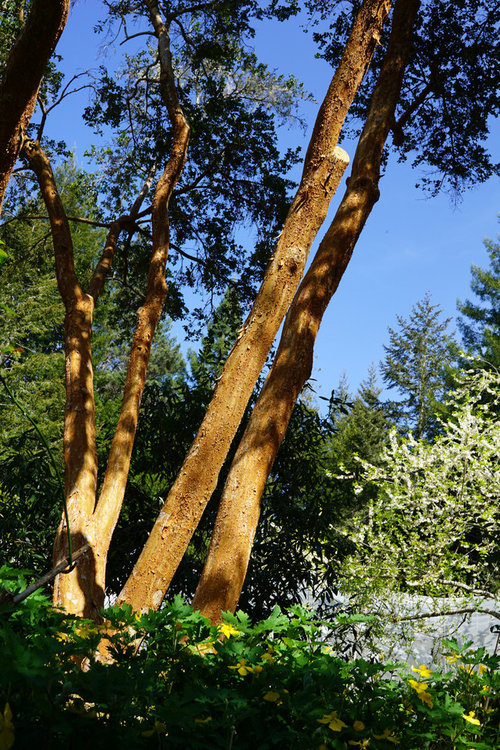
    The white flowered shrub is Carpenteria. I've seen the dove tree at Sonoma Hort. and it is tiny - I have to wonder if it really is the original seedling as that is supposed to date from 1952 or earlier. Also something years ago - maybe a picture from their web site or a comment there - gave me the impression I was going to be greeted by a large, tetraploid-looking (hence the jumbo bracts) specimen instead of what they have now. Which as can be seen in your picture looks like a dwarfed orchard fruit tree.

    Presumably grafted propagules on the market here, although maintaining the early flowering habit, seem to have too much horsepower to end up being still so small after so many years. One I planted on Camano Island at most several years ago is probably already above roof height. Another, unlabeled tree that really appeared to be the same selection, in a garden near Portland looked to be as tall as or taller than the supposed original. Of course, if the production nurseries that have picked this one up are in fact grafting onto seedlings of normal habit than those may be invigorating the scions, as often happens with grafted dwarf and slow-growing conifers.

    When I was there Sonoma themselves had flats of planted or recently sprouted seeds from the tree there labeled something like "Sonoma dove tree seedlings". If many of those get planted around and they do not come out consistently true to type that should muddle things nicely. Same as with 'Bloodgood' maple and 'Royal Purple' smoke-bush.

  • 9 years ago
    last modified: 9 years ago

    But Embo - isn't precocious flowering sometimes associated with slow growth?

    Sara, thanks for enjoying...I will look at your report now. And sorry for seeming to diss your friend.

  • 9 years ago
    last modified: 9 years ago

    Yes the clone being grown and sold under the name now is clearly a dwarf. Quite dwarf, if it was raised ca. 1952. But I'm not sure how your question pertains to anything I posted. When I first heard about the cultivar, saw the bract size comparison photo that was prepared and circulated it seems like all that was mentioned was the bigger bracts. Or that was the focus, to the extent that I thought I would be seeing a big tree when I went to the nursery. Again, as though the seedling was a tetraploid, with bigger everything.

  • 9 years ago

    If I missed someone already giving this suggestion for the white-flowering mystery plant in the first post, I apologize. The plant looks like it could be Carpenteria californica.

    UpperBayGardener (zone 7) thanked gyr_falcon