Software
Houzz Logo Print
leekle2mane

Two season senna.

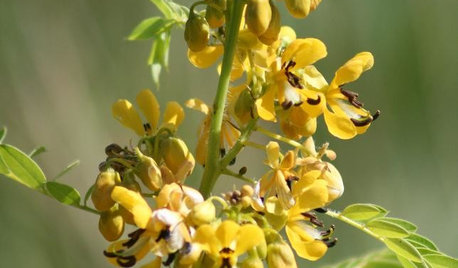
Last month I noticed that my Christmas Senna, Senna bicapsularis, had a second, off-season flowering. Aside from the timing, something seemed off to me about the flowers and I looked closer. Turns out a nearby Carolina Jessamine, Gelsemium sempervirens, had sent a few vines up into the tree and was the true source of the flowers. At the moment they are delicate looking vines and don't seem to be an issue, but I have seen this plant completely envelop fences. I am wondering if I should remove the current vines or if, perhaps as the vines themselves thicken and wooden up, the senna branches might get some extra support from Jessamine.

Comments (8)

  • 10 years ago

    Michael, I had this vine and it completely covered a small tree (Crepe Myrtle). It was beautiful when it bloomed, but it really strangled the tree. Also, pretty much everything on the plant is toxic to something. I believe the flowers contain nectar that is toxic to bees in their early stages of development. My suggestion--get rid of it if you can.


  • 10 years ago

    Carolina Jessamine is actually very slow-growing and easily controlled. Having grown up in SC (state flower), I'm very familiar with this plant. In fact, I cut my mother's down so we could replace the fence it was growing on, and it never grew back, because it doesn't like harsh pruning. I wish I had known that then.

  • 10 years ago

    Tom, I am aware that the Jessamine is toxic to bees, but I have noticed over the years that most bees in my yard go to other flowering plants if they are available and leave the Jessamine alone. If it were the only flowering plant at that time, I would possibly remove it, but since the bees seem more interested in my african basil, salvias and blueberries at that time, I am not going to remove this native. It only blooms for about a week and then stops. I am toying with the idea of cutting it back to about halfway up the trunk after each flowering each year. I haven't cut it completely back as DG mentioned, but I have cut it back before and it eventually comes back from new tendrils. By cutting it back each spring after flowering, I should keep it from swamping the canopy limbs while providing main trunk support. If it looks like it is starting to constrict and contort the main trunk, I may remove it completely from the tree, but then, I have seen many trees in SC where various vines have cause corkscrew type growth in the stem, but the trees manage just fine, so who knows?

  • 10 years ago

    I'm one for letting vines use trees for support. Looking around in nature you see it all the time. I wouldn't let a vine get so aggressive that it would kill a particular tree, but Carolina jessamine is easy enough to keep pruned back, and as Dirty said too much pruning will kill it anyway so Michael should be able to keep it under control. My Christmas senna is pretty big and I think it could handle it as long as I didn't let it go crazy.

    Carolina jessamine is not necessarily toxic to bees. It contains the alkaloid gelsemine which can kill bees if they ingest too much of it, but research shows that our native bees (like bumblees and orchard bees) don't over do it and actually use it as a medicine to help them fight infections when need be. The introduced honey bees, on the other hand, tend to over do it so it is not a good vine to have if you're a bee keeper. Also, as Michael said there are other blooms for the bees to nectar on so they don't O.D. on the jessamine because of the variety.

    I have an article with more information, and citations, at my web site (Sharon's Florida) if anyone is interested - Carolina Jessamine.

    I love my jessamine and I let it grow naturally into my oaks, and other trees, and enjoy the brilliant yellow blooms in the late winter. In my opinion it is easier to keep under control than many other vines. To each his own though. Please share a picture of your combo senna/jessamine if you have one Michael. It would be really interesting to get two seasons of yellow blooms, but from different plants intertwined.

  • 10 years ago

    If you drive up I-26 in the spring, you'll see jessamine covering trees everywhere. I wouldn't let it climb a young tree, but my mother's grew up into her redbud for years and did it no harm. That being said, I had black eyed susan vine almost smother my elderberry and a an aristolochia that killed a tree hibiscus, but I've never seen jessamine kill anything.


  • 10 years ago

    Wow growing it on a redbud is a great idea ... yellow blooms in late winter and pink blooms in the spring. I bet that looked gorgeous. :)

    I guess it depends upon the vine and the size, and strength, of the tree. I'm willing to try most things ... I live and I learn ... some things work and some don't. :)

  • 10 years ago

    sharon, actually in SC, they both bloom at about the same time, so it was extra gorgeous.

  • 10 years ago

    Wow, I can just imagine how gorgeous that must have been. Your mom must have really been proud of that. :) I don't know if she did it on purpose or not, but what a great idea of combining the two.

Sponsored
Mary Shipley Interiors
Average rating: 4.8 out of 5 stars34 Reviews
Columbus OH Premier Interior Designer 10x Best of Houzz