Software
Houzz Logo Print
fitzjennings

Seedling issues

10 years ago
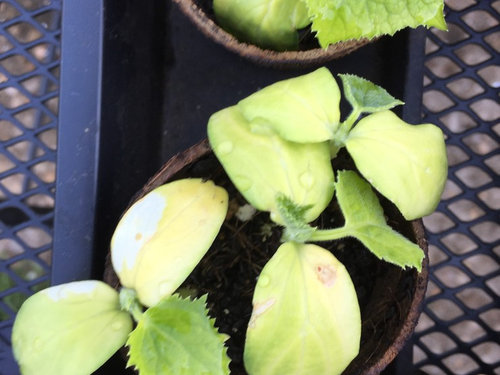
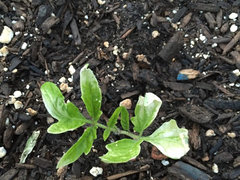
Are my seedlings diseased? I'm a very novice seed starter. These are cucumbers seedlings I've kept under grow Lights in the laundry room. They germinated and grew well, but have developed the whitish unhealthy pallor you see here. Is this damping off? Started them visiting outside today to acclamate. Are they doomed?

thank you for your help! I've followed your posts for some time, as Google repeatedly directed me to this forum in answer to any ok garden query.

Comments (6)

  • 10 years ago

    It is not damping off. Like Carol suggested, it is very likely you're keeping them too wet. Yellow leaves do not indicate one specific problem on their own. Rather, yellowing leaves can indicate stress of many different kinds. To be clear, we are addressing the yellowing of the true cucumber leaves, not the cotyledons (seed leaves) which wither and fall off on their own when their work is done.

    LACK OF NITROGEN: If the plants are growing in a sterile, soil-less growing medium, then that means there's no nutrition whatsoever to feed them, so the yellowing could indicate a lack of nitrogen. If the soil is not already excessively wet, you could feed them with the water soluble fertilizer of your choice. Since they are such young plants, I'd dilute the fertilizer so that it is half strength. So, if the package says to mix 1 tablespoon of water soluble fertilizer into a gallon of water, I'd only mix a half-tablespoon for such small, young plants. If the soil is excessively wet, I wouldn't feed them until it is much drier.

    EXCESS MOISTURE: If you stick your finger down an inch or two into the growing medium and it feels wet, you're keeping them too wet which can kill them. The growing medium should feel consistently moist but not extremely wet or soggy. Extremely wet soil can kill the roots by causing them to rot. It can encourage diseases that will kill the plants. It also clogs the roots with water which prevents them from absorbing nutrients.

    POOR AIR MOVEMENT: If your plants are on the wet side and the room doesn't have a ventilation fan or something (just a simple tabletop fan works fine) moving air around, the stagnant air and excess moisture can harm the plants. This is one reason Carol suggested moving them outdoors into shade (full shade since they cannot handle sunlight at this point). Putting them in the shade will let the outdoor air help them dry out.

    PEAT POTS: These are extremely difficult to use without creating your own problems. Peat moss is naturally hydrophobic. It absorbs tons of water and stays wet, and then, once it dries out it is almost impossible to get it to absorb water again. Using peat pots generally leads to moisture issues of one kind or another. I hate peat pots. They are one of those gardening products that sound like a great idea while actually being a bad idea. I successfully raise many hundreds of seedlings indoors under lights and in my greenhouse every year, but not in peat pots. In the future, use anything else other than peat pots. You don't have to buy little plastic pots. You can use paper cups or plastic cups with holes punched in the bottom for drainage. You can save and reuse plastic 6-packs that purchased bedding plants came in, or small 2"-3" plastic pots. Anything is better than peat pots or other pots made of any sort of compressed fiber, including those made from cow manure.

    If I had your plants in my possession right now, I'd:

    Put them out in the shade as Carol suggested. I'd start hardening off the plants at the rate of one hour of direct sunlight per day on the first day, two hours the second day, etc. This is difficult if you work fulltime and are away from home all day, but if you need creative suggestions for how to deal with that issue, let us know.

    Keep an eye on their moisture level and, if they are wet now, I wouldn't feed them until the soil-less medium is dry, but then I'd feed them with a water soluble fertilizer. They are available in both organic and synthetic formulas.

    Watch them very carefully on days they are outside because once they are exposed to sunlight and heat, they can dry out quickly, and this partially occurs because the peat pots wick moisture away from the soil-less medium once the plants are out there in heat and sunlight.

    Try to get the plants into the ground as soon as they are properly hardened off. When they are transplanted, strip off as much of the peat pot as I could as leaving the plants in the peat pots and planting the pots in the ground can lead to future problems. Whenever I purchase a plant that is growing in a peat pot, the first thing I do when I get home, no matter what, is strip every bit of that peat pot off the plant. If I cannot put the plant into the ground right then, I repot it into a paper, styrofoam or plastic cup with drainage holes punched in the bottom or into a plastic or clay flower pot.

    The weather is perfect for growing cucumbers right now and the sooner you can get the plants hardened off and into the ground the better, unless you are in far northwestern OK, in which case it might still be a little too chilly at night for them.

    fitzjennings thanked Okiedawn OK Zone 7
  • 10 years ago

    Thank you both for the advice! I should have known about the seed leaves. Though I do have some secondary (?) leaves that display the same white-yellowish tinge. I'll start hardening them off immediately.

    Ive grown them in a worm casting seed starting medium that I bought at the organic gardening shop in OKC. Should I add more of that to get a nitrogen boost?

    And I'll now avoid the peat pots in future.

    What do some of you use to drape/trelis/support cucumber/squash vines?

  • 10 years ago

    You're welcome. The secondary leaves will be fine once the roots are drier, have been fed and are used to getting more sunlight.

    To some extent the poor color of the leaves is a combination factor resulting from all the previously mentioned factors but also can occur just because a plant is very young and its vascular system is not yet large enough to adequately transport nutrients. Normally, once plants that look like yours are hardened off and transplanted into the ground, their good green color will show up slowly over the next couple of weeks as they adjust to being transplanted and adapt to their new location. Being grown in real sunlight is 10,000% better than being grown indoor under lights and plants whose color is a little bit off will improve once they are exposed to real sunlight, which is much, much stronger than inddor light.

    Giving the plants more of what they already have likely wouldn't change their condition. They need something else. Organic options would include any of the folowing: compost tea, liquid seaweed, liquid fish emulsion, or something like Neptune's Harvest, which is a combination product that contains hydrolized fish and seaweed. One of my favorite quick fixes for plants that look a little off is liquid seaweed, and anothe is alfalfa tea, which I make by soaking alfalfa (usually pure alfalfa horse cubes with nothing else added) in a bucket of water, and then straining out the alfalfa to put it on the compost pile and watering the plants with the alfalfa tea. You control how strong the tea is by how long you soak the alfalfa in the water. I like to dilute alfalfa. compost or manure tea (or Garrett Juice) to the color or weak tea when using it to water seedlings.

    You can use almost anything as a trellis. There are many options available. You can make teepee style trellises from bamboo poles. You can use any type of sturdy, woven wire fencing, cattle panels (a sturdier form of woven wire fencing that coms in large, flat panels), concrete reinforcing wire, wooden trellises, nylon twine trellis netting, etc.

    I normally use 6' or 8' tall metal t-posts hammered into the ground as the support and then attach woven wire fencing to the t-posts with zip ties. It is easy to cut the ties and put the fencing and poles away in the barn over the winter. I often use woven wire fencing with 2" x 4" rectagular openings, or 4" x 4" or whatever. You do not want to use small openings, like 1" chicken wire, because there is a tendency for small cucumbers to somehow position themselves in that 1" opening. What looks like a tiny cucumber sitting in that opening one day quickly can morph into a big fat cucumber that had gotten big overnight and is now trapped inside the opening with the wire cutting into the cucumber. You can only harvest the cuke by either cutting the chicken wire and peeling it away from the cucumber or by snapping the cucumber in half. If you don't get the trapped cuke out of the chicken wire quickly enough, rot can develop in the area where the wire is constricting the growth of the cucumber. Using plastic bird netting or deer netting with small openings results in the same type of issues. You can use purchased trellises from garden centers. Almost anything will work. Vining types of cucumbers will chose to climb whatever is sitting next to them, so it doesn't matter what you use....they'll happily climb it.

    I mentioned nylon twine or string trellis and will link an example of it below. I have seen this type of product sold on or near Burpee seed racks in stores this spring. You also can get it made from jute twine, though I am not sure how long lived that would be in our climate. I think the one I have seen in stores is a 5' tall by 15' long piece of this sort of netting. You even can use tomato cages, if they are tall tomato cages. Those little 3' or 4' tall cages won't really be tall enough, but a taller cage would be.


    Examples of trellis products


    fitzjennings thanked Okiedawn OK Zone 7
  • 10 years ago

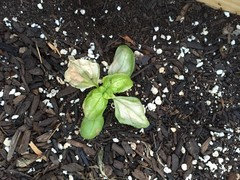
    Now something is awry with the tomatoes and basil that I just planted! Some of them appear eaten, some yellow white and shriveled..

    there are suddenly many ants in the bed, which I understand usually indicates the presence of some other big that the ants wish to eat...but I can't see any other creatures on the damaged young plants.

    thoughts, wise folk? What should I do? Apply DE around the bed?

  • 10 years ago

    The white shriveling often is associated with damage from sunlight. Were the plants fully hardened off to sunlight before being planted? Plants grown indoors must be hardened off gradually to sunlight (1 hour of sunlight the first day, two hours the second day, three hours the third day, etc.) before the plants are transplanted into the ground or they will bleach out just like your plants have done. It is a form of environmental damage, and it can kill plants, so I hope they were hardened off. Sometimes, even plants that were properly hardened off can lose some of that hardening in a specific set of circumstances. I have seen this happen when hardened-off plants are exposed to a week or two of nothing but heavily clouded skies, and then they show environmental damage after a full day of sun finally occurs. It is like they partially lose that hardening off if there's no direct sunlight at all for a week or two immediately after they are planted. This is not common, but it does occasionally occur. The plants who show this sort of environmental damage resulting from weather usually recover, but those that were not properly hardened off in the first place often do not.

    Ants exist in your garden because it is an ecosystem and they are an important part of it. You'll never have an ant-free garden, and you really wouldn't want one. Any time one part of the ecosystem is removed, that leaves a void that will be filled by something else---and that something else is often something even less desirable. Having said that, there are times when you must do some ant control---like when fire ants pop up in your raised garden beds to get above the grade level wet soil after heavy rainfall. Or, if carpenter ants are in your raised beds eating the wood lumber used to build the beds. In circumstances like that, there are organic fire ant and carpenter ant problems that are labeled for use around edible plants. You can use DE but keep these facts in mind: (a) DE will harm beneficial insects just like it harms pest insects, and your garden needs the beneficial insects to help control the pest insects; and (2) DE is not effective when wet. This makes it a more useful product in hot, dry summers but not nearly as useful in Spring when rain is falling every couple of days. If you use DE, be sure to use only food-grade DE and, above all else, do not use the form of DE sold for use in swimming pool filters as it is processed in a different way that makes it harmful to humans and animals when used in the garden. You don't want to inhale the dust of swimming pool filter types of DE.

    With ants, because they tend to be beneficial most of the time (but not if they are farming aphids on your plants, which is a whole other issue), I ignore them unless they are fire ants that are mounding up in veggie beds (I use an organic ant bait containing spinosad for them) or if they are carpenter ants eating the lumber in my raised beds (I use an organic carpenter ant bait containing abamectin for them, but it cannot be used inside an edible garden so I place it outside the garden fence in the hope they will find it and carry it back to their mounds/nests). If there is a persistent problem with carpenter ants inside the garden and it doesn't seem like they are getting the abamectin placed outside the garden, I use the spinosad for them, or spray the wood they are eating with peppermint soap spray or a spray made from Medina orange oil (taking care to get the spray on the wood and not the plants as it will then act as a herbicide).

    General ants, though, I leave alone. Most are beneficial and help with pest control. Red harvester ants, for example, pick up and carry off the bodies of dead insects. I have two harvester ant beds just outside my vegetable garden and they clean up/clear the garden of insect bodies constantly---virtually every day of the growing season.

    Just because any sort of insect is visible in your garden does not mean it is a problem. A natural ecosystem is full of insects of all kinds. If you do everything you can to promote a naural, healthy ecosystem, the beneficial insects that are present will largely take care of the pest insects for you. My garden is full of insects and I bet 97% of them do no harm.

Sponsored
Landscape Management Group
Average rating: 4.9 out of 5 stars33 Reviews
High Quality Landscaping Services in Columbus