Software
Houzz Logo Print
aclute

Retrofit Window Flashing?

10 years ago

I have a 14 year old house, that is almost entirely stucco. The windows are wood interiors with exterior vinyl. The walls are 2x6, so there is a decent sized vinyl sill that is sloped away from the building. Windows on the sides and back are wrapped in 6" wide cedar trim. Windows in front have stucco right up to it, with shutters on top.

I built the house, but wish I would have known then what I know now. Looking at pictures from construction, I can tell the following:

  • Windows were placed directly into rough openings (no wrap yet) -- with decent size nailing flanges
  • A head flashing was put in directly above the window (and only covers the width of the window)
  • For the back and sides, the cedar trim was installed next (no flashing). Another head flashing was put above the top trim, covering the width of it
  • Jumbo Tex paper was installed around the whole house (I believe 2 sheets of it), then wire (with weep screed). These butt up directly to the windows in front, and to the trim on the others.
  • Stucco was installed

Thankfully I have had no leaks inside that I can see, except for a fixed window in a two story great room where the exterior caulking between the vinyl sill and jamb mitre failed and let water drip in (became visible coming out of the top of the window below it).

What is concerning me now is that every year I am starting to find one or two pieces of the cedar trim rotting out -- always in the lower piece right below the corner of the window. I have had the entire house painted and caulked (stucco to trim, and trim to window). Yet I found one more this year.

That tells me that maybe water is still getting back there, and the lack of flashing is opening me up to more serious problems .Before painting this year, I did not notice any significant "stucco tears" at the corners, but that doesn't mean there isn't damage behind the trim. Or, it could just be the water working in at the joints on the front.

Given all that -- and I know they are not flashed, I want to find a way to flash my windows, ideally without having to replace them, or having to pull them completely (I understand that might not be possible, and end up being the final resolution).

I was thinking of doing the following, but not sure if this will actually be of any benefit at all:

  1. Pull all the trim off a window
  2. Remove the head flashing just above the window, and install a new one that covers the width of the window and trim combined
  3. Install flashing tape over bottom fin first, then sides, then top
  4. Reinstall cedar trim.

This does not solve the problem of lack of a sill pan, or having the flashing integrated into the tar paper for the stucco. But if I am already replacing a piece of trim, seems like this would be worth doing at the same time.


Thoughts?


Comments (12)

  • 10 years ago

    I would have a friendly talk about it with your residential building inspector about the proposed project and see what he/she has to say on it! It total free too! Many inspectors have an open hour in the day where you can drop by to talk to them or you can make an appointment and have them come to you!

  • 10 years ago

    In reality a building inspector is alleged to know the building codes, most truly do not know about correct building practices in my opinion.

  • PRO
    10 years ago

    building inspectors no nothing about proper window instslls, i agree.

  • 10 years ago

    Yeah....building inspectors sort of got me into this mess, so I am not sure how they will help me getting out of it.


    Thank you millworkman -- that is my fear. I don't want to make sure worse in the process, but willing to invest to make it better.

  • 10 years ago

    "building inspectors sort of got me into this mess, so I am not sure how they will help me getting out of it."


    Yeah, they signed off on the original installation didn't they?

  • PRO
    10 years ago

    Can you post up a picture? Might be work demo'ing one opening to figure out work scope specifics before ordering product. You can do everything you need to do in this application and the worst that might be require would be cutting back of the stucco a bit.

  • 10 years ago

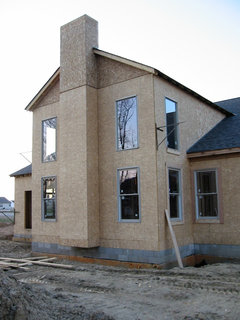
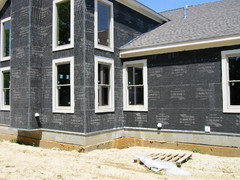
    Here are pictures from the construction 14 years ago. You can see in mid process of them trimming the windows out. All of them eventually get that cedar wrap. And then you can see the paper for the stucco.

  • PRO
    10 years ago

    A well designed drip cap and sill pan extension that emptied on the exterior of the stucco would have probably negated this issue from the outset.

  • 10 years ago

    Agree. I have drip caps, but not sill pans. Any idea what it would cost (ballpark) to have new Windows installed for just the 4 second story fixed ones in the great room? Assuming they are pulled, sill pans and proper flashing installed. All my windows are wood with vinyl clad, but I would be ok with vinyl for those 4 if it gave me a better solution.

  • PRO
    10 years ago

    If you have drip caps, I am going to guess that they weren't quite right. The drip cap should have kept out and overwhelming majority and enough so that the window openings didn't rot in my opinion. As far as price, you are going to have to talk to some folks that are local and make sure they are both comfortable and capable of the workscope at hand.

  • 10 years ago

    I think the challenge with those upper windows was two-fold -- the extreme height of them rendered the drip cap good for the top but not the bottom part of the window. Also, because they are fixed windows in a 2x6 wall, the glass was not flush with the exterior -- there is about a 1.5" vinyl sill exposed, and where that meets the exterior jamb, the factory caulk wore out.


    I have only seen the problem on my fixed windows. My double hung have all been fine.