Software
Houzz Logo Print
fitzjennings

DE as a squash bug preventative

10 years ago

Thoughts on this? My squash/melons/cucumbers have been decimated every year I've tried because of the little critters.

id heard a suggestion to apply DE around the stem of the young plants to get them early...could this be harmful? Anyone tried it?

Comments (14)

  • 10 years ago

    I used it, the squash bugs won.

    fitzjennings thanked AmyinOwasso/zone 6b
  • 10 years ago

    Ok. Any other chemical free ideas anyone has found successful?

    if I could trust my bad chickens in the garden, they would certainly take care of the squash bugs

  • 10 years ago
    last modified: 10 years ago

    Out of curiosity...why can't you trust your bad chickens? My mom always let the hens have the run of her veggie garden. I don't remember her ever complaining about any bugs at all. The chickens did their job. :-)

    fitzjennings thanked TulsaRose
  • 10 years ago

    Well perhaps I could let them in once there were no very young plants/seeds to excavate! I made that mistake last year. Planted early in the season and the hens promptly dug them all out again.

    Though they have been known to nibble tomatoes and other fruit.

  • 10 years ago

    When I usd DE, I already had a problem. You can try it early, before they show up, but I think it has to be reapplied if it gets wet.

    The first thing to do in Oklahoma is plant C. moschata varieties, which are more resistant than other squash varieties, I grew a parthenocarpic (doesn't need to be pollinated) zuchinni under a netting cover last year with great sucsess. You can grow any of them under cover if you don't mind hand pollinating. We have been seen in the garden with a shop vac or a hand vacuum sucking them off the plants and drowning them afterwards. If you are very diligent you may be able to hand pick bugs and eggs for control. A bit of duct tape will help pull the eggs off the leaves and will grab small nymphs.


    I have not tried, but some say cedar mulch or bedding under the plants. I've been told talcum powder, though I think that might have other issues. Vanillin (artificial vanilla) is supposed to repel them. Garlic juice, here is my friends recipe: "In A Quart Jar .. Take A Good Size BULB OF GARLIC .. Run Over It With A Tractor Tire (Smash It)... Add Water Add Lid.. Set Outside For 3-4 Days.. Strain.. Pour Into Sprayer Bottle.. Spray Plants (Will Not Change Flavor) Toss Strained Garlic In A Bowl & Put It Near Your Patio Table For Skeeters.... & VAMPIRES.. LOL". Supposed to be repelled by kelp meal, (I have no idea where you get that). There are numerous plants that are supposed to repel them, you can google that, and if you find one that works, let us know. I have tried icicle radishes, petunias marigolds, nastutiums. I have not tried tansy, lemon balm or chamomile. I have read to grow buckwheat before squash because it attracts beneficials that prey on squash bugs. This doesn't even address squash vine borer, which I consider more evil than squash bugs.

  • 10 years ago

    The problem with DE is that it does not work when wet. I guess the moisture softens the soft edges and makes them soggy so that they no longer slice the little bugs to shreds. If you use DE, you'd have to reapply it every time the area has rainfall, irrigation or even heavy dew....so, here at my house these last couple of weeks, I would have to be applying it daily. I also have found that, in general, when I use DE, it seems hit and miss and does not consistently work for all the pests it is supposed to control. I pretty much don't bother with it any more. If I was going to use it with squash plants, I'd apply it to the undersides of the leaves with a duster like a Dustin Mizer since it is the undersides of the leaves where the eggs are laid and where the nymphs hatch.

    Squash bug control requires great consistency and you cannot stop doing it for even one day because if you do the population will suddenly skyrocket. I find it most effective to look on the undersides of the leaves and remove and destroy the eggs when I find them. I generally use either duct tape or a lint roller to pick up the eggs off the undersides of the leaves, and then I wrap the duct tape or lint roller paper around them, following wrapping them up in it and I throw it in the kitchen trash can to ensure they don't hatch and crawl out to the garden. If nymphs have begun hatching, I carry a bowl of soapy water with me and flick them into it to drown. The earlier you kill them, the less chance they have to get away and hide. I also do the same with adult squash bugs. You have to be consistent though, and never let down your guard and decide that you've gotten all of them and can stop looking. The minute you stop looking, a million more will appear. You also can spray squash bugs with insecticidal soap and that usually kills the nymphs, though not always the adults.

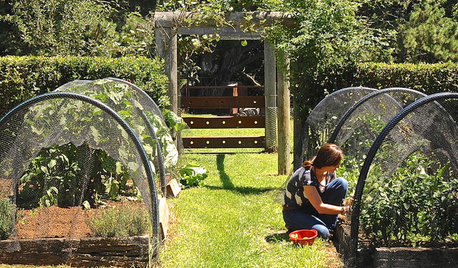
    The ATTRA document on squash bug and squash vine borer control has lots of great techniques and I pretty much use them all, but my favorite methods are to (a) grow the plants under lightweight floating row covers pinned down tightly to the ground to exclude the pest, and (b) to grow C. moschata types of winter squash and summer squash as they are more or less not bothered by SVBs about 98% of the time (because they have solid stems the SVBs cannot tunnel through). Unfortunately, squash bugs can spread disease to C. moschata types of winter and summer squash, so you still have to control the squash bugs or they'll give your moschata squashes diseases that may (or may not) kill the plants. Most C. moschata types of squash are pretty disease tolerant, but that doesn't mean they are immune to disease.

    Here's the ATTRA document on organic squash bug and squash vine borer control.


    ATTRA: Squash Bugs and Squash Vine Borers


    If you do not mind using synthetic pesticides, many people report good results from spraying with liquid (not the dust) Sevin or with Bug-B-Gone. I've never used those for squash bugs so cannot comment on whether or not they work, but some folks report that they do.

    I grow yellow straightneck squash and zucchini early in the season, planting as early as possible in an effort to get a harvest from them, but inevitably the squash bugs or squash vine borers soon show up and the war is on. When I get tired of the war, I let the pests kill those plants and then yank out the plants and dispose of them. By then, my C. moschatas (which are planted later, since they need warmer soil to germinate and to grow) are coming along nicely and I focus on keeping the pests off of them. I do plant my C. moschatas as far away (roughly 200-300' away) as possible from the standard summer squash plants so that the squash bugs cannot quickly find the C. moschata plants.


    fitzjennings thanked Okiedawn OK Zone 7
  • 10 years ago

    I use DE in my hens laying boxes, under the straw. When I replace the straw, I replace the DE too.

  • 10 years ago

    I've been told that the warm winter will leave us with all the destructive critters, and early. Spider mites already on my tiny tomato plants....

  • 10 years ago

    I've had an extremely large population of lady bugs all over my garden since February and they are growing and reproducing like crazy. I am not seeing many pest insects at all----this is the most pest-free spring I've had in ages and ages. We've had no Colorado potato beetles, no flea beetles and virtually no cabbage loopers (some did just show up recently but I handpicked and drowned them) and not really even any cucumber beetles (I am sure they will show up eventually). For small insects like aphids and mites, I suspect the lady bugs are devouring them.

    I always have spider mites and I just don't worry about them any more. We are in a very rural area and spider mites are everywhere. There's even bermuda mites on the bermuda grass. In the garden, I just focus more on having healthy soil. Healthy tomato plants in healthy soil can tolerate a lot of spider mite damage and keep on producing in an average year with average rainfall. I do have a whole lot more spider mite issues in hot, dry, droughty years. For the most part, I just do everything I can to encourage a healthy population of beneficial insects, and they largely keep the pest insects under control for me to a certain extent. I don't think I'll ever have a garden that is free of spider mites on tomato plants, but most years they do not kill my plants.

    My garden is full of toads, frogs, lizards and birds as well, and turtles too, and all of them eat lots of pest insects. That helps with pest control more than anything else I do myself. For the pest insects for which there are not good organic controls, like squash bugs and SVBs, I do a lot of searching out and destroying the eggs, and I sometimes grow summer squash under netting to exclude the pests. However, when I lift the netting to hand-polinate the squash flowers, there's always a chance the pests will get on the plants at that point.

    I garden organically and don't like to use any pesticides, even those that are organic in nature, so rely more on an army of beneficial insects and other garden helpers. I haven't seen any assassin bugs or wheel bugs in the garden yet, but May is when they usually show up and start helping with insect control. I have had tons of tiny grasshoppers hatching out recently, but spread Semaspore in the garden and that generally takes care of them. I think that roughly 97-98% of the insects in my garden are beneficial insects and they help take care of the few pests that are what we call "the bad guys" in our garden.


  • 10 years ago

    I have a lot of lady bugs this year, too. Also more aphids. Or maybe it's just that I can see them this year since my cataract surgeries last fall. I have mostly ignored the aphids, since I've been seeing the ladybugs. They are mostly on spent brassica, so no biggie. I have ants in all my beds, and I'm wondering if I got rid of the ants if the aphids would be less of a problem. At this point, prepping for another storm is probably all I will get done today.

  • 10 years ago

    I do think aphids are attracted to cool season plants that are past their prime or that are struggling as the weather heats up. Also, pests of all kinds seem to be attracted to plants fed a high-nitrogen plant food, so when friends ask me about a sudden "explosion" of aphids on their plants, the first thing I ask is if they just fertilized. It is amazing how often the answer is yes. And, I think some plants are just more attractive to aphids no matter what you do or don't do. Piricicaba broccoli is an aphid magnet in my garden, and would have aphids all over it when Packman broccoli in the same raised bed didn't have any....so I stopped growing Piricicaba, which is a shame as it is very heat-tolerant.

    Ants are everywhere this year, as they were last year, and I suspect it isn't that we have more, just that they are more up on the surface of the ground this year (and last) due to it being so wet. I ignore the ants unless they are fire ants and are biting me, in which case I use an organic fire ant bait that contains Spinosad.

  • 10 years ago

    I saw several ladybugs on my crepe myrtles vut couldn't see any aphids? Maybe they were just looking?

  • 10 years ago

    Maybe they were just window shopping. Or, maybe they already had gobbled up the aphids and were just looking for more?

Sponsored
Peabody Landscape Group
Average rating: 3.5 out of 5 stars8 Reviews
Columbus' Reliable Landscape Design & Contracting