Software
Houzz Logo Print
stanrools

Worm bin PH?

10 years ago

I am just beginning to farm Red Wigglers at home I know that I have to keep my PH neutral dose anyone have any recommendations for a PH meter or strips that work best for them?

Comments (13)

  • 10 years ago

    Stan, IMO you probably don't need to test your w/bin pH. Just don't feed them any (or v. small amounts) of acidic things like citrus rinds. Have heard that a bin that gets way too wet or not enough air can get acidic.

    If you provide them your typical kitchen fruit and veggie scraps I'm sure you worms will be very happy. Keep a close eye on how they're doing and you'll soon get a good feel for what they like or dislike to eat, and what the bin conditions should be like.

    If you feel you must test the pH, I've often wondered if the pH test strips used for swimming pools might work. Someone else may have some further suggestions. Good luck.

    Harry

  • 10 years ago
    last modified: 10 years ago

    I agree that you don't need to test the pH in a worm bin. We may say that it's bad to let the bin become "acidic," but what we really mean is that certain conditions are bad for the worms - conditions which you only need a functioning nose and your other senses to detect. If things smell like stinky rottenness or ammonia, then the bin is too wet/too overloaded with wet food. If the bin smells "earthy" things are going right.

    With that said, I've been curious to know the ACTUAL acidity in the bin. If I got curious enough to actually check, I would think a good soil testing kit would work. From everything I have heard, the electronic pH meters that you can buy are not accurate and not worth the money.

    (Similar principles apply in home fermenting, which is something else I do when I'm not playing with worms - there is the "right" level of pH that you want to achieve, but you don't really need to actually check the pH as long as you observe the conditions and the results properly).

    You might WANT to check the pH to satisfy your curiosity; if your kid is doing a science project; or if you want ammunition for online arguments. :-)

  • 10 years ago

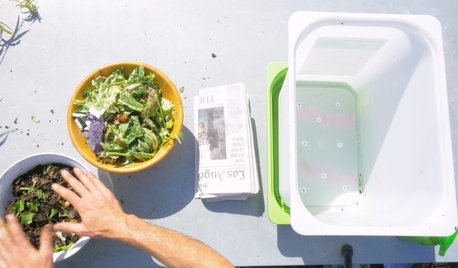
    Thank you that is reassuring. like I said previously I just started this and hopefully they will thrive. luckily for me I have a near by source of free horse manure sawdust and hay bedding to feed my worms along with table scraps and yard waste. I live in the country so when they grow I will be able to build a bin pile or some sort of arrangement outside for now I have them in a roughly 18"x24" plastic bin inside of another plastic bin both of witch have small holes in for air circulation im sure its not much air but its a start. the bottom bin is to catch my drippings

  • 10 years ago

    Parsley, when you mentioned "home fermenting" were you referring to bokashi composting 'cause I do that too. Don't see it talked about much in the Soil,Compost and Mulch forum.

  • 10 years ago

    No, I meant making sauerkraut, brine pickles and kimchi!

    Somewhat analogous to composting, in that it involves letting organisms that are naturally present do the work for you, and all you need do is provide the right conditions.

  • 10 years ago

    I sprinkle wet granulated limestone and use more browns if I'm worried about acidity. Your senses will tell you as surely as any test strip what conditions are. About to try adding crushed oyster shells from shucking job, something like that would also help keep things basic. On my drive they appear to thrive under whole shells.

  • 10 years ago

    I stopped worrying so much about acidity in my bins when I read an article about earthworms in England. England's fine estates and golf courses seem to be under a constant "barrage" of castings messing up the lovely looks of their lawns and courses, leading them to fight earthworms, rather than encourage them. Well, seems that in most places over there, the soil pH can run from about 5 to 6.5... and they are all but 'overrun' with worms, while, at least were I am, the soil (such as it is -- mostly sand) is running roughly 7.3 or even higher by nature. My average bin pH as a result is only slightly lower. 7 to 7.1. I have to work almost too hard to get the pH to drop much further without resorting to extreme measures, like spending a lot of money on peat, adding sulphur to the yard or the yard waste before it hits my worm bins, etc.. I think I might like some nice 6.5 pH vermicompost to be able to grow certain acidic loving plants easier -- but..... how much do I want to stress my squirms to get there?

  • 10 years ago

    Drying out, which is NOT my problem this week, what with the coattails of "Collin". Just the opposite, I'm hoping the squirm hasn't drowned, and that I'm not growing Zika mosquitoes instead. Supposed to dry out tomorrow, so I will be out all afternoon, bailing and draining, probably.... :/

  • 10 years ago

    To me the beauty part is when the bin has matured. At that point enough of the stuff is castings that the bin has no trouble regulating its own temperature and moisture. This is why, next time, I will only harvest half of a bin. Harvesting all at once is a shock to the worms and their carefully constructed climate.

  • 10 years ago

    baldeagleomelette: yes, that's the wisest thing to do. Less stress to them and they just carry on with whatever they've been doing.

  • 10 years ago

    I suppose that's one of the principles behind a multi tray stacking bin: after setting up the very first tray, you are only ever adding one one new tray at a time, leaving the worms free to gradually settle the new trays and bring their companion microorganisms with them at their own pace. I feel like after that first tray, the subsequent trays get working much more quickly and smoothly.

    Perhaps this is also one of the reasons why a flow through bin works well - the food is added at the top, the most finished castings come out the bottom, and there's always a "middle zone" where the worms are working away undisturbed in the conditions that best suit them.

  • 10 years ago

    im starting to find with my bin that with the exception of adding very little moist news paper to the very top the worms are staying very happy. I may have added to much water last week when I was busy and added a lot of food for the worms I have a lot of little white mites in the bin right now exspechily on my banana peals. I also added a lot of coffee grounds and coffee filters to one side of the bin. the worms are eating it but when I went into the bin digging around yesterday their was diffidently not enough air in the coffee grounds and I had a methane smell I mixed them and wont do that again.

    What a learning experience this is.

Sponsored