Software
Houzz Logo Print
sarah_krause

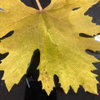
What the heck is this

10 years ago
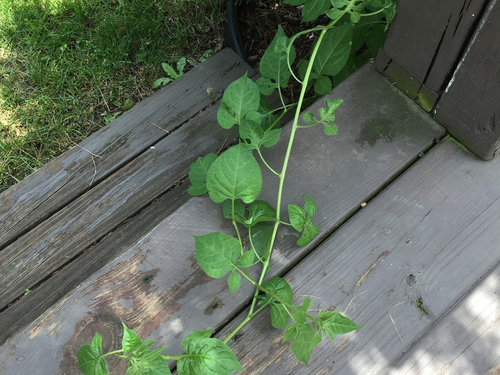
This wasn't here two days ago and we got tons of rain yesterday and now bam!

Comments (9)

  • 10 years ago
    last modified: 10 years ago

    The only thing I know of that grows that fast would be Kudzu. If that's what it is, GET OUT NOW...Save yourself! LOL

    But Seriously, I have no idea what it is. Someone else will have to help you out.

  • 10 years ago

    It is all over my yard. It will grow if there's a 3" square of poor soil, I swear. It needs no special attention, at least here in Southern NH. Originally, I asked my husband to let it grow because I like Bittersweet. Now It's everywhere. In my back yard, where I want a living privacy hedge, I leave it. Everywhere else, I pull it up. And then I pull it up again and again and again...... You get the picture. It has actually wrapped itself around one of my deck posts and I'm thinking of letting it stay and encouraging its many cousins to follow suit. It's prettier than the deck posting and maybe I'll get some Bittersweet Berries!

  • 10 years ago

    The plant pictured above is Solanum dulcamara, woody nightshade, which has herbaceous viney growth, but doesn't wrap itself around anything. Floral is from the UK, not the US, and common names are often different in various parts of the country or world. What we in the US refer to as bittersweet is a different, woody plant, either Celastrus orbiculatus, oriental bittersweet, or native American bittersweet, Celastrus scandens. In NH, oriental bittersweet is highly invasive, and will seed into wild areas densely enough so that it can bring down trees from their weight or kill them by wrapping around trunks and restricting their growth and circulation. So I wouldn't hope for berries as you will be adding to the problem. Here's a thread talking about how to get rid of an established bittersweet. To get a feel for the problem, do a web search using the terms invasive and bittersweet. Read some of the descriptions of control and look at images. In Concord, NH, there is an old farm that has an unbelievable amount of the stuff - a real nightmare.

    If you really want some bittersweet, get a couple of plants of the native variety, which doesn't create the extensive problems that the oriental bittersweet causes. There are quite a number of other wonderful perennial vines that grow in NH without causing the problems of seeding into wild areas that Celastrus orbiculatus does: trumpet honeysuckle (Lonicera sempervirens), a wide range of clematis, the native pipevine (Aristolochia macrophylla), climbing Hydrangea, or Virginia creeper (Parthenocissus quinquefolia). There are also various annual vines such as scarlet runner beans, sweet peas, and black-eyed Susan vines (Thunbergia).

  • 10 years ago

    NHBabs is absolutely right. Bittersweet is a common name for Solanum dulcamara in the UK, but not in the US. Sorry to cause confusion. That is why I gave you the botanical name which is unambiguous and would by understood anywhere in the world. That is the name you need to get fixed in your mind and use it when you research the plant.

  • 10 years ago
    last modified: 10 years ago

    I apologize but my confusion can be explained, at least I think it can. I have several plants that do as you mentioned: they've wrapped themselves around some pines in our back yard, a fence on one side of the yard, and now our deck. But, and this is an important point for me to make, I also have several Celastrus Scandens, which you have taught me is a true Bittersweet vine. Those, I have used for many years, for ornamental purposes. I make my Thanksgiving centerpiece, using some of the branches from them, as well as a few branches I bring inside and put into some tall antique pitchers I own. I promise I will investigate the role of the Oriental Bittersweet in the state of NH.

    Behind our home, we have a line of very tall Pines, along with other wild flowers, including a lovely Mountain Laurel bush that must have been here years ago when they tell me this land was a farm. It's an old bush but lovely, and currently blooming and I often cut some of it to bring inside for me to enjoy. (Yes, I know it is protected in CT but it's on my land and I never cut too much and it's thrived since I started to cut it.)

    That area offers many wild flowers, which include Lilly of the Valley, wild Violets, a large Lilac tree, some wild roses that were also cultivated to grow next to my house and I removed, and blackberry bushes, another invasive vine I've pretty much removed from the property. This year, to our dismay, we have discovered some Poison Ivy

    When they come in to get rid of the Poison Ivy, I will ask that they remove all the Celastrus Orbiculatus from the property. I apologize for my ignorance and I hope you'll not have to reprimand me for trying to hang on to some of what I thought were harmless plants in an attempt to not strip the small "Forest" behind my home! :)

  • 10 years ago

    No worries. The way to tell the difference between C. orbiculatus and C. scandens is the location of the flowers and berries. In the native one, the flowers and berries are at the ends of stems in a large cluster. In oriental bittersweet, the flowers and berries are located in smaller clusters along many places on each stem.

    Are you in CT rather than NH?

  • 10 years ago

    Thanks for all the info! I've come to realize the nightshade is growing not only from under my deck but on the sides of my house as well! What do I do? Just rip them up forever as long as I see them?

  • 10 years ago
    last modified: 10 years ago

    Yup. They put out a good number of seeds, and I find that rodents stash them as well as just dropping, so keep pulling. Seeds can stay in the soil for several years, so keep on top of it. Mulching may help prevent sprouting since I only see it in unmulched areas in my garden.