Software
Houzz Logo Print
patrickjmaley

1st Time Composter with One-Years Product

10 years ago

Hi

We started composting last year with a tumbler we built
ourselves, and now we have about one year's worth of compost and we are
not sure if it is usable or if more should be done to let it process.
We've fed the composter with uncooked kitchen trimmings, coffee grinds
and filters, paper towels and roles, and egg shells, and a bit of grass
(we are a bit concerned about the lack of brown matter). What we have
(which fills most of a 30 gallon garbage can) looks like clumpy mud with
egg shells scattered throughout, and it smells a lot when agitated. The
ph is around 7. I suppose I was expecting something more like the
consistency of dirt, so I'm not sure if what I've got is desirable. Do
you suppose this is useful stuff, or should we be going more to process
it? I bought some red wigglers (which haven't arrived yet) but am not
sure that they will help.
Thanks very much.

Comments (15)

  • 10 years ago

    I just emptied out my compost tumbler into my new big bin that hubby built me. Sounds very similar. Clumpy, wet, muddy, and stiiiinky. Reminiscent of sewage. Nastiness. It's too wet and not 'ready'. Turn it, add some leaves or cardboard and let it sit longer.

    patrickjmaley thanked Jessica Whittingham
  • 10 years ago

    Congratulations, Patrick. Very cool.

    I would empty the composter onto the ground and allow the compost to 'finish'. It sounds like it might be a bit moist, so I'd suggest letting it dry out. If that were my compost, once it was dry enough, I would screen it using 1/2" hardware cloth. The process of screening it will break it into small bits that will be exposed to air, and that will help with the finishing process.

    Paul

    patrickjmaley thanked User
  • 10 years ago

    Thanks much: how do I know when it is finished? Is there a particular texture I should be looking for?

  • 10 years ago

    Compost tumblers are typically "batch composters."

    That is, you fill it part way full according to manufacturer's directions, and then turn, again, according to directions.


    Next, you start all over with a new batch.

    The items you listed could be managed well in a worm bin.

    patrickjmaley thanked Jean
  • 10 years ago

    What do you intend to use the composted materiel for? Based on your description the moisture level was too high. If there is an offensive odour something was out of kilter. Tumblers can be batch or continuous fed but are a little less forgiving than piles or bins. Any pictures of your home built tumbler?

    patrickjmaley thanked Lloyd
  • 10 years ago

    If your compost stinks, it's because it went anaerobic. Having too much wet, green material will do that. I agree with what others have said - let it dry out, either through evaporation or by adding lots of dry browns that will absorb some of the moisture. When compost is finished, it should have a sweet, earthy smell and a nice, loamy texture.

    patrickjmaley thanked jnavarro31
  • 10 years ago

    We would like to use the compost primarily for our vegetable garden and for other plants in pots. The garden is already planted, but our hope was to use the compost around the plants as fertilizer later in the season.

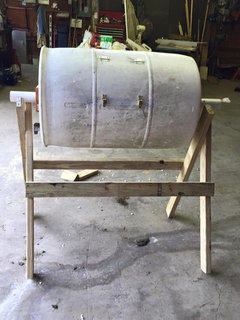
    Here are a couple pictures of our tumbler from when we built it. When I emptied, it was about half full--up to the pvc inside. You may not be able to tell, but there are holes drilled in the pvc and throughout the body of the tumbler.

    Will adding worms to the current compost and and to this year's batch that has just been started in the tumbler help?


  • 10 years ago

    Looks like there is not a lot of air movement based on the size and number of holes I can see in the picture. Frequent tumbling will help but a lot of the water evaporated out of the material will just condense on the inside of tumbler and either drip or run down the sides to the bottom. If the moisture content of the materials is high (and UCGs traditionally have one of the highest) then the chances of going anaerobic are pretty high.

    If you had an area in your garden that was not planted then I might suggest you could till this "stuff" in and let it finish off in situ.


    BTW, excellent post by Richard.

    patrickjmaley thanked Lloyd
  • patrickjmaley thanked Lloyd
  • 10 years ago

    Hi again, Patrick. Next time you're at a garden center that sells bulk compost, wander over and have a look at it. Screening the compost will break it up and allow it to dry out a bit. As it dries, it will resume composting so don't let it suddenly heat up and completely dry itself out. You want to maintain a certain amount of moisture, not too much, not too little.

    My problem is usually piles that completely dry themselves out. I keep old plastic leaf bags around. It doesn't matter to me if they're torn because I am using them as a cover for my compost pile. The cover prevents rain from soaking the pile and it also prevents the pile from drying too much. The edges of the pile are open to the air and that seems to be enough to keep the pile happy.

    I once screened more than 2 yards of newly composted material into a pile. That pile finished composting during the spring and early summer. I used it as a mulch for established vegetables. The soil was awesome.

    patrickjmaley thanked User
  • 10 years ago

    It's hard to see the holes so presumably they are quite small. In which case they could quickly become blocked by the materials inside and your compost would have insufficient air. Hence the anaerobic results. More air and more carbon ('browns') needed, I'd suggest.

    patrickjmaley thanked floral_uk z.8/9 SW UK
  • 10 years ago

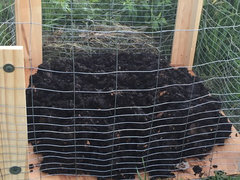
    Thanks for the help, everybody. I added a bunch of cardboard (difficult to determine how much is necessary) to my high-nitrogen sludge, churned it up, built this bin, and dumped it in to work some more. Hopefully it turns out well.

    I also drilled a bunch more holes in my tumbler so hopefully that plus more vigilant additions of carbon will help next year's batch turn out better.

  • 10 years ago
    last modified: 10 years ago

    I would of left the bottom open to the ground as that plywood will rot fairly quickly. I would say air and moisture are the most important elements for compost. Just keep opening it up and turning it.

  • 10 years ago
    last modified: 10 years ago

    I had the same thought John. It's fine to keep the grass from growing up through that scrumptious stuff, but whatever you use is going to decompose rapidly. Just fine to leave it right on the ground too. That's the way nature composts things anyway.

    I am fully confident it will be nice compost rather soon. Turn it every few weeks and keep heavy rain off of it. It will be crumbly and earthy smelling in no time.