Software
Houzz Logo Print
megan_huntley_7a_ok

Perennial plant recommendations

10 years ago

I've got a tall order here...
Both parents have heart trouble, so I'm trying to cut down on their yardwork. I could use some advice on plant choices, most importantly, I need perennials but I'd also like native or Oklahoma proven so I know it can take the weather. Since I'm trying to keep maintenance down, stuff that won't take over because I can only get out to them about once a month and I'll have to do the majority of maintenance.
Please let me know what plants remain!
I do need to replace a couple specific plants too:
1) something about the height & canopy of a crepe mertyl without the maintenance. Flowers are good, but not necessary. Needed more for a lower-height canopy/wind break.
2) a flowering plant that gets about 2 feet tall and tends to clump. I had imagined bee balm but don't want to fight the spread.

Comments (13)

  • 10 years ago

    What kind of soil do they have? Also, will these plants be growing in full sun? Part sun? Dappled shade? Heavy shade? More details please so we can give you the best answers possible!

    Oh, and welcome to the OK Forum too. Happy to see you here1

    Dawn

  • 10 years ago
    last modified: 10 years ago

    I'll have to break this into more than one post to do that! Overall, sandy clay soil that's loose enough you can dig but still tight when it's dry. Balanced PH. In near NW OK so dry and hot to begin with but some unique heat/water issues I'll outline in my next post.

  • 10 years ago

    Challenges:

    • Busy corner + near Baptist church = lots of scrutiny
    • In town but west side of street is field. No greenbelt/break. Heats up and dries out their yard.
    • Not great about watering and high water bills a concern
    • My mom hates yuccas
    • Need to reduce trimming/edging/pruning. Dad wants to save energy so he can continue mowing for two widows down the street.
  • 10 years ago
    last modified: 10 years ago

    Projects:

    • Foundation bed - need drought tolerant perennials; morning sun; 12&after shade
    • Privacy row - thinking ornamental grasses. Faces field so heat & drought tolerant. Fast growing. 8+hrs PM sun.
    • Anything my dad can wheel the mower under and not have to weed eat around I'm thinking fountain growing type plants
    • Windbreak/PM shade. Direct sun 12-sunset. Drought tolerant. Needs to block sun as it gets lower starting 4-5pm. Along street so can't be low enough to block visibility at corner.
  • 10 years ago

    How about Indian Hawthorn Pinkie? I have one and it seems to tolerate about anything. I completely ignore it in fact.

    Megan Huntley thanked hazelinok
  • 10 years ago

    Northwind switchgrass might be perfect for your privacy row. It's upright, so would be easy to mow along the row.

    I just planted seven along my driveway last fall, so it's too early for me to confirm that they are drought tolerant, but that's one of the reasons I chose them.

    Good luck with the project. I hope my sons are as helpful when the time comes.

    Michelle

    Megan Huntley thanked Dragonfly Hollow (z7b,North Texas)
  • 10 years ago

    I like all muhly grasses, but Pink Muhly is especially striking, especially as it sort of sways and moves in the wind. Salvia greggi is about as low-care as it gets in my garden. I snip off spent blooms every now and then, but they don't require the constant deadheading that annual salvias need. Salvia farinacea is another salvia that tolerates heat and drought, and it comes back for me every year in zone 7b. I don't know how it does further north. Daylilies would be nice were it not for the deadheading. I keep hoping they'll breed some daylilies that deadhead themselves. In my garden, crinum lilies get huge---about 4' tall and wide, and bloom profusely in June. They are thick and dense and serve as a windbreak all on their own in my garden. It takes them a few years to get this big, but once they are that large, their root ball bulb thing is huge. I doubt I'd ever be able to remove them even if I wanted to. I don't know how they'd tolerate strong wind, but their leaves are strappy and from a distance they almost look more like an ornamental grass with wide leaves than a lily. I just cut them back to the ground in winter after they freeze back. So, that's their once a year maintenance.

    I like Texas Ranger's list and no one here has more experience with native, low-water plants than TR does.

    Grow-low Sumac is a very short, wide sumac that is very pretty. It gets maybe 1-2' tall and 6-8' wide and is low-maintenance and drought tolerant.

    One of the most low maintenance plants in our landscape is not a perennial, but it adds color (green in spring and summer, turning purplish in winter). It is Purple Wintercreeper, which is in the euonymous family but doesn't look like it. It really is a ground cover, though it can try to grow upright more like a shrub sometimes. When it does that, I just cut it back sort and the new growth comes out more prostrate. When I want to cut it back, I just hit it with the string trimmer. We have it in horrible, dense red clay and we have friends who have it in very sandy soil, so it seems highly adaptable.

    For small trees, my favorites are Chaste Tree (Vitex Agnus Castus) and Desert Willow (which isn't a desert plant and isn't in the willow family either). They are coming out with new types of Desert Willow all the time, and some of the newer ones are a lot more compact than older ones. 'Blue Puffball' and 'Blue Diddley' Chaste Trees are more the size of shrubs than trees, and their blooms are beautiful. The older desert willow I have has grown for about 15 years in slow-draining clay even though they reportedly need well-drained soil, but it is pretty tall so probably wouldn't work for you. I just mentioned it because it has tolerated clay so well, so I think the other chaste trees likely would too. I have "Bubba" desert willow in a sandy/silty area and it has been very drought tolerant in that soil. "Shoal Creek" Desert Willow is taller than Blue Puffball and Blue Diddley. It gets about 4-8' tall and maybe 6' wide. One interesting thing about chaste trees is that they can be very low maintenance. Their natural tendency is to be more shrubby, but some people like to limb them up more like trees. However, you also can take a saw and cut them off right at the ground level every spring, and they grow back very quickly and bloom very quickly after being cut like that, and it keeps them more compact. The desert willows drop their own flowers, so are self-cleaning. Chaste trees hang on to their flower heads a lot longer. Some people prune them off, others leave them and let them fall naturally. I consider it low-maintenace though and almost never cut off the seedheads. Eventually they fall on their own.

    I was going to mention a planting I like at a Wal-Mart/Sam's Club parking lot in Denton, TX because it is pretty and low maintenance, even though it involves red yuca (which isn't a yucca by the way). They have Desert Willow (probably 'Bubba' based on its size) in a row along the drive with the red yucca planted beneath it and sort of beside it. They are gorgeous and stay in and out of bloom all summer long so they never look tired or ragged, and closer to the building there's a mass planting of an ornamental grass (I don't know its name) that is there year round. They cut the grass back in spring just before it starts to put out new growth and that's all the maintenance it gets.

    Another substitute for crape myrtle (depending on how tall your parents' crape myrtles are) might be Chitalpa. It is a cross between Catalpa (a big, tall tree) and Desert Willow.


    Megan Huntley thanked Okiedawn OK Zone 7
  • 10 years ago

    What about the bluestem grasses? Do they make good ornamentals or do they spread?

  • 10 years ago

    The native bluestem grasses I'm familiar with that grow here on our property spread quite a bit, as they self-sow seeds all over the place.

    There are some ornamental varieties of little bluestem, but all the ones I've ever seen are seed-propagated and do reseed. If there are any sterile ones available for landscaping, I bet Texas Ranger will know about them. One little bluestem I've seen is called Blue Heaven and it was very pretty, but I am pretty sure it self-sows so keeping new seedlings from sprouting and taking over an area might be time-consuming.

    Megan Huntley thanked Okiedawn OK Zone 7
  • 10 years ago
    last modified: 10 years ago

    I just typed in a description of my experiences with named varieties of LBS on the Ornamental Grass forum (link below). It might help you decide. I purchased mine as 4" plants from Santa Rosa Gardens. These named varieties tend to behave well in garden situations but they need lean soil, no fertilizer, no mulch and do best in hot sunny spots.

    I also have some I call 'The Big Boys' that are from around here. Very tall robust plants that are powder blue or darker, more of a gun metal grey/blue. These do tend to seed more than the SRG named varieties and they are really BIG--- tall grass prairie stuff. I also got some that were bred in New Mexico at Los Lunas from High Country Gardens. Those are big, tall robust plants too and very blue. Both of these need very lean soil, full sun and dry conditions otherwise they will lodge.

    Little Bluestem is my favorite grass. I think its a great garden choice. Matter of fact, I'm massing in swaths of it.

    [https://www.houzz.com/discussions/deschampsia-cespitosa-pixie-fountain-dsvw-vd~3955303[(https://www.houzz.com/discussions/deschampsia-cespitosa-pixie-fountain-dsvw-vd~3955303)

    Megan Huntley thanked User
  • 10 years ago

    I was hoping texr would show up with some suggestions. So well versed on these. Love it! Love the ideas. Very helpful. Megan, I hope you get it sorted out. I would suggest rose of sharon, but I think it might require more sun than just the morning sun.

    bon

    Megan Huntley thanked chickencoupe
  • 8 years ago

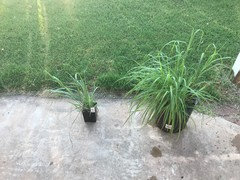
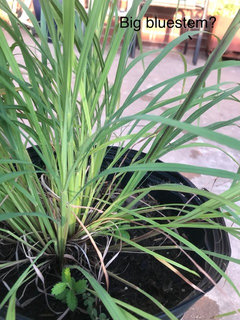
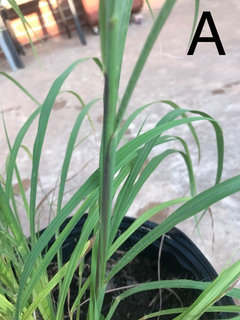
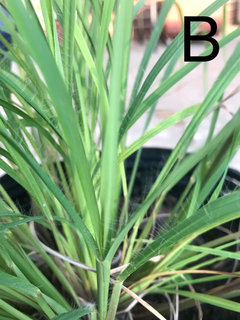
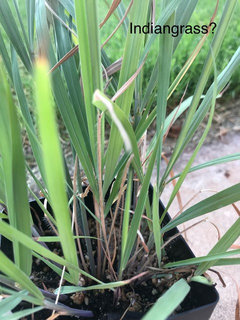
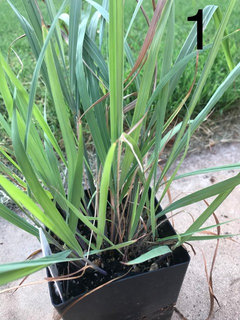
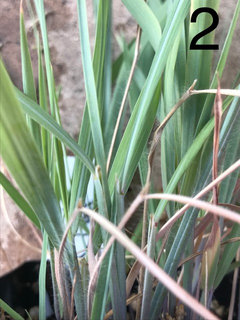
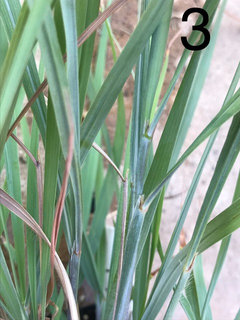
    It's been a while but I'm having some grass ID issues and hoping for some help since everyone was so helpful the first time around. I have a big bluestem grown from hand-me-down seeds but I'm afraid it might be an Old World Bluestem which I don't want. I also have a purchased grass that was tagged indiangrass, but looks more like bluestem than the bluestem! LOL. The indiangrass has obvious ligules but the lower stems are purplish-blue and it is hairy.

    First pic is of both plants together, indiangrass on the left. After that, I've lettered the bluestem and numbered the indiangrass for clarification sake.


Sponsored
Peabody Landscape Group
Average rating: 3.5 out of 5 stars8 Reviews
Columbus' Reliable Landscape Design & Contracting