Software
Houzz Logo Print
genacm

Seneca Handmold Tile Review

10 years ago
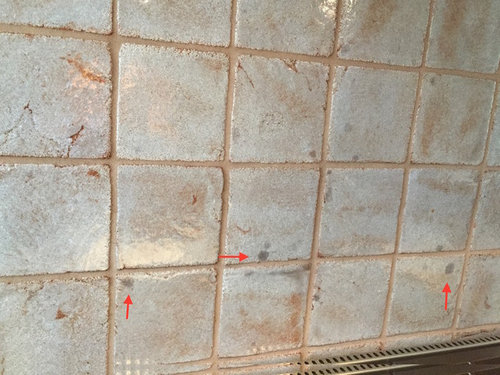
I can't tell you how disappointed I am in the Seneca Handmold Reflections Series and also how disappointed I am in Seneca's customer service. We have these tiles installed in our stove backsplash and they stained in 5 months and are ruined. When I called the company to ask about this problem I was given the President's email address and told to write him directly. He has never responded. Instead he turfed the question to his distributor who told me that my kitchen designer lied when she told me she had received assurances that the tile was appropriate for kitchen use. The distributor also pointed to the "technical notes" at the way back of the Seneca Tiles Brochure we, of course, never saw. The tiles are not appropriate for a backsplash application and that fact should be listed right up front. I'm left with a stained and ugly product and the manufacturer, distributor and designer pointing fingers at each other. I plan to post this review in as many places as I can get it up to fully express my dissatisfaction with this product and the way my problem has been handled.

Comments (14)

  • 10 years ago

    The tile brochure says clearly that it has to be sealed-was this done? If not go back to the installer and have them fix your entire problem. It's not the tile.

  • 10 years ago

    Was the tile sealed?

  • PRO
    10 years ago

    "

    In cooking areas, around a stove on counters
    and backsplashes, cooking oil splatters should
    be cleaned up as soon as possible, as oils may
    permanently darken some tiles. It is suggested
    that you reseal these areas of Re ections tiles
    periodically to help maintain their resistance
    to liquid penetration. Still, some spotting from
    liquid penetration may be possible."

    Seneca shows tiles installed as backsplash repeatedly and even behind a cooktop.

  • 10 years ago
    last modified: 10 years ago

    I was concerned about the porosity of the Seneca tile and I asked my designer to check that it was suitable for this application. She sent me back an email saying she had asked and been assured the tile was appropriate as long as it was properly sealed. I considered this to be appropriate due diligence: I raised a concern with the person I hired to have expertise in the matter and she addressed the concern, in writing. Her tile installers sealed the tiles. They stained anyway. My designer is working with me to address the problem (we are trying poultice now) but I feel the company should make it clear that these tiles are problematic in this setting instead of burying the information on the last page of a glossy brochure people aren't likely to see. I just posted this so that other people have information about the tiles I didn't have. BTW I love them where I've used them in a backsplash that doesn't get wet or dirty.

  • 10 years ago

    This isn't the tile makers fault. You WERE told to seal the tile. Sealing isn't once and done. It is distasteful that you would attempt to blame the manufacturer.

  • PRO
    10 years ago

    I see this more evenly. Seneca is all green, made in USA, natural, blah, blah, blah. The last thing they want muddying up their brochure is BIG BLACK BOLD WARNINGS on the product's limitations. Could Seneca have been more forcfull? Could the OP been more thorough? Yes to both.

  • 10 years ago
    last modified: 10 years ago

    When a design professional is involved, they should make sure that their client is compatible with the use and care requirements. I would have insisted on a signed waiver. Not just verbally told you to seal it.

  • 10 years ago

    My designer's tile installers did seal the tile. How often do you think I was supposed to reseal? This stained inside of 6 months. Clearly my designer is responsible for giving us erroneous information and she is living up to that (though I will reiterate that she did check with Seneca or their distributor and was assured that the tile would not stain if properly sealed). Still, don't you think Seneca could have done more to warn people about this problem? And do you think I am wrong to want to warn others who might be researching on Houzz that this problem exists?

  • 10 years ago
    last modified: 10 years ago

    The tile is behaving no differently than natural stone, or unglazed terra cotta, or any number of porous tiles would behave. You seal. Then you seal again. Then if it is still absorbing sealer, you seal yet again. Standard industry practice

    Your characterization of the tile company as deceptive is repugnant. Your blasting them all across social media because YOU failed to understand the CLEARLY WRITTEN care requirements, that you received a copy of, only shows you in a poor light.

  • 10 years ago

    There aren't many Seneca Tile users on houzz, or anywhere else for that matter, and while I'm sorry that you had this experience, I feel I know more about them than I did before because you posted the information.

    Seneca is an Ohio company, and being a good Ohio girl, I have wanted to be a cheerleader for them, but I've never seen the tile in person, let alone lived with it. It looks like it would be perfect for a cabin in the woods, really earthy. But clearly, it has its limitations. I hope you come to a resolution that leaves you satisfied. I have no idea what that might be, but good luck!

  • 10 years ago

    I noticed that Seneca makes several different collections of handmade tiles. The Reflections Collection is the the only one that has a specific warning regarding "cooking oil splatters & dark spotting." It is a more specific warning than you normally see on the data sheets of porous tiles.

    I am sorry that you are going through this. It looks like a beautiful backsplash & I hope you can successfully remove the spots. In the future, when cooking with oil, you could prop a sheet of stainless against the tile (a cookie sheet would work) to prevent splatters.

  • 6 years ago
    last modified: 6 years ago

    Coming into this thread three years late...just as my tile guy is laying out our Seneca Studio Sea Glass tile for my son's bathroom vanity wall. @genacm, I sure hope your situation was remedied!

    I remember reading about tile sealing issues months ago and emailed Seneca at that time to make sure ours didn't need sealing. I was told (by email) that no sealing was needed for Seneca Studio tile. This surprised me as their Studio line has a red clay body, which looks quite porous to my amateur eyes. I expressed my surprise in writing but received no further reply, so I took that as "case closed."

    My GC has reviewed the install instructions and just spoke to the Seneca people by phone. Any last minute tips before we start? :) This tile will be going floor to ceiling on the wall behind a floating vanity/sink, and kitty corner to the shower.

  • 4 years ago

    We have Senica Handmold old world tile in our master bath and shower surround. beautiful tile thats spotless after 10 years. Unlike the reflections series the old world series glaze is impervious. Sennica had a devestating fire and are running very limited production for now.

Sponsored
Custom Home Works
Average rating: 4.6 out of 5 stars10 Reviews
Franklin County's Award-Winning Design, Build and Remodeling Expert