Software
Houzz Logo Print
kchuphotography

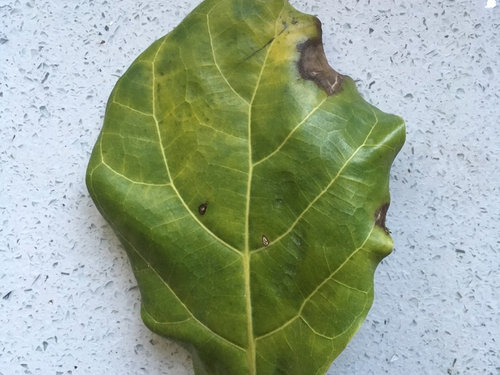
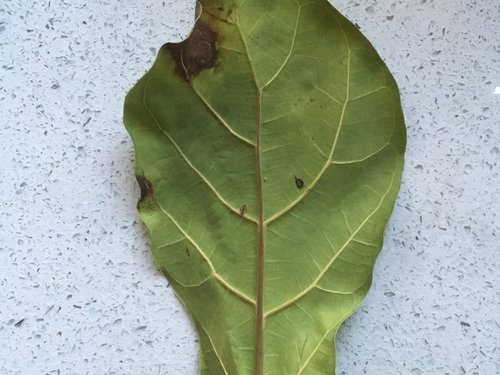
Fiddle Leaf Fig Tree Browning

10 years ago
Hey Everybody,

I purchased my fiddle leaf fig tree (About 5-6 feet) from home depot about 6-7 weeks ago and repotted it in another pot with 1/3 perlite, 2/3 organic potting mix. I pruned the roots back just a tiny bit as well to easier fit in my 13 inch planter.

From week 1-4 everything seemed to be going fine, I checked it on almost a daily basis to make sure everything is growing good and healthy. It started growing new leaves from week 2. Then week 5 hit, and the most bottom leaf started to brown on the edge and eventually grew bigger. The next week i barely touched/pulled the leaf and it came off the stem extremely easily. Now on week 6-7 other leaves are beginning to brown as well.

My plant gets good amounts of diffused light all around the tree except on one side(against the wall). I have it positioned in a south/west facing windows away from harsh sunlight so it is all bright diffused light.

I cant seem to figure out what is wrong with it. The leaf is growing (1 is basically full grown already and 3 are somewhat babies). I've done some research and overwatering seems to be the most common problem to browning but I feel that the soil isn't even wet. I water once every two weeks with 2 regular sizes water bottles and water drains through the hole.

Anyone here have any suggestions to fix the problem? Could it be that the side where it is against the wall that doesn't get much light be the problem its browning? I rotate the tree every 2 weeks as well.

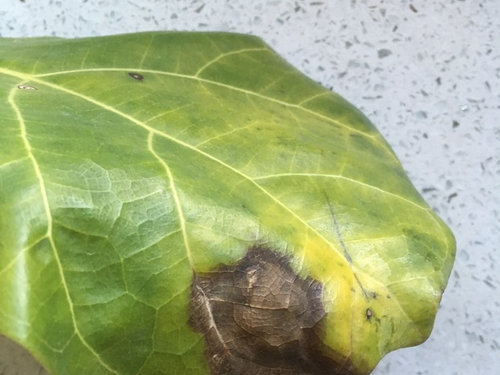
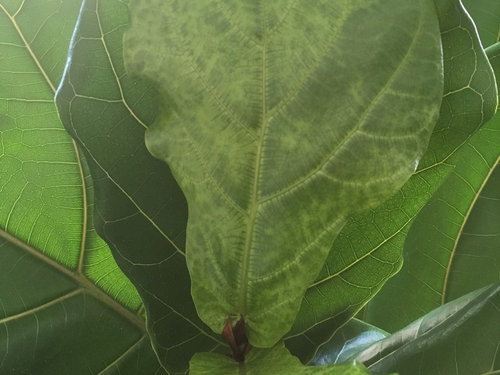
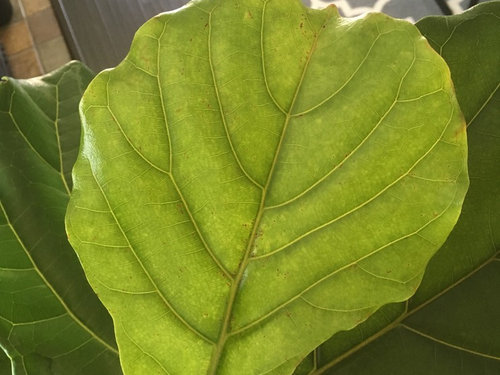
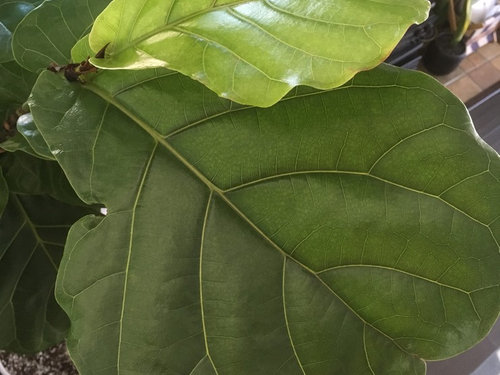
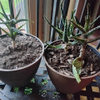
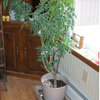
Thanks, attached are some photos..
Kevin~

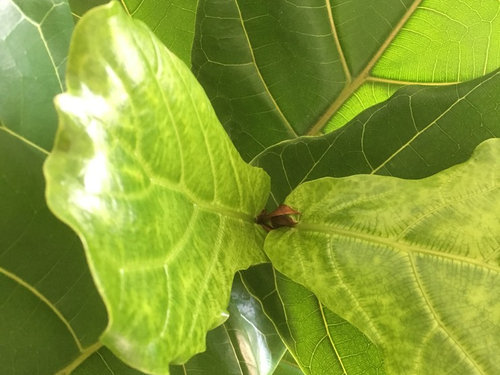
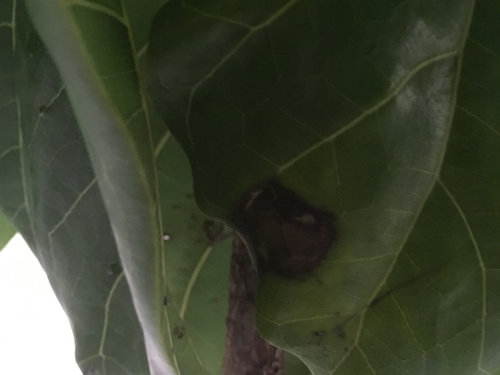
BROWNING LEAF


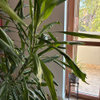
TOP POINT OF THE TREE ( 2 NEW BABY GROWTH)


SIDE BRANCH NEW GROWTH (the one directly below the new growing leaf is the first leaf to grow and is now fully grown I believe)


Comments (6)

  • 10 years ago

    It needs to be in full sun or outdoors.

  • 10 years ago

    The necrosis at the leaf margins is from over-watering or a high level of dissolved solids (salts) in the soil solution. It also appears that you have some micronutrient deficiencies going on - based on the chlorotic appearance of the new leaves. There's no way to tell if the deficiency is the result of cultural issues inhibiting nutrient uptake or an actual deficiency, so here's what I would do.

    * Repot it if it needs it. The repot will set the plant back a bit, but after it recovers, the growth and vitality it will display will be worth it, and the net growth will be much superior to what will/would have occurred if you'd just let things take their own course. If you have pine or fir bark in an appropriate size, I suggest you take advantage of it and base your soil on coarse material instead of peat/compost-based potting soil. It will help you avoid a lot of reasons people come here for help.

    * Get it in a spot with appropriate light - preferably outdoors.

    * The next time the plant ACTUALLY needs water, flush the soil thoroughly with a volume of room temperature water = to at least 10x the volume of the pot the plant is in. More is better.

    * Get control over your watering. Use a 5/15" wooden dowel, sharpened in a pencil sharpener on both ends and inserted deep into the root/soil mass - all the way to the bottom if possible. If you cut a 4' dowel in half, you have 2 testers, each with 2 ends. If it comes out wet or stained dark from the moisture, withhold water until it comes out dry or just barely moist. When your soil appears dry, there is still a little moisture to act as a buffer between 'it FEELS dry' and 'it IS dry'.

    * Start fertilizing regularly. Foliage-Pro 9-3-6 is a superb choice for houseplants and has ALL the essential nutrients plants normally get from the soil. Very few soluble fertilizers can make that claim. It's all you need for a sound nutritional supplementation program.

    HOW you fertilize depends on your watering habits and soil choice. Ideally, you'd be using a soil that allows you to flush the soil at will w/o need to worry that the soil will remain saturated so long it affects root function and root health, yielding the symptoms in your images as an ongoing thing. Flushing the soil is like hitting the fertilizer 'reset button'. It keeps the level of dissolved solids (salts) low and, as important, keeps the nutrient ratio in the soil solution from getting badly out of balance, which carries with it its own set of issues.

    Al

    Kevin Chu thanked tapla (mid-Michigan, USDA z5b-6a)
  • 10 years ago

    Thanks everyone for the replies!

    The soil seems pretty much all dry. I have a moisture meter that i use occasionally for some of my other potted plants without drainage holes and it is usually accurate. I have also tried sticking in a rough chopstick to see the moisture on the wood and it seems to be still dry as well. I water the tree once every 2 weeks with 2 standard size water bottles and water basically comes out and fills the saucer. (The pot is still raised over the saucer so its not "sitting" in water). I think it may be the nutrient deficiency or salt build up.. Now that Tapla has mentioned it, when I first repotted the plant and saturated everything wet it was thriving for a few weeks. Should I bring the plant outdoor and just flush it throughly with water and bring it back in before I try repotting the soil? I used miracle-gro brand perlite 1/3 to organic potting mix 2/3. Any brand name potting mix I should look for? Could browning also occur when the soil is too dry as well? And is it natural for new growth to continue appearing while the browning is occurring?

    The tree is sitting right near a small 24x24" window and about 10 feet from a large one. If I move it closer to the large window, wouldn't the harsh sunlight "burn" the leaves? Around late afternoon 4PM - Sunset it gets pretty harsh. I feel like it does get enough light where I place the tree, as I have a bunch of other cactus/succulents around the vicinity and they grow well... But I may be wrong since this is my 3rd non cactus/succulent plant and it may be different.

    For the fertilizer, is it necessary to use it if all I want is for the tree to survive essentially? I would much rather it grow at a slow rate and look healthy since the tree will outgrow my home if it grows much bigger.. I've never used fertilizer on all my cactus and succulents and they thrive.

    Their are also a few gnats on the soil, can gnats cause harm?

    Thanks for all your responses, greatly appreciate the feedback.

  • 10 years ago

    Fertilizer: Your tree - your call. Growth rate and vitality are inextricably linked. Intentionally slowing growth by purposefully maintaining marginal vitality is like starving yourself to the point of fainting because you like to sleep. I have trees older than you would believe if I told you their age that can be lifted pot and all in one hand and they're in perfect health. Keeping trees small is why they invented pruners. I have many ficus older than 30 years (no where near as old as the oldest trees) that can also be lifted with a single hand - all, I can honestly say, enjoy exceptional health; so, you can have both.

    Al

    Kevin Chu thanked tapla (mid-Michigan, USDA z5b-6a)
  • 10 years ago

    Thanks, never really thought of fertilizer that way especially in the pruners(duh!). I am mainly experienced with cactus/succulents so their isn't really much to prune with those plants. I'll give fertilizer a go once I figure out exactly whats going on with the tree.

    I will water throughly when the weekend comes around to see if the salts/soil is the main problem. The soil is pretty much all dry right now.

    If anyone has any other input please do so! Thanks.