Software
Houzz Logo Print
jrbarnard

You guys do this with your backsplash?

10 years ago

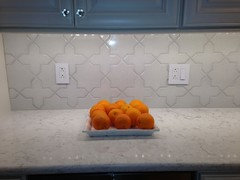
So, had an idea this morning. We have "Bone" 3x6" subway tile going into the backsplash and I had an idea this morning.


I was thinking if we turned the electrical boxes on the backsplash so they are horizontal instead of vertical, we could add something like these (I assume they have solid white ones as well) and they would more "blend" into the backsplash.


Has anyone seen these in solid white?


Russ


Comments (37)

  • 10 years ago

    lol

  • 10 years ago

    Oooh I like those bocci outlets. Wonder if they will pass code here in the over regulated state of CA

  • 10 years ago

    Funny thing, I have never lived in a home with vertical outlets in the backsplash, or almost anywhere. Unless your tile is vertical, and I've also never owned a home with a tile BS, wouldn't they always look better horizontal?

  • 10 years ago

    Yes I have specified for them to be mounted horizontally in subway tile and also to have enough extra wire and nailing surface so they can fit exactly into tile layouts either horizontal or vertical.

  • 10 years ago

    How do you specify so that it ends up fitting exactly, before you have shimmed cabinets & installed countertop?

  • 10 years ago

    Yea, I am not sure how it would work, exactly, hence why I really do not care if they are vertical or horizontal.. heh


    R


  • 10 years ago

    Hmmm. Me thinks you care. A lot

  • 10 years ago

    My DH did our back splash and put our outlets horizontal. They are regular outlets, not pop out.

  • 10 years ago

    I have put mine horizontal in the last two kitchens, thanks to advice I heard on this site. However, at least one of mine isn't totally straight. They aren't perfectly in line with the tiles. I still like horizontal better. They aren't visible behind stuff as much. I wish I had been able to place them exactly where I want them. I kind of told them, but still feel like they are in some weird places. I would push as far into corners as possible.

  • 10 years ago

    We are building in NC and this is the first time in my life I've ever seen vertical outlets. In Chicago all electric is in metal conduit, all electrical boxes are metal and the norm for a 2 outlet box is horizontal. Here it's all Romex and plastic boxes and they attach them to the studs vertically - it always catches my eye and not in a good way.

  • 10 years ago

    Well, yea, I care.. but not enough to make a big fuss over it. I sent them an email and will push to have them turned, and I am pretty sure they will do it, but not sure how they will measure to make sure they fall between two good tiles, except they may be able to move them a little in the sheetrock if they are too low or high, we will see.

  • 10 years ago

    I specify by measuring as closely as possible beforehand to get the best estimated position. have the wire run, no boxes put in place and then designing an exact tile layout, including sometimes starting to layout tile and then having the electrical boxes mounted in their final positions. It's extra steps and more money and it's easier if the electrician and the contractor understand the point of doing it. I am doing the third bathroom designed around all full tiles with all the outlets and everything else laid out within the tile grid, so Anything can be done, it's just a matter of how much time, effort, and/or money you want to put into it.

  • 10 years ago
    last modified: 10 years ago

    My outlets are horizontal, and I prefer that to the vertical ones I had last kitchen. Not sure why, probably a visual thing. One thing that I would not like though, is the pop out Adorne outlets. Yes, they look cool in photos, but I have appliances that are "permanently" plugged in, so I don't see any advantage to them. Also, I wonder if there are any issues with stability since the plug goes down instead of in? My backsplash is white, and my outlets are white, and honestly, I'm not sure that not seeing the outlet is really a plus. Actually, you'll still see the box, just not the "plug".

    edited to change: my current ones are horizontal. Musta been the wine talking last night. :)

  • 10 years ago

    DH planned for them to be horizontal. He tiled up to the row beneath the outlets then wired them so they would fit exactly in the next row of subway tile. They are not invisible, but don't draw your eye either.


  • 10 years ago

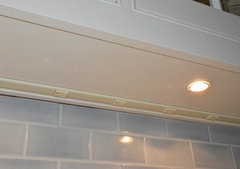
    I'm using plug molds instead.

    Sound Rd · More Info

  • 10 years ago

    I like plug mold even less than I like vertical outlets, but I realize different things appeal to different people. The reason I don't like plugmold is because the wires from "regular" appliances hang down rather than hiding behind the appliance, and I don't want to have to unplug things that I use regularly.

  • 10 years ago

    lol. I saw the email notification and was like, "plug mold? is that anything like food mold?" lol


    Gotcha... that actually is another interesting idea too


  • 10 years ago

    Russ - glad to hear you're getting closer! You'll find a fair number of threads and good ideas, with a quick search. I decoupaged my outlets. Next time, I'll take the time to plan the layout before the wire is run, a la palimpset.

    If you are up to making a sample board with your tile (easy, really - stick tiles to board with double sided tape, grout, let dry), you can then take the board into Staples or wherever and photocopy. (Then, you can chip the grout off and reuse your tiles).

    You'll want to play with settings as you photo-copy, until you get a few which look really close in color to your tile.

    Then... decouppage them on with modge-podge (sp?) or other glue and protect with a few coats.

    What I still need to clean up / how not to do it. I did find my left over tile in the basement recently....

  • 10 years ago

    cp - check code compliance for wire (plug) mold. Not allowed everywhere - couldn't have used it in our last house.

  • PRO
    10 years ago

    "However, at least one of mine isn't totally straight."


    kelleg69:


    Remove your cover and you'll find adjustment screws holding your receptacle in place.

  • PRO
    10 years ago

    eam44:


    I see two problems with the "flush" receptacles:


    1. You'll never plug an Apple computer charger into them.


    2. Unless that marble backsplash is completely removable, it makes the boxes containing the receptacles inaccessible, a code violation everywhere in the States.

  • 10 years ago

    NNNNNNNOOOOOOOOOOOOOO!!!!!!!!

  • 10 years ago
    last modified: 10 years ago

    Eh, as you all know, I've brooked greater disappointments. On to the next fantasy...being ready to worry about the receptacles at all....

    Ob2b, I love your bs tile and I love what you did with your outlet covers in the kitchen. Trying to find the edges of the wall plate is like playing Where's Waldo! You have to post when you're done with the others!

    Cp, plug mold has its allure. What will you do for light switches?

  • 10 years ago

    Joe, the Bocci outlets are UL approved. It looks like the junction box is accessible. Why do you say they won't pass code? I too think they are very cool.

  • 10 years ago
    last modified: 10 years ago

    I am in the Chicago area and agree with what DLM2000 wrote. My receptacles are installed horizontally.

    While those pop-outs look cool, it would drive me batty to have to deal with them while trying to plug and unplug the food processor with doughy hands and the like. I can't stand extra steps for anything in the kitchen, even if it's just one extra step. Also those just look they are bound to break/get stuck. Finally, you know food, gunk and spatter will get in behind them or just under the grooves at those edges. I see lots o' Q-tips in your future.

  • 10 years ago

    So true about horizontal outlets. Never had the vertical ones until we moved from Chicago to Southern CA.

  • 10 years ago

    If you get Adorne make sure it's the rectangular ones. The square ones don't have enough space for two larger plugs to be plugged in at the same time.

  • 10 years ago
    last modified: 10 years ago

    Russ - my favorite receptacle treatment was Cloud_swift's. See threads I am linking.

    Thread Entitled "Cloud Swift...your outlet covers?"

    Thread that shows Cloud_swift's entire kitchen

  • 10 years ago
    last modified: 10 years ago

    Joseph Corlett,

    The Bocci outlets are UL approved. The box is cylindrical and the outlets are inserted and removed with a cylindrical tool that inserts around the outlet (or switch) and into the cylindrical box and "unlocks" the receptacle allowing it to be pulled out accessing the box and wire connection.

    This is an expensive system, running hundreds of dollars per outlet and of course not easily changed to conventional.

    A similar flush system is Trufig, which uses rectangular boxes but has a very complicated mounting system and jigs to fabricate custom friction fit covers $$$$.

    A similar down market method would be to use Sillites which are also UL approved and cylindrical but are removed by obvious screws in the face of the receptacle itself.

  • PRO
    10 years ago
    last modified: 10 years ago

    "Joe, the Bocci outlets are UL approved. It looks like the junction box is accessible. Why do you say they won't pass code? I too think they are very cool."

    sherri1058:

    Electrical connections must be made inside a box. That box must always be accessible, meaning you can't drywall over it. In the trade it's known as a "flying junction". An immovable marble backsplash is the same as drywall covering a box. Besides, what are you going to do if one of those receptacles fail? You're going to pull that marble splash, that's what. And if you hire me to do it, I'm going to make you acknowledge in writing that I'm not responsible for any breakage and you'll pay me hourly plus materials for any repairs. Those two little holes are mighty dang delicate and reinstallation will require perfect realignment which takes lots of time. All to have a "cool" receptacle that you can't plug everything into.

    There is no law as to how large your cover plate can be. Turn that splash into a giant cover plate, maybe two discreet stainless screws at the top, and the inspector hasn't got a complaint.

  • 10 years ago

    I like plug mold even less than I like vertical outlets, but I realize different things appeal to different people. The reason I don't like plugmold is because the wires from "regular" appliances hang down rather than hiding behind the appliance, and I don't want to have to unplug things that I use regularly.

    The things regularly plugged in for us such as the toaster oven and the coffee maker will be behind closed doors in the "coffee station" so nothing on the open counter will be plugged in on a regular basis.

    Like you said it depends on the kitchen and how it's being used.

  • 10 years ago

    cp - check code compliance for wire (plug) mold. Not allowed everywhere - couldn't have used it in our last house.

    Thanks DLM. I believe I'm good as I've already have it in my options list and my builder didn't say we couldn't use them.

    Cp, plug mold has its allure. What will you do for light switches?

    Obviously light switches will need regular switches. My last kitchen my under counter lights were on the wall opposite my counters. Good point.

  • 10 years ago
    last modified: 10 years ago

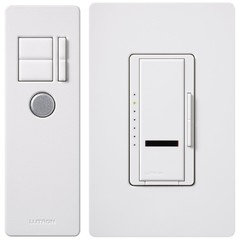
    I meant, you've got the outlets out of sight, and those of us who love tile, love you for that, but have you found any cool light switches we can drool over? Bocci has round ones, cute, but probably not worth the added expense.

    Loutron has cool ones that dim at the mere suggestion and have remote controls.

    In my search for cool light switches, I found the perfect one for the nieces/nephews guest bedroom:

    although admittedly, the toggle placement wasn't well thought out... Poor Han Solo.

  • 10 years ago
    last modified: 10 years ago

    I love the idea that the bocci might be useable. Fantasy saved! Thanks Sherri, and Pal. Nana nana boo boo to Joe :-)

    I haven't had much sleep... I just love the way outlets look like a surprised emoji. Having them circular without a plate makes me happy and looks fantastic. I've never had an outlet fail, but it would be tragic if one of these did! I have no idea whether they have GFCI...

  • 10 years ago
    last modified: 10 years ago

    "There is no law as to how large your cover plate can be"

    I have seen outlets installed just as Joe Corlett said, particularly with wood or Corian panels where the panel was routed out to expose the receptacle ovals or rectangle where the plugs go and the whole large panel can be removed.

    The Bocci receptacle is its own coverplate since removing it allows access to the box.

    The outlets run about $125 - 150 for a single, $225 for a duplex and the proprietary tool to remove the outlet is $75. The labor is also going to be significantly more than normal.

    I also recently installed lighting fixtures that mount on regular rectangular or round boxes but have an option that provides a sub coverplate that can be drywalled over that then has a 1" wide x 2or 3 long access.

  • 7 years ago
    last modified: 7 years ago

    This is an older thread but one of the few that references Bocci 22 outlets to date, so I'd like to update with clarifications regarding some of the previous comments. These outlets are designed by a Canadian company, so not originally targeted to meeting electrical codes in the USA, but I've seen comments online from designers and electricians whom I presume to be based in the United States who have installed them into clients' cabinetry.

    The Bocci company advertises these outlets as solutions to be mounted flush not only behind wood but also into drywall and behind permanent stone and tile installations, most of which applications would make the junction boxes at least partially inaccessible which could be a code violation of the NEC that is followed by most jurisdictions in the USA. Note that a Bocci outlet is not a self-contained receptacle like Sillites. The wired connections for the Bocci outlet must lodge within a junction box separate from the outlet. A Bocci outlet can be removed with a special tool from the front to give access to the wiring connections which in my thinking could count for "access to the box." In reality, it's only partial access because if the box itself became loose or the holding faceplate broke, you couldn't get to it under a permanent surface, but you could fix or replace the outlet part and the wires. The entire holding faceplate for the box appears to be made of plastic, so if you had to plug in something that required extra force and broke the faceplate that holds the outlet, you'd have no access to replace it under a permanent installation.

    Another potential issue with the Bocci 22 outlets is that when used behind wood cabinetry, which is considered a flammable surface, the entire junction box could be made accessible depending on the configuration, but the edges of the junction box won't be flush with the flammable surface as mandated by the NEC. The outlet part itself projects forward out of the junction box and sticks through the wood overlay, a unique design that skirts the usual issue of how sparks would be contained because the outlet and faceplate of the junction box together create a spark-proof seal. Even so, I'm not sure all inspectors would pass these since there is no exception for this design in the 2017 version of the NEC to my knowledge.

    Sillites are only slightly larger than Bocci 22 but are self-contained receptacles so avoid some of these problems. Sillites don't meet code in every jurisdiction, is my understanding, but I've never heard an explanation of why that might be. Sillites require 2 face screws each and come with cover plates for an inconspicuous appearance, but Amazon has a few reviews from people who have had the prongs of the Sillites covers break off within the receptacle, which cannot be fixed without destroying the unit, so the recommendation seems to be to avoid using the covers that are flimsy.